

A first car, further education or a helping hand with a home deposit. Whatever it’s used for, putting money aside for a child can give them more choices when they reach adulthood.
An ethical Junior ISA (JISA) lets you consider what their money supports along the way. You might want to avoid fossil fuels and tobacco, back businesses tackling environmental problems, or invest in companies improving people’s lives.
From managed ethical portfolios and platforms for choosing your own funds, here are nine options for investing for your child’s future.
Junior ISA basics
In the 2026/27 tax year, you can pay up to £9,000 into a child’s Junior ISAs. This is a combined allowance across cash and stocks and shares accounts, separate from your own ISA allowance. Investment growth and income within a JISA are free from UK income tax and capital gains tax.
A parent or guardian with parental responsibility can open an account for a child under 16. Children aged 16 or 17 can open their own. Friends and relatives can contribute, subject to the overall allowance.
The money belongs to the child. They can take control from 16 and normally withdraw it only from 18, when the account becomes an adult ISA.
A child can have one cash JISA and one stocks and shares JISA. If they already have an investment JISA, ask the new provider to arrange a transfer. A Child Trust Fund must be transferred in full before a child can hold a JISA.
Read the government’s Junior ISA rules.
How we apply the Good Money Test
Ethical, sustainable and ESG investments can take different approaches. ESG stands for environmental, social and governance, and a fund using those factors may still hold companies you would prefer to avoid.
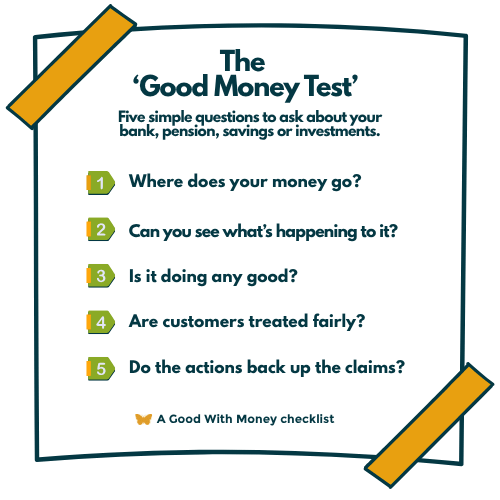
Our Good Money Test provides five areas to examine:
- Investment choices: Which businesses and sectors does the money support, and what is excluded?
- Transparency: Can you find the holdings, selection rules and charges?
- Positive impact: Is there evidence that investments support useful environmental or social outcomes?
- Customer fairness: Are costs, risks and account restrictions clearly explained?
- Consistency: Do the provider’s investments and wider behaviour support its ethical claims?
For JISAs, both the platform and the funds deserve attention. A mainstream platform can give you access to sustainable funds without applying ethical restrictions across its whole range.
The options below offer different levels of choice and support. Inclusion is not a blanket endorsement of every investment they sell. The Good Money Test is also separate from our Good Egg accreditation.
1. Triodos Junior Stocks and Shares ISA
Annual service fee: 0.4 per cent on holdings up to £250,000, then 0.2 per cent on the amount above this.
Fund charges: Published ongoing charges range from 0.75 to 1.10 per cent a year, depending on the fund.
Minimum investment: £25 a month or a £250 lump sum.
Triodos’s new investment JISA offers four impact funds: Future Generations, Global Equities Impact, Pioneer Impact and Sterling Bond Impact.
The Future Generations Fund has a particularly relevant focus for families, investing in companies supporting children’s wellbeing and development. Across the range, Triodos applies sustainability criteria and publishes the companies its funds invest in, helping parents understand where their child’s money goes.
You choose the fund or funds, with professional managers selecting the underlying investments. The account can be opened through the Triodos app and managed through the app or internet banking.
What to weigh up: The service fee and published fund charges together come to around 1.15 to 1.50 per cent a year for holdings below £250,000. Other investment costs and currency effects can apply. Triodos states that its impact funds are not covered by the Financial Services Compensation Scheme; eligible cash in the linked cash account is covered. That cash account pays no interest.
Triodos’s charges and investment information.
2. The Big Exchange
Annual platform fee: 0.25 per cent.
Fund charges: Typically 0.5 to 1.8 per cent a year.
Minimum investment: £25 a month or a £100 lump sum.
Co-founded by the Big Issue Group, The Big Exchange specialises in positive impact investing. Its funds are independently assessed for their contribution to people and the planet, with medal ratings to help investors compare them.
You can research and select individual fund or choose a pre-selected fund bundle.
What to weigh up: The platform fee is only part of the bill. Fund charges vary considerably, so compare the total cost of the investments you choose. An impact rating also does not guarantee that every holding will match your preferences.
Fees | Minimum contributions and account FAQs.
3. Wealthify
Annual management fee: 0.6 per cent.
Other investment costs: Approximately 0.46 per cent a year for Ethical Plans, including fund and trading costs.
Minimum opening investment: £1,000.
Wealthify offers an Ethical Junior ISA for parents who want a managed portfolio. Its investment team selects and monitors the investments, with different risk levels available.
This can suit families who want help with the investment decisions and prefer to manage the account online or through an app.
What to weigh up: The current minimum opening deposit is £1,000. The management fee and average ethical investment costs together are approximately 1.06 per cent a year, although actual costs vary. Read the ethical approach and holdings to check that the portfolio fits your priorities.
4. Moneybox
Subscription: £1 a month, free for the first three months and waived for customers meeting qualifying balance conditions.
Annual service fee: 0.45 per cent for other providers’ funds, including the third-party ESG options.
Fund charges: Additional, varying by fund.
Moneybox’s JISA is currently available to existing Moneybox customers. It offers Cautious, Balanced and Adventurous Starting Options.
JISA customers can select Global Shares ESG when choosing a Starting Option, replacing the standard global shares fund. They can also adjust the investment allocation.
What to weigh up: Check the whole portfolio’s holdings and exclusions. Selecting an ESG shares fund does not mean every part of the portfolio follows identical ethical rules.
Moneybox also advertises a lower 0.15 per cent service fee for its own funds, plus a 0.29 per cent fund fee. These should not be confused with its third-party ESG choices: Moneybox says its own funds are not designed as ESG-labelled strategies.
ESG options | Fee and subscription conditions.
5. Scottish Friendly
Annual management charge: For unit-linked funds, 1.5 per cent on the first £5,000, one per cent on the next £15,000 and 0.5 per cent above £20,000. Check the fund’s Key Information Document for the full cost breakdown.
Scottish Friendly’s My Climate Leader Select Junior ISA invests in its Climate Leaders Fund. This holds shares in companies worldwide that the investment manager believes can benefit from efforts to limit climate change.
It offers a single-fund route for parents who want a climate-focused investment without selecting a collection of funds themselves. Scottish Friendly is a mutual, with no shareholders.
What to weigh up: Scottish Friendly describes the fund as adventurous. A climate focus will not necessarily cover every ethical concern, so check its investment policy and holdings. There is also a £50 charge if the policy is transferred to another JISA manager within its first five years.
Scottish Friendly’s charging structure.
6. Interactive Investor
Account cost: Junior ISAs can be added at no extra charge to the Plus plan, which costs £14.99 a month.
Other costs: Fund charges and any applicable dealing fees.
Interactive Investor is a platform for parents who want to choose their child’s investments. Once on the Plus plan, you can open JISAs for all your children without an additional account charge.
Its wider investment range allows families to select funds that meet their own sustainability priorities.
What to weigh up: The platform itself is not an ethical portfolio. You need to examine the funds you buy. The £14.99 monthly plan costs £179.88 a year, so opening it solely for a small JISA could be expensive. It may make more sense if you already use the plan for your family’s investments.
7. Bestinvest
Annual service fee: Starts at 0.4 per cent for third-party funds and UK shares, with lower rates for larger holdings. Its own Ready-made Portfolios have a separate rate starting at 0.2 per cent.
Other costs: Fund charges and any applicable dealing fees.
Regular investing: From £50 a month.
Bestinvest’s Junior ISA gives parents access to a broad investment range, including funds they can research for ethical or sustainable criteria.
This is an option for families comfortable choosing investments and checking whether the holdings reflect their values.
What to weigh up: Do not assume Bestinvest’s Ready-made Portfolios are ethical portfolios. If you choose third-party sustainable funds, use the relevant third-party platform fee when comparing costs. There is no minimum service fee on its JISA.
Bestinvest’s fees | Ethical and ESG investing.
8. Hargreaves Lansdown
Annual account fee: None for the Junior ISA.
Online dealing fees: None. Fund charges and some other costs can still apply.
Minimum investment: £25 a month or a £100 lump sum.
Hargreaves Lansdown offers a JISA for parents who want to select their own investments. Having no annual account fee or online dealing charges can help keep costs down, particularly for smaller pots.
Parents can use its investment range to choose sustainable funds, checking each fund’s objectives, exclusions and holdings.
What to weigh up: You are responsible for the investment choices and ongoing reviews. The account’s lack of platform fees does not remove the charges within funds, and costs such as foreign exchange charges can apply to overseas share trades.
HL’s charges | Minimum investments.
9. Simply EQ
Fees and minimum investment: Ask EQ Investors for a current JISA-specific quote.
Simply EQ offers advice and ongoing investment management, with Junior ISAs among its available accounts. Its sustainable strategies include Positive Impact, Future Leaders and Sustainable World.
This may appeal to families who want an adviser to recommend a portfolio and an investment team to manage it.
What to weigh up: EQ’s general Simply EQ page advertises a £50,000 lump sum or £1,000 monthly commitment. These should not be read as JISA contribution requirements: a new £50,000 payment or £1,000 every month for a full tax year would exceed the £9,000 JISA allowance. Transfers of existing JISA savings are treated differently from new subscriptions.
Confirm the applicable minimum, service fee, VAT and underlying investment costs directly with EQ before applying.
Choosing the right account for your family
Start with how much you can afford to put aside, how long the money can stay invested and how much involvement you want.
For a small pot, a monthly subscription can take a noticeable bite. For a larger balance, percentage fees deserve closer attention. Compare the total cost, including the platform, funds, dealing and any transfer charges.
Then read what the investments actually own. A fund focused on climate solutions, one screening out controversial industries and one favouring companies with higher ESG scores can produce very different portfolios.
Investing is generally better suited to a timeframe of at least five years. If your child is close to needing the money, consider how a market fall would affect their plans and whether a cash JISA would be more suitable.
Risk warning: Investments can fall as well as rise, and your child could get back less than you invest. Ethical or sustainable investing does not remove investment risk. Tax treatment depends on individual circumstances and rules may change. This article provides information, not personal financial advice.