Choosing a credit card means weighing up what’s good for your finances alongside its impact on people and the planet. Look at the provider’s lending policies, how it treats customers and how clearly it explains its charges.
Then consider how you’ll use the card. If you expect to carry a balance, check the interest rate and fees carefully. Stronger ethical credentials are worth looking for, but the repayments still need to work for your budget.
What makes a credit card “ethical”?
There’s no official definition, but in practice it usually comes down to three things:
Fair treatment of customers (no exploitative fees or practices)
Transparency around costs and repayments
Wider business ethics, including how the provider lends and operates
With that in mind, these are the strongest options currently available.
The The Co-operative Bank has long positioned itself around ethical policies, including commitments on where it lends and invests. This card is available to Co-op members and offers a simple structure.
Monzo takes a different approach with its Flex product, focusing on transparency and behavioural nudges rather than traditional credit card features.
It allows you to spread the cost of purchases, with clear repayment options shown upfront.
Key features:
0 per cent interest for 3 months on purchases over £100
No foreign transaction fees
Real-time tracking and repayment prompts
After the interest-free period, rates are higher than average.
Representative APR: 29 per cent (variable)
Why most ethical banks do not offer credit cards
Many of the UK’s most clearly ethical providers – such as Triodos Bank or Ecology Building Society – don’t offer credit cards at all. There are two main reasons:
1. The nature of credit cards Credit cards are unsecured, revolving debt. They don’t fund specific projects or outcomes, unlike loans for renewable energy, housing or community initiatives.
2. High interest rates Even responsibly run credit cards typically carry APRs above 20 per cent. For providers focused on financial wellbeing, that can sit uneasily with their mission.
As a result, many ethical providers focus instead on:
Current accounts
Savings
Mortgages and impact lending
There are no perfect ethical credit cards, but there are better options.
Providers like Nationwide Building Society, The Co-operative Bank and Monzo stand out for fairness, transparency or ownership structure.
For fully values-led banking, though, many of the strongest ethical providers still choose not to offer credit cards at all.
Best UK green energy suppliers 2026: how to choose
Want an energy supplier that fits your budget AND your values? We’ve compared five providers to help you find a home for your energy bills that you can feel good about.
There comes a point in autumn when putting the heating on brings a little mental calculation with it. How much is this going to cost, and could we be getting a better deal?
This October, that question feels particularly timely. Ofgem’s energy price cap rose by four per cent for a typical household paying by direct debit, just as we head towards the colder months. The cap limits rates on covered tariffs, rather than your total bill, so what you pay still depends on how much energy you use.
If you’re thinking about switching, you might also want to know what your money supports. Choosing a supplier that invests in renewable energy can feel like a positive use of a bill you have to pay anyway.
Working out which companies live up to their green promises takes some effort, though. A renewable electricity tariff might tell you very little about the company’s gas supply, its wider business or how helpful it will be when something goes wrong.
We’ve done the digging on five energy suppliers, looking at where your money goes, how they treat customers and what their green claims mean, to help make your choice easier.
How we use the Good Money Test
We’ve adapted the Good Money Test for energy suppliers. It asks five questions:
Where does your money go? Does the company support renewable energy, and does its wider business have fossil fuel interests?
Can you see what is happening to it? Does it explain where its energy comes from and what you’re paying for?
Is it doing any good? Is it helping to build renewable energy or making it easier for households to use less fossil fuel?
Are customers treated fairly? Does it offer clear information, helpful service and support when people need it?
Do the actions back up the claims? Is there evidence behind the green promises?
Our verdicts reflect the published information we’ve reviewed, including suppliers’ disclosures and independent customer research. A pass with reservations means there are worthwhile strengths alongside drawbacks we think you should know about. These assessments are separate from our Good Egg accreditation.
Green energy suppliers at a glance
Supplier
Why consider it?
What to know
Good Money Test
Good Energy
Buys renewable electricity directly from British generators
Most of its gas is still fossil fuel, and ownership has changed
Pass, with reservations
Ecotricity
Uses customers’ bills to help build renewable energy projects
Customer service results are less reassuring
Pass, with reservations
100Green
Offers a tariff with 100 per cent certified green gas
Other tariffs contain a smaller proportion of green gas
Pass, with reservations
Octopus Energy
Offers practical options for EVs, heat pumps and cheaper off-peak electricity
Its published electricity mix includes nuclear power
Pass, with reservations
So Energy
Another renewable electricity option to compare on price
Its parent company still has substantial fossil fuel activities
Pass, with reservations
Good Energy: knowing what your money supports
Good Energy is worth considering if you want a clear connection between your electricity bill and British renewable energy.
It buys renewable electricity directly from more than 3,300 British generators, matching the amount its customers use over a year.
It also checks how closely that generation matches customers’ electricity use throughout the day. For April 2025 to March 2026, it reports an 87 per cent match within the same half hour. That is useful because the country needs renewable power available when people are actually using it.
Its gas needs a little more explanation. At least 10 per cent is biogas, made from organic materials such as waste. Most remains fossil gas, with the company buying carbon offsets to compensate for emissions. Those offsets support projects elsewhere; they don’t make the gas itself renewable.
Good Energy also has a new owner. Esyasoft bought the business in April 2025, so its long-standing environmental reputation needs to be considered alongside its place in a wider group.
Good Money Test verdict: Pass, with reservations. Buying directly from renewable generators and explaining its energy sources are clear strengths. Customer feedback is encouraging, although independent checks of how it runs its service were less positive. We’d also keep its new ownership and continued use of fossil gas in mind.
Ecotricity: helping build more renewable energy
With Ecotricity, part of the appeal is knowing that money from customers’ bills helps develop new sources of renewable power.
The company builds wind and solar projects, giving its environmental promises something tangible behind them. It also considers animal welfare: its energy is certified vegan by the Vegan Society and Viva!, excluding animal-derived materials from its energy sourcing.
Its gas supply contains a mixture of sustainable green gas and fossil gas. The company also invests in British carbon removal projects, but customers shouldn’t assume that all the gas they buy is renewable.
Service is another consideration. Ecotricity received two stars out of five for overall customer service in Which?’s 2026 survey. That matters when you need someone to explain a bill or put a mistake right.
Good Money Test verdict: Pass, with reservations. Its investment in renewable generation and clear animal-welfare standards give it a strong environmental case. Customer service is the main reservation. It could suit someone who particularly values helping to build renewable energy and is comfortable with the price they’re quoted.
100Green: a choice for greener gas
If you have gas central heating, 100Green offers something worth looking at: a tariff with 100 per cent certified green gas.
That tariff is called 100 Origin. Its other tariffs include at least 10 per cent green gas, so the name of the company alone won’t tell you what you’re getting.
Green gas is produced from organic materials and processed into biomethane, which can be fed into the gas network. Your home still receives the shared network supply, but your purchase supports renewable gas production.
100Green also explains where its renewable electricity comes from. Its 100 Origin tariff includes extra environmental requirements for generators, such as protections for wildlife.
Customer feedback is a positive part of the picture, although independent research found room for improvement in support for people who need extra help.
Good Money Test verdict: Pass, with reservations. Clear information about its energy sources and the option of fully certified green gas give 100Green a credible environmental case. Choose the tariff carefully, check the cost and, if you need additional support, make sure its arrangements work for you.
Octopus Energy: making greener choices easier at home
Octopus Energy is worth comparing if you have an electric car, solar panels or a heat pump, or can move some electricity use to cheaper times of day.
It offers tariffs designed around those needs, alongside services such as solar panel and heat pump installation. Its wider business also invests in renewable generation, and independent research gives it recognition for both sustainability and customer service.
One detail needs explaining. On its green energy page, the published electricity mix for April 2024 to March 2025 is 86.4 per cent renewable and 13.6 per cent nuclear.
Nuclear power produces low-carbon electricity, but it isn’t renewable. That distinction may matter to you when choosing a supplier.
The other question is whether a particular tariff fits your home. Cheap overnight electricity can be useful for charging a car, for example. You still need to account for what you’ll pay during the rest of the day.
Good Money Test verdict: Pass, with reservations. Its renewable investment, customer-service recognition and practical help for households are positives. Our reservations are about the distinction between renewable and nuclear electricity, and making sure a specialist tariff delivers savings for the way you live.
So Energy: an option with a wider business to consider
So Energy backs its renewable electricity through contracts with generators and certificates that verify renewable production. Customers can also vote for the renewable sources they would like it to support.
It is another option to compare if you want renewable electricity at a price that works for your household.
However, So Energy belongs to ESB. The wider group’s 2025 sustainability report records substantial fossil fuel use alongside its renewable activities. That is relevant if you want your supplier’s whole business to be moving away from fossil fuels.
Customer feedback was generally positive in the independent research we reviewed, but checks covering areas such as complaints, contact and support were less reassuring.
Good Money Test verdict: Pass, with reservations. So Energy explains how it supports renewable electricity, but its parent company’s fossil fuel activities and weaknesses in its service assessment limit our endorsement. It may appeal if you receive a competitive quote and are comfortable with those compromises.
What does a green tariff actually change?
Your electricity reaches you through the same shared grid as your neighbours’. Choosing a green supplier affects how the company supports the energy you buy.
Suppliers can use certificates called Renewable Energy Guarantees of Origin, or REGOs, to show that renewable electricity has been generated to match customers’ use.
Those certificates provide evidence, but they don’t tell the whole story. We also look at whether a supplier buys directly from renewable generators, helps build new projects and explains its activities clearly.
Gas is worth checking separately. A company can offer renewable electricity while selling mostly fossil gas. Look for the proportion certified as green gas, and remember that carbon offsetting does not change the source of the fuel.
How to choose a deal that works for you
Start with the amount of electricity and gas you use in a year, measured in kilowatt hours. You’ll find this on your bill or in your online account. Using the same figures for each quote makes the comparison much more useful.
Compare the estimated annual cost, including the daily standing charges, and check for exit fees. A lower suggested monthly direct debit might simply be based on an assumption that you’ll use less energy.
If you’re considering a fixed tariff, it is the agreed rates that are fixed. Your bill can still increase if you use more. For tariffs with cheaper and more expensive hours, think honestly about how much of your routine you can shift.
You don’t need an electric car or a house full of new technology to make a worthwhile choice. Nor should choosing greener energy leave you struggling to pay the bill.
A supplier that fits your budget, explains itself clearly and puts your money towards something you value is a good place to start.
WR Ethical awarded Good Egg mark
WR Ethical, an independent mortgage and protection broker, is the latest responsible finance company to be awarded the Good Egg mark from Good With Money.
The mark helps people find financial providers that benefit people and planet, as well as offering a good deal for their pockets.
Based in Bristol, WR Ethical helps borrowers consider the ethics of their mortgage lender alongside the cost of their loan. Its approach to fair pricing, charitable giving and running a responsible business impressed the Good Egg panel.
Bringing ethics into your mortgage search
A mortgage is likely to be one of the biggest financial commitments you make. Finding an affordable deal should be the priority, but you may also want to know more about the company receiving your monthly repayments.
WR Ethical brings those questions into the mortgage conversation. It offers whole-of-market advice, considering price and ethical factors when recommending a lender, with support for first-time buyers, home movers and people remortgaging. It also advises on buy-to-let mortgages, later-life borrowing and protection insurance.
The Good Egg assessment highlighted the firm’s commitment to putting customers first. This includes recommending that borrowers go directly to a lender where that represents the lowest-cost option, and taking time with customers regardless of their income.
Paul Waterfall, director and senior mortgage adviser at WR Ethical, said: “I’m delighted that WR Ethical has achieved Good Egg Certification. I’ve admired what the team at Good With Money has been doing since before we started WR Ethical, and to have our principles and practice pass their rigorous assessment is such a buzz.
“We try to do what’s right, but it can be hard to look outside your own niche and see if your approach stands up to proper scrutiny. This certification, along with our B Corp and Fair Tax certifications, confirms that it does.
“Each assessment process has looked at our business differently, so the collection of certifications is testament, in my view, to doing good being built in rather than trying to tick some boxes. It gives us confidence to continually improve and try to inspire others to do the same.”
The WR Ethical team
A fair deal for customers and communities
WR Ethical offers free initial mortgage consultations and Agreements in Principle, with no broker fee for like-for-like remortgages and rate switches. It also offers cashback for first-time buyers and publishes its fees so customers can understand the costs upfront.
The business commits to giving five per cent of its turnover to charity, supporting organisations including debt-help charity Christians Against Poverty, Bristol charity inHope and environmental law organisation ClientEarth.
It’s also a certified B Corp, a member of 1% for the Planet and Fair Tax accredited. These commitments sit alongside practical steps such as planting a tree for every mortgage arranged and using office space supplied with renewable electricity.
What impressed the Good Egg panel?
The Good Egg screening report highlights WR Ethical’s:
Customer-first approach, including directing borrowers to a lender where doing so would cost them less.
Whole-of-market mortgage recommendations and clearer, upfront fixed fees.
Free initial consultations and support for first-time buyers.
Charitable giving, tree planting and commitment to Fair Tax.
Support for staff training and policies covering equality, business ethics and whistleblowing.
Panellists praised the breadth of its ethical commitments for a business of its size, its approach to green mortgages and the useful information available to customers on its website.
What’s in a Good Egg?
The Good Egg mark assesses how well a provider measures up against environmental, social and industry impact factors, taking into account its size, history and performance.
Ethical Screening, an independent specialist consultancy, produces a report on each applicant. A panel of ethical finance experts then provides a further level of scrutiny before the mark is awarded. Not every company that applies receives one.
For WR Ethical, the award recognises an approach that brings together customer care, ethical considerations in mortgage advice and responsibility for the impact of its own business.
If you think your company could be our next Good Egg, get in touch.
Good Money Week: Could financial advice help you?
The annual Good Money Week puts sustainable and ethical options in pensions, savings and investments in the spotlight. It’s a good prompt to ask whether your own financial plan reflects what matters to you, and to talk to a planner who can help you find out.
Whether you’re thinking about retirement, supporting your children or making more ethical investment choices, financial planning can help you work out your next steps.
What is financial planning?
Financial planning is the process of taking a comprehensive look at your financial situation and building a specific plan to support your current needs and reach your long-term goals.
It often covers multiple areas of finance, including investing, tax, savings, retirement, your estate and insurance, as well as the sustainable and ethical choices Good Money Week is all about.
What will my financial planner do?
A financial planner focuses on you: your goals, your aspirations and your concerns. They will:
Build a picture of your current wealth and position.
Understand your life plan and help you to prioritise your goals.
Assess possible risks and potential opportunities in your financial life.
Create a bespoke plan with tailored recommendations to help achieve your objectives.
Provide support to help you implement your recommended plan.
Do I need financial advice?
Financial planning can help to answer some of life’s big questions:
How much should I set aside for unexpected life changes?
Will I be able to maintain my lifestyle in retirement or retire early?
How can I best set up my children for the future?
Are my investments tax efficient?
What can I do with an expected inheritance?
Can I afford school fees for my children?
Can I afford to move to a bigger home?
Are my investments set up as efficiently as possible?
Should I adapt my finances after a divorce or the death of a loved one?
What should I do after my property or business sale?
These are the kinds of questions we get asked every day at EQ Investors.
Our financial planners are trained to sit down with you to explore your needs and priorities, whatever they may be, and then help you turn that initial conversation into a fully fledged financial plan.
How does financial planning work?
1. We get to know you
During this first phase, we want to learn about your future life goals and priorities. We also want to ensure you fully understand what you can expect from us, what we will deliver and how we will work with you.
2. We build your financial plan
Having identified your personal needs and objectives with you, we will create your tailored financial plan. This outlines the actions we recommend to help you achieve your goals.
We believe that working to a plan can help you build the financial future you want.
3. We help implement the plan
Our team will help you to implement your plan and invest on your behalf, managing decisions about when to buy or sell.
You can check how your investments are doing online, 24/7. You can talk to us whenever you like, and we’ll review your plan every year.
Ethical financial advice: book a free consultation
It is our philosophy to build trusted and long-lasting relationships with our clients.
Book a free financial planning discussion and we’ll look at your circumstances, identify any gaps and suggest the way forward. From inheritance to investing, pensions to protection, we’ll cover everything that matters to you.
Ethical cash ISAs: compare UK providers, rates and access
You want your savings to earn a decent return, be there when you need them and support things you feel comfortable with. An ethical cash ISA can help bring those priorities together.
Ecology Building Society, Triodos Bank and Charity Bank offer cash ISAs that support environmental or social projects. Gatehouse Bank applies Shariah-based exclusions, while member-owned building societies such as Nationwide and Skipton offer another approach to choosing where your savings sit.
The right account depends on what matters most to you: easy access, a fixed return, transparent lending or a particular cause. Below, we compare six providers and explain what to check before moving your money.
Rates and account details checked on 1 October 2026. Rates can change and accounts can be withdrawn.
What is an ethical cash ISA?
An ethical cash ISA is a tax-free savings account with a provider whose lending policies, ownership or social purpose align with your values.
The ISA wrapper determines the tax treatment. The provider determines how your deposits are used.
Some providers lend specifically to charities, renewable energy projects or sustainable housing. Others exclude particular industries or operate for the benefit of their members. These approaches offer different benefits, so it helps to look closely at what each provider actually does.
You may also see the term green cash ISA. If your priority is the environment, check the provider’s lending policies and the projects it finances before relying on the name.
Ethical cash ISAs at a glance
Provider and account
Annual rate
Minimum opening deposit
Access
Why consider it?
Ecology Building Society Cash ISA
3.05% AER, variable
£25
No-notice withdrawals
Supports sustainable housing and environmental projects
Triodos Bank Online Cash ISA
2.36% AER, variable
£10
Unlimited withdrawals; flexible ISA
Finances environmental, social and cultural projects and publishes its business borrowers
Charity Bank Ethical 33-Day Notice Cash ISA
2.71% AER, variable
£250
33 days’ notice
Supports charities and social enterprises
Gatehouse Bank 1 Year Fixed Term Woodland Cash ISA
3.75% AER expected profit rate
£1,000
One-year term; early withdrawals cost 90 days’ profit
Shariah-based exclusions and a tree planted for each account opened or renewed
Nationwide Building Society 1 Year Fixed Rate Cash ISA
4.50% AER, fixed
£1
Early access requires closure and costs 60 days’ interest
Member-owned mutual
Skipton Building Society 1 Year Fixed Rate Cash ISA
4.15% AER, fixed
£1
Early closure costs 60 days’ interest
Member-owned mutual with a charitable commitment
AER means annual equivalent rate and helps you compare annual returns. Gatehouse pays an expected profit rate under Shariah principles. The accounts have different access conditions, so compare those alongside the rate.
How we assess providers: the Good Money Test
At Good With Money, our Good Money Test helps readers assess a financial provider’s ethical claims through five questions:
Where does your money go? What does the provider finance, and which activities does it exclude?
Can you see what is happening to it? Does it publish useful information about its lending and investments?
Is it doing any good? Does it actively support environmental or social projects?
Are customers treated fairly? Are rates, access restrictions, charges and account terms clear?
Do its actions back up its claims? Is there evidence behind the marketing?
For cash ISAs, this means considering both how your savings are used and whether the account works for your everyday needs.
The providers below have different strengths. Dedicated ethical lenders offer a clearer connection to positive projects, while mutual ownership gives customers a stake in how a building society operates. Membership alone doesn’t establish a provider’s environmental impact.
The Good Money Test is an editorial checklist. Our Good Egg mark is a separate accreditation awarded following a more detailed assessment. Ecology and Triodos hold the Good Egg mark.
Its environmental purpose is central to its business: savers’ deposits help fund sustainable housing and environmental projects across the UK.
You can withdraw without notice or a penalty. However, bear in mind that an ISA is not flexible, so replacing withdrawn money uses your remaining annual allowance. Transfers from previous years’ cash ISAs are accepted.
Worth considering if: you want accessible savings with a clear environmental purpose.
Triodos finances projects including renewable energy, organic farming and social housing. Its transparency is a particular strength: it publishes the organisations it lends to, helping savers understand what their money supports.
The account allows unlimited withdrawals and is flexible, meaning money withdrawn can be replaced within the same tax year without using more of your ISA allowance. New accounts must be opened through the Triodos app.
Worth considering if: you value transparent lending and the ability to take money out and replace it.
The bank is owned by charitable foundations, trusts and social purpose organisations. It uses savings to support charities and social enterprises.
The notice period makes this more suitable for money you can plan around than cash you might need immediately. You can apply online, but the bank says accounts are subsequently operated by post.
Worth considering if: supporting charities and communities is a priority and you are comfortable giving notice to access your savings.
Its Shariah principles exclude activities including arms, gambling, alcohol and tobacco. It also plants a tree in a UK woodland for each Woodland Saver account opened or renewed.
Gatehouse pays profit instead of interest. If it expects to fall short of the advertised rate, it says it will contact customers and offer the option to close the account with their deposit and profit earned. Ordinary withdrawals during the one-year term carry a charge equivalent to 90 days’ profit.
Worth considering if: its exclusions match your values and you can leave your money for a year.
Its inclusion rests on its mutual ownership model. Savers looking for a specific environmental outcome should also examine the society’s lending and sustainability policies.
You cannot top up the account after opening it. Early access requires closing the ISA and paying a charge equivalent to 60 days’ interest. Customers new to Nationwide must apply in a branch.
Worth considering if: you want a member-owned provider and a fixed return for one year.
Skipton Building Society
Skipton’s 1 Year Fixed Rate Cash ISA pays 4.15% AER fixed, with a £1 minimum deposit. Early closure carries a charge equivalent to 60 days’ interest.
Skipton is owned by its members and commits one per cent of its group’s pre-tax profits to charitable causes each year. These are useful social and ownership credentials, although savers seeking a dedicated environmental lender should consider that separately.
Worth considering if: you favour mutual ownership and can commit your savings for a year.
Are ethical cash ISAs safe?
Eligible deposits with UK-authorised banks and building societies are protected by the Financial Services Compensation Scheme up to £120,000 per person, per authorised firm.
That limit covers your combined eligible deposits with the firm. Different banking brands can share an authorisation, so check before assuming each account has separate protection.
A cash ISA doesn’t have stock market fluctuations, although inflation can reduce what your savings will buy. Early-access charges on fixed accounts can also reduce the amount you receive.
How much can I put in a cash ISA?
For the 2026/27 tax year, you can pay up to £20,000 across your adult ISAs, subject to the rules for each ISA type. You can currently put the full £20,000 into cash ISAs. The tax year ends on 5 April 2027.
From 6 April 2027, the annual cash ISA subscription limit will fall to £12,000 for people under 65, within the overall £20,000 ISA allowance. People aged 65 and over will retain a £20,000 cash ISA allowance.
Can I transfer an existing ISA to an ethical provider?
Yes, provided the new account accepts the type of transfer you want to make.
Ask the new provider to arrange an ISA transfer. Withdrawing the money yourself and paying it into another account can lose the protection of the ISA transfer rules.
Check any early-exit charges and whether the new account accepts current-year savings, previous-year savings or both.
Do ethical cash ISAs pay lower rates?
Rates vary between providers, and ethical credentials alone won’t tell you how competitive an account is.
Compare accounts with similar access terms. A one-year fixed account serves a different purpose from an easy-access ISA you might use for emergencies.
It also helps to put the difference into pounds. On a £10,000 balance, a one percentage point difference in annual return is about £100 over a year. That gives you something concrete to weigh alongside access, service and what your savings support.
This article provides general information, not personalised financial advice. Tax treatment depends on your circumstances and rules can change. Check the provider’s latest terms before applying.
Best ethical savings accounts 2026
With UK Savings Week upon us, it’s a good time to check what your savings are earning and what your money is helping to fund.
If you’ve got some spare cash once the bills are paid, the first priority should be building an emergency buffer.
Most experts suggest holding three to six months’ essential expenses in an easy-access savings account. That pot isn’t there to make you rich – it’s there to stop you reaching for expensive credit if the boiler breaks, your car fails its MOT or your income suddenly drops.
Cash savings are predictable and protected. Your money won’t fall in value overnight and, up to £120,000 per eligible person, per authorised bank or building society, it’s covered by the Financial Services Compensation Scheme (FSCS).
If inflation exceeds the interest you earn after tax, your cash savings lose purchasing power over time. If you’re saving for goals more than five years away – retirement, a house deposit, financial independence – investing is generally a better way to grow your wealth, though it comes with ups and downs along the way.
If you’re looking to keep some savings in cash, here are some of the more ethical options to consider – from social and environmental pioneers to mutuals that are structurally less driven by shareholder profit.
Best ethical savings accounts: quick comparison
Provider
Example account
Rate checked 23 September 2026
Access
Why we like it
Triodos Bank
Online Saver Plus
2.20% gross/AER variable
Instant access; three penalty-free withdrawals a year. Further withdrawals reduce the rate to 0.10% for the month concerned.
Good Egg mark. Only lends to organisations delivering positive social, cultural or environmental impact.
Triodos Bank
Ethical Savings Bond
3.60% gross/AER fixed
One-year fixed term
A fixed-rate option from a bank with a clear ethical lending policy.
Ecology Building Society
Easy Access
2.30% gross/AER variable
Easy access
Good Egg mark. Uses savers’ money to help fund greener homes and environmental renovation projects.
Ecology Building Society
35-Day Notice
2.75% gross/AER variable
35 days’ notice
A higher rate than its Easy Access account, supporting the same environmental lending mission.
Co-operative Bank
Regular Saver
7.00% gross/AER variable
Save up to £250 a month for 12 months; requires a Co-operative Bank current account
Long-standing ethical policy. Now owned by Coventry Building Society.
Nationwide
Flex Regular Saver
6.50% gross/AER variable
Save up to £200 a month for 12 months; requires a Nationwide current account. Rate falls to 1.05% after four withdrawals.
A mutual owned by members, with profits reinvested for their benefit.
Coventry Building Society
Regular Saver (6)
4.00% gross/AER variable
Save up to £500 a month; withdrawals incur a charge equal to 30 days’ interest
Mutual ownership helps align the society’s interests with those of its savers and borrowers.
Tandem Bank
Instant Access Saver
3.40% AER variable, including a 0.25 percentage point top-up for 12 months
Instant access; unlimited withdrawals
Says savings are not used to fund fossil fuel extraction and production. Lending includes greener home improvements.
Charity Bank
Ethical Easy Access
3.04% AER variable on balances of £5,000 or more
Easy access; £5,000 minimum opening deposit
Lends savers’ money to charities and social enterprises across the UK.
Gatehouse Bank
Woodland Saver
3.75%–4.20% AER expected profit, depending on term
Fixed terms from six months to five years
Sharia-compliant bank with exclusions including alcohol, gambling and weapons. Woodland Saver accounts support tree planting.
Raisin UK
Al Rayan one-year fixed-term account
4.85% AER expected profit
One-year fixed term; £1,000 minimum deposit
Savings platform offering access to selected providers, including Sharia-compliant and mutual options. Check the underlying bank before applying.
Credit unions
Local savings accounts
Varies
Varies
Community-focused, mutual providers where savings help fund affordable local lending.
Regular saver rates apply only to the money in the account: monthly deposits earn interest for different lengths of time. These accounts cannot be compared directly with putting a lump sum into a fixed-term or easy-access account.
Rates and terms can change. Check the latest rate, eligibility, minimum deposit, withdrawal rules and FSCS protection before opening an account. Raisin UK is a savings platform, so protection depends on the bank holding your money.
How we choose ethical savings accounts
At Good With Money, we use our Good Money Test to help assess whether a savings provider is genuinely aligned with people and planet.
We look beyond the headline interest rate and ask five key questions:
Where does the money go? Does the provider lend to fossil fuels, weapons, tobacco or other harmful industries, or does it use deposits to support homes, charities, communities and environmental projects?
How transparent is it? Can savers easily find out how their money is used, what the provider excludes and what kind of lending or investment it supports?
Does it have a positive impact? Some providers go further than avoiding harm by actively funding renewable energy, greener homes, social housing, charities, community finance or other positive outcomes.
Are customers treated fairly? We look at whether the provider offers clear terms, fair access rules and reasonable rates, as well as whether it has a track record of putting customers first.
Do its actions match its claims? Green language is easy to use. We look for evidence, policies, ownership structures, lending data, accreditation or independent verification to support ethical claims.
Some providers also hold Good With Money’s Good Egg mark, which recognises companies that can show they are making a positive impact. Where a provider has Good Egg accreditation, we have highlighted this in the article.
Ethical Bank Triodos, which has a Good Egg mark from Good With Money, is a true leader in the field of ethical personal finance and only invests in businesses that have a positive social and/or environmental impact.
Key terms
Both online savings accounts open from £1. Online Saver Plus pays a reduced rate of 0.10% gross/AER for any month in which you make a withdrawal beyond your three penalty-free withdrawals.
The Ethical Savings Bond currently offered has a one-year term and a £500 minimum deposit.
Ecology Building Society is known for its mortgages on eco-friendly new builds and renovation projects. So what it takes in deposits from savers, is used to lend to making Britain’s housing stock more energy efficient.
The company boasts a Good Egg mark from Good With Money, which is awarded only to companies that make a positive impact in the world. It was also the first building society awarded a Fair Tax Mark.
The RCT account makes a monthly donation to the Ecology Community Scheme, while the Sea-Changers account makes a quarterly donation to marine conservation charity Sea-Changers.
Regular Saver paying 7.00% gross/AER (variable) for 12 months
Cash ISA and fixed-term options available, but rates vary
**Why is it ethical? **
The Co-op Bank has a long history of ethical banking, having launched its first ethical policy back in 1992. Now, it is committed to carbon neutral operations, and won’t fund or invest in companies that manufacture or market destructive products like weapons and tobacco. It says it won’t support businesses or organisations that have business relationships with oppressive regimes and will promote human rights and equality across the world.
In 2017 the bank was bailed out by international hedge funds, which dented its reputation for responsibility. The bank was acquired by Coventry Building Society on 1 January 2025, bringing it into mutual ownership.
Key points
The Regular Saver requires a Co-operative Bank current account. Open from £1, save up to £250 per calendar month and make withdrawals without a penalty.
Other savings accounts vary widely in rates and access.
Flex Regular Saver: 6.50% gross/AER (variable); save up to £200 a month for 12 months.
Flex Instant Saver: 2.30% gross/AER (variable), for 12 months. Both accounts require a Nationwide current account.
**Why is it ethical? **
As a building society, Nationwide must hold at least 75 per cent of its assets in residential property, making it far less likely than its big bank competitors to be lending to unsustainable firms. Its profits are also invested back into the business for the benefit of borrowers and savers (its members) rather than shareholders.
Key points
With the Flex Regular Saver, after four withdrawals the interest rate reduces to 1.05 per cent AER/gross a year (variable) for the rest of the term.
The Regular Saver (6) account: 4.00 per cent gross/AER (variable) on monthly savings
Why is it ethical?
Mutual ownership helps align the society’s interests with customers, though executive pay at some mutuals has drawn scrutiny.
Key terms
With the Regular Saver account you can save from £1 to £500 per month. You can access your money, but it’s with a charge equal to 30 calendar days interest on the amount withdrawn.
The Instant Access Saver: 3.40 per cent AER (variable), including a 0.25 percentage point top-up for 12 months.
Why is it ethical?
A digital challenger bank, Tandem aims to be a “greener, more accessible bank for people across the UK”. Tandem guarantees that your savings are never used to fund fossil fuel extraction and production or similar destructive industries. Instead, money held in Tandem savings accounts is used solely to fund its lending products.
Its home improvement loans finance energy-efficient improvements such as solar panels and air source heat pumps, saving people money on energy bills while also helping to save the planet. Tandem’s EPC mortgages reward customers who own energy-efficient homes.
Key terms
No minimum deposit and unlimited withdrawals. Manage the account through the Tandem app. After the 12-month top-up ends, the account pays the standard variable rate, currently 3.15 per cent AER.
Ethical Easy Access: 3.01% gross / 3.04% AER (variable), on balances of at least £5,000. Below £5,000, the rate falls to 0.10% gross/AER.
Ethical 33-Day Notice: 2.86% gross / 2.89% AER on £250–£24,999; 3.01% gross / 3.04% AER on £25,000–£500,000 (variable).
Why is it ethical?
Charity Bank was founded to support charities with loans that they couldn’t find elsewhere and to show people how their savings could be invested ethically and in ways that would make them happy. It invests its customers’ money into charities and social enterprises around the country.
It says on its website: “Charities have never been more needed, but also more challenged. That’s why our promise – of supporting charitable activities and helping people to save and do good – is more important than ever.”
Woodland Saver accounts: 3.75%–4.20% AER expected profit, depending on term. The one-year account pays 4.20% AER. Minimum deposit £1,000; early withdrawals are generally not permitted.
Why is it ethical?
As a Sharia-compliant bank, Gatehouse avoids alcohol, gambling, weapons and similar sectors; its Woodland Savers include tree-planting initiatives.
Raisin isn’t a bank but a savings platform that lets you access a range of savings accounts from building societies (often mutual or ethical-aligned) and Sharia-compliant providers.
It can be particularly useful if you want to compare ethical deals, but always check FSCS protection and product terms before committing.
Local credit unions are mutual, community-focused savings/co-ops where your savings fund affordable local lending. Rates vary, and dividends (shared profits) replace traditional interest rates. FSCS protection applies. Check for a credit union near you.
Good With Money occasionally uses affiliate links to providers or offers, where relevant. This means that if you open an account or buy a service after following the link, Good With Money is paid a small referral fee. We choose our affiliates carefully and in line with the overall mission of the site.
What sustainable investing actually means today
This is the first in a three-part series exploring what sustainable investing means today, the opportunities it can create for investors and the role it could play in long-term financial planning.
Flooding in Nepal and another destructive wildfire season across Europe are reminders that environmental risks are becoming harder to ignore.
But for investors, sustainability now goes far beyond climate change.
It’s increasingly about understanding how major shifts, from extreme weather and pressure on resources to ageing populations, healthcare innovation and cybercrime, could affect the companies we invest in.
Sustainable investing is often associated with avoiding fossil fuels and backing renewable energy. In reality, it can cover everything from energy-efficient buildings and medical technology to cybersecurity, resilient infrastructure and cleaner supply chains.
At its heart are two questions – which businesses are helping to solve the challenges likely to shape the economy over the coming decades, and which could be left behind by them?
The basic principle behind sustainable development is meeting our needs today without leaving future generations worse off.
For investors, that means looking at changes already taking place across the economy and identifying businesses that could benefit from them.
Climate is an obvious example, but this goes well beyond simply buying shares in renewable energy companies.
We look for businesses improving the energy efficiency of buildings, turning waste into durable materials and developing technology to detect pollutants such as PFAS, often known as “forever chemicals”, and microplastics.
Adapting to a warmer climate also creates potential demand for companies making infrastructure more resilient, developing technology to monitor environmental conditions and providing insurance against changing risks.
The investment argument is simple: these are problems societies will have to spend money solving.
It’s about more than the environment
Health is another major theme. At Liontrust we see potential opportunities in earlier diagnosis and screening, medical innovation and technologies that make new treatments possible, alongside businesses helping people to live healthier lives.
Supply chains matter too. Globalisation has made products cheaper and trade easier, but it has also left companies exposed to poor labour practices, environmental damage, geopolitical disruption and natural disasters. How well a business manages those risks can have financial consequences.
Cybersecurity is increasingly relevant for similar reasons. Digital attacks can cause huge financial and reputational damage, creating demand for companies providing protection while making cybersecurity governance an important issue for businesses themselves.
Good corporate governance may sound less exciting, but how a company is run, how executives are rewarded and whether its board properly understands its risks can have a direct bearing on long-term performance.
Seen this way, sustainable investing becomes a wider assessment of how well a company is positioned for a changing world.
Avoiding harm still matters
Investing in solutions is only one side of the picture.
Many sustainable funds also restrict or completely avoid businesses involved in activities their managers believe cause significant environmental or social harm.
Depending on the fund, that might include fossil fuels, tobacco, weapons, gambling, intensive farming, alcohol or companies associated with serious human and labour rights concerns.
And the caveat of ‘depending on the fund’ is important.
There is no universal rulebook for sustainable investing. One fund may exclude an industry entirely, while another may invest selectively because its manager believes particular companies are changing.
So a “sustainable” label alone does not tell you enough. Investors need to understand what a particular fund actually does with their money.
Using investors’ influence
Sustainable investing can also involve what fund managers do after they buy shares.
Managers can engage directly with businesses on issues including climate risks, pollution, working practices, diversity and executive pay. They can also use their votes at company AGMs to support or challenge management.
We regard this engagement as an important part of sustainable investing, both to gain greater insight into the companies it owns and to encourage better business practices.
For investors choosing a sustainable fund, this is worth checking. Can the manager explain which issues it has raised with companies, what changes it wants to see and how it votes when businesses fall short?
What about returns?
Sustainable investing is still investing. The aim is to generate returns, rather than simply direct money towards companies doing useful things.
Our investment case is that businesses providing products and services needed for a cleaner, healthier, safer and more resilient economy could benefit from long-term structural demand.
The reverse can also be true. A company may be profitable today but face difficulties if its products become less desirable, regulation tightens or it fails to manage significant environmental, social or governance risks.
That does not mean every sustainable company will be a successful investment or that a sustainable fund will automatically outperform a conventional one. The price paid, the quality of management, competition and wider economic conditions still matter. As with any investment, your capital is at risk.
Sustainability is another way of assessing where future risks and opportunities may lie.
So what does sustainable investing mean today?
This means looking for businesses benefiting from long-term shifts towards a cleaner, healthier and more resilient economy, limiting exposure to activities it considers damaging and using its influence as a shareholder to encourage companies to improve.
For individual investors, the more useful question may be not whether a fund calls itself sustainable, but how it is sustainable.
What does it invest in? What does it avoid? How does its manager decide whether a company qualifies? And can it show that sustainability genuinely influences investment decisions?
Those answers tell you far more than the label on the fund.
New Good Guide: Get your self-employed finances in shape
Being your own boss can be brilliant. You get more control over what you do, who you work with and, sometimes at least, when you do it.
The less glamorous bit is that you also become the finance department, payroll team, pension manager, invoice chaser and chief tax worrier.
That’s why we’ve launched our brand new Good Guide to Self-Employed and Small Business Finances, in partnership with EQ Investors. It’s designed for freelancers, sole traders and small business owners who want to get a better grip on their money, without having to become an accountant in the process.
Why managing money is different when you work for yourself
Self-employed finances come with their own particular pressures.
Income can vary from one month to the next, and tax bills have an irritating habit of arriving when you’d much rather spend the money elsewhere. And many of the financial protections employees barely have to think about, including employer pension contributions, paid sick leave and holiday pay, disappear when you go it alone.
Then there is the business itself. Are you charging enough? Should you be a sole trader or limited company? How much should you put aside for tax? Are you properly planning for quieter months?
Our guide tackles these questions in plain English, with practical steps you can actually use.
Small habits can make a big difference
You don’t need a complicated financial system to start feeling more in control. Some of the most useful habits are surprisingly simple: keeping personal and business money separate, putting tax aside as payments arrive, building a cash buffer and spending 20 minutes each week checking invoices, expenses and cashflow.
We also look at Making Tax Digital, VAT, allowable expenses and payments on account, as well as how to work out what you really need to charge once pension contributions, holidays, admin and non-billable hours are factored in.
All this is crucial because being busy is no guarantee that your business is paying you properly.
Don’t forget about future you
When you work for yourself, it’s particularly easy for pensions, investing and financial protection to slide down the list behind whatever needs doing today.
The guide explains how to build your finances in layers, beginning with emergency savings and tax reserves, then protection, before moving towards longer-term investing through pensions, ISAs and other investments.
There’s also expert guidance from EQ Investors on financial planning for business owners, sustainable investing and what to think about before, during and after selling a business.
Make your business money match your values
For Good With Money readers, there might be another question on your mind: what is your business money helping to fund?
If you care about the suppliers you use, the clients you work with or the environmental impact of your business, it makes sense to look at your bank, pension, savings and investments too.
You don’t have to overhaul everything at once. The aim is to make thoughtful choices that support both your financial security and the kind of business you want to build.
Triodos joins forces with Ethex to grow investing for good
Putting your money behind community energy, affordable homes and other projects with a positive impact is getting simpler, as Triodos Bank brings its crowdfunding investments onto Ethex.
The migration took place on 8 September. All future Triodos crowdfunding offers will be hosted on the Ethex platform, giving investors one place to find opportunities from both organisations and manage their holdings.
For Good With Money readers who want a closer connection between their investments and the difference they make, it’s a welcome move. Bringing together two experienced ethical finance organisations should help more people discover projects they want to support, and help those projects reach more potential investors.
A shared home for positive investment
Together, Triodos and Ethex have raised more than £330 million for over 300 projects. That includes £246 million for 264 climate-positive projects.
Their work spans renewable energy, community-led initiatives and organisations meeting social needs. By combining their investor communities on one platform, they aim to get more money flowing to these businesses and projects.
Ethex, which was established in 2013, has built a community of more than 29,000 positive investors. Triodos brings more than 25 years of experience arranging investments through its corporate finance team.
Both will continue independently to find investment opportunities in their specialist areas. Triodos will develop and structure new offers, which will be clearly identified alongside Ethex’s own opportunities.
Mark Clayton, CEO at Triodos Bank UK, said: “By partnering with Ethex, we can now offer more investors even greater access to these high-impact opportunities.”
What changes for investors?
The practical benefit is a single portfolio view and simpler account management for investments brought together through the partnership.
Ethex will handle investor records, payments and online accounts, providing support for Triodos crowdfunding investors and the organisations they’ve backed.
There is also continuity behind the scenes. Both platforms have used ShareIn, the specialist provider supporting payments and investment platform technology.
For people exploring direct impact investing for the first time, Ethex offers opportunities starting from £50, although minimum investments vary between offers. Investors buy shares or bonds issued by organisations seeking funding for activities that benefit people or the environment.
That gives investors a clear view of what their money is intended to support, whether that is generating clean electricity or helping a social enterprise expand.
The difference that funding can make
Recent fundraising through Ethex gives a flavour of the projects this approach supports.
Bath and West Community Energy raised more than £750,000, while Low Carbon Hub raised more than £500,000 towards a community-owned battery project in Oxfordshire.
These are examples of how individual investments can come together to fund local energy infrastructure, helping communities play a greater part in the shift to cleaner power.
The partnership gives projects access to a wider pool of investors, while bringing more choice together for people looking to put their money to positive use.
Lisa Ashford, director and co-CEO at Ethex, said: “We believe that now more than ever we need to move with urgency to meet the demand for capital that we are seeing from impact-driven enterprises.”
Making an informed choice
Some bonds offered through the platform are eligible for an Innovative Finance ISA, allowing qualifying investors to receive interest tax-free. Eligibility and tax treatment depend on the investment, your circumstances and the rules in force.
It’s important to read each offer carefully. These are investments, and returns are not guaranteed. They can be difficult to sell, you could lose some or all of your money, and they are not covered by the Financial Services Compensation Scheme.
There’s something about coming back from holiday, full of chips, ice cream and time to think, that makes September feel more like a fresh start than January.
The return to work and school routines is a good opportunity to look at where your money is going, cancel things you no longer use and tackle the financial jobs that have been sitting at the bottom of your list.
It’s also worth checking what your money is supporting. Your bank, energy supplier, pension and investments can all help fund positive change, or industries you would rather avoid.
You don’t need to overhaul everything at once. Pick one of these seven sustainable money jobs and start there.
1. Your spending
Spent more than planned over summer? Join the club.
Start by looking through the past three months of bank and credit card statements. Cancel subscriptions you have forgotten about, check for price rises and make a realistic plan for the rest of the year.
If you struggle to save what is left at the end of the month, consider moving a small amount on payday instead. Moneybox, Plum and Chip are among the auto-saving apps we compared for 2026, although charges and the way your money is protected vary between products.
Food waste is another expensive place to look. WRAP says the average UK household of four throws away edible food worth around £1,000 a year. Planning a few meals, checking the fridge before shopping and freezing food before it goes off could save more than any clever budgeting hack.
Apps such as Too Good To Go offer surplus food from local shops, cafés and restaurants at reduced prices, while Olio allows people and businesses to give away food and household items locally. Recipe boxes can help with portioning, but they are rarely the cheapest option, so compare the full price once any introductory offer ends.
2. Your mobile phone contract
If your phone still works, keeping it and moving to a SIM-only deal will usually cost less than paying for another handset. It also keeps a working device in use for longer.
For a greener SIM-only option, Ecotalk offers monthly plans with no annual price rises and uses some of its income to support nature restoration. Meaningful Planet directs 10 per cent of customer bills towards UK nature projects and offers rolling and fixed-term plans. Both use EE’s underlying network. Giffgaff is a more mainstream option running on O2. It is a certified B Corp and encourages customers to buy refurbished phones or recycle old devices.
Before switching, use Ofcom’s Map Your Mobile to check which underlying network performs well at home, work and other places you regularly visit.
3. Your energy supplier
This one is worth sorting before the heating goes back on.
From 1 October, Ofgem’s price cap will rise by four per cent for a typical dual-fuel household paying by direct debit, taking the illustrative annual bill from £1,663 to £1,723. The cap limits unit rates and standing charges, rather than a household’s total bill.
If you’re on a standard variable tariff, compare fixed deals using your actual annual consumption. Check the unit rates, standing charges, tariff length and exit fees.
A fix can provide certainty, but it could leave you paying more if prices fall.
The right choice will depend on price and how you use energy. Octopus offers several smart and electric vehicle tariffs, while Good Energy, Ecotricity and 100Green have more specialist renewable energy models.
Be wary of suppliers that rely mainly on buying certificates to label standard electricity as green without investing meaningfully in new renewable generation.
4. Your savings
Before investing, deal with expensive debt and try to build an emergency fund. A good rule of thumb is to keep three to six months of essential outgoings in an instant-access account, although any amount you can put aside will help.
Then check the interest rate and ethical record of the bank holding your money.
If tax on savings interest is a concern, compare our top ethical Cash ISAs. The overall ISA allowance remains £20,000 for 2026/27. From April 2027, the Cash ISA limit is due to fall to £12,000 for people under 65, while the overall limit will remain £20,000.
Eligible deposits are now protected by the Financial Services Compensation Scheme up to £120,000 per person, per authorised firm. Check whether different banking brands share the same licence before assuming each account has separate protection.
5. Your investments
Investing is suitable for money you can leave alone for at least five years. It should come after building an emergency buffer and clearing expensive short-term debt.
A Stocks and Shares ISA allows you to invest within the £20,000 annual ISA allowance without paying UK Income Tax or Capital Gains Tax on returns.
Your investments can fall as well as rise, and you may get back less than you put in.
Simply EQ offers managed Positive Impact, Future Leaders and Sustainable World portfolios. Triodos offers a smaller range of dedicated impact funds, while The Big Exchange lets you choose individual funds or use one of three ready-made bundles.
Wealthify also offers managed Ethical Plans. More confident investors can find sustainable funds through mainstream platforms including interactive investor, AJ Bell and Hargreaves Lansdown, although these platforms also offer conventional investments. The impact of your portfolio will depend on the funds you choose, so check the full holdings, exclusions, fees and sustainability reporting.
6. Your pension
Your pension could become one of your largest investments, but it’s often the account people know least about.
Log in and check which fund you are in, how much you and your employer are contributing, what it costs and where it invests. Many workplace schemes place savers into a default fund, but offer ethical, sustainable or climate-focused alternatives.
Switching funds within your existing workplace pension may be simpler than moving the whole pot. Think carefully before transferring an older pension, as you could lose guarantees, valuable benefits or lower charges. Regulated financial advice may be sensible if the pension includes safeguarded benefits or you are unsure what to do.
7. Your current account
Your current account may not hold much money for long, but your choice of bank still matters. Banks use deposits and other funding to support lending and investment across the economy.
Triodos has the clearest positive-impact model and publishes details of the organisations it finances, although its account costs £3 a month and does not offer an overdraft.
The Co-operative Bank combines a long-standing ethical policy with more familiar high street banking features. Nationwide and Cumberland are member-owned mutuals, while Starling offers convenient digital banking and no direct fossil fuel project finance, but has less of a positive-impact focus.
Check fees, overdraft costs, branch access and app features before choosing. If the new provider participates in the Current Account Switch Service, it will transfer your balance and regular payments and close the old account within seven working days.
Once these basics are sorted, you can apply the same approach when your mortgage or insurance comes up for renewal. Our latest guides cover responsible mortgage providers and ethical home insurers. Price, suitability and cover should come first, followed by the provider’s wider impact when the practical choices are reasonably close.
Seven jobs may sound like a lot. Pick the one that could make the biggest difference to your finances and give yourself an hour to deal with it. September is a reset, not a deadline.
How investors use AGMs to drive sustainability
From fossil fuel financing and climate resilience to access to medicines and biodiversity, EQ Investors has been putting questions directly to some of the UK’s biggest company boards.
Annual general meetings may sound like fairly dry corporate events, but they give shareholders a valuable opportunity to question the people ultimately responsible for a company’s strategy.
For responsible investors, this can mean challenging boards on issues that could affect people, the environment and the company’s long-term prospects.
Attending AGMs is one of five tools in EQ Investors’ stewardship strategy, alongside scrutinising shareholder votes, speaking directly to companies, working with other investors and engaging with fund managers.
This AGM season, we questioned boards at major UK-listed companies across five of our six strategic engagement themes.
Why attend AGMs in person?
Physical meetings give shareholders, whether large institutions or individual investors, the chance to be heard directly by a company’s board.
EQ believes this opportunity needs to be protected as more companies consider moving their AGMs online.
Hybrid meetings can make AGMs accessible to people who cannot attend in person. However, a fully virtual meeting may give companies greater control over which questions are heard and make it harder for shareholders to hold boards to account.
The future of in-person AGMs is currently being debated in Parliament, and EQ supports ShareAction’s campaign to protect them in the UK.
Banking and the climate transition
Standard Chartered
We challenged Standard Chartered over its financing of new liquefied natural gas infrastructure in emerging markets.
We asked the bank to undertake country-level transition assessments and set clearer targets to reduce the risk of locking fast-growing markets into long-term fossil fuel use.
Barclays
With oil and gas markets experiencing disruption because of the conflict in Iran, we asked how Barclays would protect its climate commitments and capital allocation plans from short-term geopolitical pressure.
We also asked the bank to assess the credit, transition and reputational risks it could face if those commitments were weakened.
Preparing for physical climate risks
BT
Storm Amy caused an outage on the Scottish island of Tiree in 2025, cutting broadband, mobile and landline services for several weeks.
Against this backdrop, we questioned why BT had downgraded its assessment of physical climate risk from “moderate” to “low”.
We also asked whether the company would provide asset-level information about resilience gaps at its highest-risk UK sites.
Vodafone
Wildfires in Spain and France have highlighted the physical risks that extreme weather can pose to communications infrastructure.
We asked why Vodafone’s climate scenario analysis concluded that its physical risk was limited without publishing the estimated financial exposure behind that conclusion.
We also asked the board to explain who is responsible for managing physical climate risks and what resources have been allocated to the work.
Improving access to medicines
GSK
GSK was recently ranked first in the Access to Medicine Foundation’s Antimicrobial Resistance Benchmark.
We asked the company to explain how much investment and resource it is putting into research and development targeting pathogens identified as priorities by the World Health Organization.
We also asked what regulatory incentives would be needed to support this work as other pharmaceutical companies retreat from the area.
AstraZeneca
Alongside another asset manager, we asked AstraZeneca to publish more detailed data on the number of people reached through its oncology patient access programmes.
This would allow investors to measure progress rather than relying on broad company commitments.
Encouraging healthier food markets
Tesco
Tesco met its target for 65 per cent of its sales to come from healthier products.
However, its replacement commitment promises only “year-on-year healthy sales growth”, without setting a specific benchmark against which that growth can be assessed.
Speaking on behalf of ShareAction’s Healthy Markets investor coalition, which represents more than 50 investors managing $6 trillion, we asked Tesco to introduce a minimum threshold for future progress.
Unilever
With a proposed combination with McCormick under consideration, we asked Unilever to confirm that its nutrition expertise and disclosure commitments would be protected during any transition.
We also pressed the company to introduce a sales-weighted Health Star Rating target, following its weaker position in the independent ATNI nutrition ranking.
Protecting biodiversity
Reckitt
We welcomed Reckitt’s progress on responsible palm oil sourcing, but raised concerns about its fall in Global Canopy’s Forest 500 ranking.
Speaking for the UN Principles for Responsible Investment’s Spring coalition, we asked the company to publish a time-bound plan covering due diligence, traceability and grievance monitoring across all commodities associated with deforestation, rather than palm oil alone.
Antofagasta
Antofagasta’s Los Pelambres mining site has a well-developed biodiversity programme aligned with the Taskforce on Nature-related Financial Disclosures.
However, it is the only one of the company’s four mines with such a plan.
Centinela, Antucoya and Zaldívar do not currently have biodiversity management plans, despite their proximity to recognised Key Biodiversity Areas and the presence of endangered species. Centinela is also undergoing an expansion.
We asked Antofagasta to provide a timetable for addressing these gaps.
What happens after the AGM?
Asking a question at an AGM does not guarantee immediate action. The quality of the answers given on the day can vary considerably.
However, AGMs allow investors to put their concerns directly to company boards and create a public record of the issues being raised.
They are also one part of a year-round engagement programme. Many of our questions support collaborative campaigns through which investors will continue to repeat their requests and ask companies for more detailed responses.
Our engagement themes run over several years, and the information gathered at AGMs also shapes the questions we put to the managers of the funds held in our portfolios.
For investors, this is a useful reminder to look beyond the companies a fund owns. It is also worth asking how actively the fund manager uses its votes, its voice and its influence once it becomes a shareholder.
We will report on the progress made through these engagements in EQ’s forthcoming impact and sustainability reporting.
Exclusive offer: up to £500 of your first Energise Africa investment guaranteed
Good With Money readers can target returns of eight per cent while backing cleaner cooking and renewable electricity projects across Africa, with an exclusive guarantee covering half of their first investment up to £1,000.
Paid partnership with Energise Africa
Imagine knowing your money is helping to fund cleaner cookstoves and solar mini-grids in Africa, with a measurable impact on families, businesses and communities.
That’s the idea behind Energise Africa, a UK impact investing platform that connects investors directly with clean energy businesses working across sub-Saharan Africa.
Its current opportunities include a Kenyan business replacing charcoal and firewood with cleaner cookstoves and sustainable fuel, and a long-established Nigerian engineering company building solar mini-grids for communities without reliable electricity.
Both bonds are targeting an expected return of eight per cent a year over 24 months.
Now Good With Money readers have an extra incentive to take a closer look. The first 200 new investors who register using the code GOODWITHMONEY26 can have 50 per cent of their first investment guaranteed, up to £500 on an investment of £1,000.
Your capital remains at risk and the guarantee does not cover the whole investment or any expected interest. We explain how it works, along with the risks to consider, below.
The Good With Money reader offer
Register for a new Energise Africa account using the code GOODWITHMONEY26 and 50 per cent of your first investment will be guaranteed to be repaid, up to a maximum of £500.
That means:
Invest £500 and up to £250 of your capital is guaranteed.
Invest £1,000 and up to £500 is guaranteed.
Invest more than £1,000 and the maximum guarantee remains £500.
The guarantee applies to capital only and does not cover interest or other expected returns. It applies solely to your first investment, so any unused amount cannot be carried over to a later project.
The offer is available to the first 200 eligible new investors who register using the code, which is valid for three months. Energise Africa will confirm whether you qualify by email within 48 hours of registration.
The guarantee is provided by Energise Africa and is separate from Financial Services Compensation Scheme protection.
What is Energise Africa?
Energise Africa was launched in 2017 to give UK investors a direct route to help fund businesses expanding access to affordable, cleaner energy across Africa.
Rather than putting your money into a broad sustainable investment fund, you choose a bond issued by a particular company. You can see which business you are supporting, how it intends to use the money and the social and environmental impact the project is expected to achieve.
You lend money to the company for an agreed period in return for a targeted rate of interest. Investments start from £50, making it possible to spread smaller amounts between projects rather than putting all your money into one business.
Eligible bonds can also be held within an Innovative Finance ISA, or IFISA. This means any returns can be received free of UK income and capital gains tax, subject to your personal circumstances and annual ISA allowance.
Energise Africa says more than £48 million has been raised through its platform for over 250 projects. Its figures, updated in December 2025, estimate that investors have helped more than 1.1 million people benefit from renewable energy and prevented more than 734,000 tonnes of carbon emissions.
Investors can also view a personalised impact report showing where their money has been deployed and the impact attributed to their investments.
EcoSafi: cleaner cooking with lower fuel costs
One of the live opportunities at the time of writing is the EcoSafi Issue 2 bond, which is targeting an expected annual return of eight per cent over 24 months. The minimum investment is £50.
The Kenyan clean-cooking company aims to raise £300,000 to manufacture and distribute 4,932 high-efficiency cookstoves, along with sustainable biomass pellets made from agricultural waste.
Millions of families in Kenya still cook using charcoal, firewood and other traditional fuels. These can be expensive for households, contribute to deforestation and fill homes with harmful smoke.
EcoSafi offers families its cookstove without an upfront charge. Customers then pay for the locally made pellets used to fuel it, which the company says cost between 40 and 70 per cent less than charcoal or liquefied petroleum gas.
The stoves are designed to burn more efficiently and cleanly than traditional charcoal stoves, helping families reduce fuel costs and their exposure to indoor air pollution. Using agricultural waste for the pellets also reduces demand for wood and charcoal.
Energise Africa estimates that the 4,932 cookstoves financed by this bond could:
save participating households a combined £310,716 over five years
prevent 37,673 tonnes of carbon emissions over the lifetime of the stoves
save each household around 61 hours a year.
The bond is part of a wider EcoSafi project that plans to distribute almost 20,000 clean cookstoves in Kenya, supported by investment of more than £1.2 million.
An additional route to repayment
A particularly interesting feature of the EcoSafi bond is how its planned repayment has been structured.
EcoSafi is still growing, distributing stoves, developing its customer base and generating carbon credits. The bond has therefore been designed so that planned repayment does not rely solely on the company reaching commercial break-even during its two-year term.
The intended source of repayment is funding from the Modern Cooking Facility for Africa, known as MCFA. This results-based finance is released when EcoSafi achieves agreed delivery and impact targets that have been verified.
MCFA is a multi-donor clean-cooking programme managed by Nefco, the Nordic Green Bank. It has awarded EcoSafi up to €1.5 million in results-based financing to establish 25,000 sustainable clean-cooking services in Kenya, potentially giving up to 125,000 people access to cleaner cooking by the end of 2028.
The arrangement provides a separate planned source of repayment and reduces the bond’s dependence on EcoSafi’s short-term trading performance. EcoSafi must still deliver the project, satisfy the grant conditions and receive the funding, so the structure reduces some risks rather than removing them.
Maskh: solar power for almost 67,000 people
Another live opportunity at the time of writing is the Maskh Issue 2 bond, also targeting an expected return of eight per cent a year.
Maskh Nigeria is raising £600,000 to help finance the construction and connection of 19 solar mini-grid sites across the states of Bauchi and Jigawa.
These local renewable electricity networks are expected to connect 14,937 households and 1,881 commercial and institutional customers, bringing electricity to 67,216 people.
For families, that can mean reliable lighting, phone charging and the ability to use small household appliances. For local businesses, electricity can power fridges, mills, welding equipment and other tools that support jobs and economic activity. Schools and health facilities are also among the planned connections.
The 19 sites are expected to provide 3,280kWp of installed solar capacity and avoid an estimated 177,664 tonnes of carbon emissions over their 25-year lifetime when compared with diesel generation.
Maskh is a second-generation family business founded in 1991, with more than 30 years of experience delivering infrastructure projects in Nigeria. It already operates 14 mini-grid sites in Bauchi, serving more than 3,000 active customers.
How the Maskh repayment structure works
Maskh has been awarded a results-based financing grant by Nigeria’s Rural Electrification Agency to construct and operate the 19 new sites.
Repayment of the bond is intended to come from the grant proceeds. The money is released following the verified completion and connection of the mini-grids, tying repayment to delivery of the project rather than customer revenues or wider market conditions during construction.
The bond has an expected term of 24 months, or until the results-based finance grant is repaid if that happens sooner. Maskh has already completed preparatory work on the sites, according to Energise Africa.
As with EcoSafi, the grant-backed structure provides an additional planned route to repayment. Investors are still relying on the company to complete the work, meet the required conditions and receive the grant.
What are the risks?
These investments offer the chance to support clearly defined projects while targeting an attractive return, but they are higher risk than mainstream savings accounts or widely diversified investment funds.
The eight per cent interest rates are expected rather than guaranteed. The bonds are issued by individual businesses, so you could lose some or all of your investment if the company fails or cannot make its repayments.
Your money is also tied up for the term of the bond. Energise Africa does not operate a secondary market, which means you should not assume you will be able to sell the investment or withdraw your capital early.
For an eligible Good With Money reader making a first investment of £1,000, the special guarantee would cover up to £500 of lost capital. The other £500 would remain at risk, along with all expected interest. Anything invested above £1,000 would also fall outside the guarantee.
Holding a bond in an IFISA can protect eligible returns from tax, but it does not protect the investment itself. FSCS and Financial Ombudsman Service protection do not cover poor investment performance.
These investments are intended for people who understand the risks and should only form a limited, diversified part of a portfolio. Never invest money you cannot afford to lose or money you may need during the investment term.
Energise Africa will email within 48 hours to confirm whether you qualify for the guarantee. Once confirmed, you can browse the available opportunities and read each company’s full offer document before deciding whether to invest.
The offer is available to the first 200 new investors who register using the code and is valid for three months, subject to availability. Questions about the offer can be sent to help@energiseafrica.com.
Investment opportunities can fill or close, so check the Energise Africa website for the projects available when you register.
Don’t invest unless you’re prepared to lose all the money you invest. This is a high-risk investment and you are unlikely to be protected if something goes wrong. Take two minutes to learn more at www.energiseafrica.com/risk-summary.
Approver: Share In Ltd (FRN 603332). Approval date: 21/07/2026
Four investing mistakes women in their 40s should avoid
From leaving too much in cash to forgetting old pensions, these common habits can hold back your long-term finances.
Your 40s can feel like the decade when every financial demand arrives at once. There might be a mortgage to pay, children who seem to cost more every year, parents who need support and a career that no longer follows a predictable path.
Investing can easily slide down the list of priorities, especially when you feel like you should have started years ago. But you don’t need a flawless strategy or a huge lump sum to get going. A few sensible changes now can still make a valuable difference over the next 15 or 20 years.
This article is adapted from our free Good Guide to Fearless Finances at 40, created in partnership with Liontrust. The full guide covers pensions, sustainable investing and a practical action plan for building your future finances.
1. Keeping too much long-term money in cash
Cash has an important job. It covers emergencies, gives you breathing space and protects you from having to sell investments at a bad time.
The problem starts when money that’s intended for retirement or another long-term goal stays in cash for years simply because investing feels daunting. Inflation reduces what that money can actually buy, so a balance that looks unchanged may well be losing ground.
A helpful way to think about it is to give each pot of money a clear purpose. Keep your emergency fund and anything you expect to spend within the next few years somewhere safe and accessible. Money you’re unlikely to need for at least five years is likely to have a better chance to grow if it’s invested.
That doesn’t mean moving every spare pound into the stock market. It means checking that habit, rather than intention, has not decided where your long-term savings live.
2. Panic-selling when markets fall
Watching the value of your investments drop is uncomfortable, however experienced you are. It’s even harder when every headline seems to predict disaster.
Selling after markets have already fallen can turn a temporary drop into a solidified loss. It might also mean missing the recovery, which often begins before the news starts to feel reassuring again.
The best time to think about this is well before markets become choppy. Choose investments that suit your appetite for risk and make sure your money is spread across different companies, industries and parts of the world.
It also helps to stop checking your balance constantly. Investment apps make it very easy to watch every movement, but that can make normal ups and downs feel far more dramatic. For many long-term investors, one proper review each year is more useful than reacting to every wobble.
3. Waiting for the perfect time to start investing
There’s always a convincing reason to delay. Markets look too expensive, the news is unsettling, work is frantic or your finances don’t feel organised enough yet.
The perfect moment rarely appears.
You should have some emergency savings, be free from expensive debt and feel able to leave the money invested for at least five years. Once those basics are in place, waiting for complete certainty can mean losing valuable time.
Starting small is fine. A regular monthly contribution can feel far more manageable than investing a large lump sum, and setting it up automatically removes the pressure to decide when to invest each month.
You don’t need to predict what markets will do next. You need a plan you can live with and enough patience to give it time.
4. Forgetting old workplace pensions
A few job changes can leave you with pension pots scattered across several providers. They may be out of sight, but they could still make up a large part of your future wealth.
Start by working out what you have, where it’s held, what it’s invested in and how much you are paying in charges. It’s also worth checking whether the level of risk still suits you and whether the investments reflect your values.
The government’s Pension Tracing Service can help you find contact details for schemes you’ve lost track of.
Bringing several pensions together can sometimes make them easier to manage, but don’t transfer them automatically. Some older schemes include valuable guarantees, protected benefits or exit charges that could be lost.
Your current workplace pension deserves a look too. Check whether your employer will pay in more if you increase your own contribution. Missing the full employer match can mean turning down part of your overall pay.
Give your money a little more attention
Investing in your 40s isn’t about making up for lost time with risky decisions. It’s about getting clearer on what you have, what you want and what your money needs to do next.
Review your cash, track down your pensions, choose a regular amount you can afford and put one annual check-in in the diary. Then give your investments space to do their job while you get on with everything else life is throwing at you.
FAQS
Is 40 too late to start investing?
No. You may still have 15 or 20 years before retirement, and even small regular contributions have time to grow. Make sure you have emergency savings, deal with expensive debt first and choose investments that suit your circumstances.
How often should I check my investments?
For many long-term investors, checking once or twice a year is enough. Review whether your goals, contributions or appetite for risk have changed rather than reacting to every market movement.
Should I combine my old pensions?
Combining pensions can make them easier to manage, but check for valuable guarantees, protected benefits and transfer charges first. Consider regulated financial advice where you are unsure.
Download the full guide
Our free Good Guide to Fearless Finances at 40 includes practical help with pensions, sustainable investing, choosing where to invest and creating a simple midlife action plan.
This article provides general information and is not financial advice. Investments can fall as well as rise, and you may get back less than you invest. Tax treatment depends on your circumstances and may change.
Top 6 responsible mortgage providers in 2026
A mortgage is likely to be the biggest financial commitment you ever make, so finding an affordable and suitable deal must come first. But when several lenders offer similar rates and terms, it’s worth looking beyond the headline price at the company behind the mortgage.
Many mainstream banks continue to finance sectors linked to fossil fuels, deforestation and weapons. By choosing carefully, you may be able to find a competitive mortgage while supporting a provider with clearer ethical policies, a mutual ownership model, credible environmental commitments or a fairer approach to customers.
Building societies feature strongly in this list because they are owned by their members rather than external shareholders. This can allow profits to be reinvested in the business or used to benefit customers. Mutual status alone does not make a lender responsible, however, so we have looked at each provider’s policies, transparency, environmental and social impact, and treatment of customers.
Our six picks include five mortgage lenders and one whole-of-market broker. Between them, they cover mainstream borrowing, eco homes, self-build projects, first-time buyers and people who want help comparing lenders on both price and ethics.
Rates and products were checked on 13 July 2026. Mortgage deals can change frequently, and the rate available to you will depend on your deposit, circumstances and property.
How we use the Good Money Test
We put each provider through the Good Money Test, Good With Money’s framework for assessing whether financial firms live up to their claims.
We ask:
Where does the money go, and does the provider have clear policies governing its lending and wider business?
Is it transparent about its rates, fees, ownership and environmental or social impact?
Does it make a measurable positive contribution to people or the planet?
Does it treat its customers fairly and offer suitable, accessible products?
Do its actions and results support the claims made in its marketing?
Mutual ownership, green mortgage products and accreditations such as B Corp status are all positive evidence. None provides an automatic pass. We have also considered current controversies, limitations and gaps in disclosure.
Ecology Building Society remains the top choice for borrowers whose property itself has a strong environmental or social purpose.
It specialises in mortgages for energy-efficient homes, self-builds, modular construction, major renovations, conversions, shared ownership, affordable local homes and community-led housing. It also considers non-standard building methods that many conventional lenders will not accept.
Its current product range includes:
Eco Home variable rate of 4.69 per cent at up to 80 per cent loan-to-value (LTV)
Renovation variable rate of 5.19 per cent at up to 80 per cent LTV
Self-Build rate of 5.69 per cent at up to 65 per cent LTV
Community Living variable rate of 5.34 per cent at up to 90 per cent LTV
Shared Ownership variable rate of 4.69 per cent at up to 95 per cent LTV
Some products also include up to £1,000 cashback towards installing a heat pump. Fees, early repayment charges and eligibility vary between products.
Ecology rewards properties that achieve higher energy standards through its C-Change discounts. Its mortgages are funded by members’ savings, giving customers a relatively clear view of how money moves through the society.
The limitation is availability. Ecology is unlikely to be the right lender for an ordinary home with no significant environmental features or improvement plans. Its specialist, manually assessed mortgages may also cost more than leading mainstream deals.
Good for: Eco homes, self-builders, major energy-efficient renovations, co-housing and unusual sustainable properties.
Coventry Building Society combines the mutual model with stronger-than-average evidence on environmental performance, community investment and customer experience.
The society is a certified B Corp. Its wider group reported a 62 per cent reduction in Scope 1 and 2 emissions compared with 2021, carbon-neutral operations and more than £6 million invested in communities during 2025. Its sustainability strategy covers ethical lending, access to green finance, financial inclusion, vulnerable customers and access to housing.
Existing mortgage customers can access a lower rate when borrowing more for eligible energy-efficiency improvements. Coventry also received a Fairer Finance gold ribbon for mortgage customer experience in spring 2026.
Coventry completed its purchase of The Co-operative Bank in 2025. They remain separate mortgage propositions with different histories and policies, but readers should be aware that two entries in this list now sit within the same group. Coventry’s B Corp certification applies to the building society itself and should not automatically be read across to every part of the enlarged group.
Coventry does not have Ecology’s tightly defined environmental lending purpose or The Co-operative Bank’s long-standing exclusion policy. It earns its place through the combination of mutual ownership, measurable group-level progress, green borrowing and competitive mainstream availability.
Good for: First-time buyers, home movers and remortgagers looking for a mainstream mutual with credible sustainability commitments.
Suffolk Building Society is a smaller mutual with a flexible approach to borrowers who may not fit the standard high-street mould. Its range includes mortgages for first-time buyers, self-employed people, later-life borrowers, self-builders, expats and holiday-let owners.
Current residential products include a two-year fixed rate of 5.75 per cent and a five-year fixed rate of 5.69 per cent at up to 80 per cent LTV. At 90 per cent LTV, its current fixed rates are 5.99 per cent for two years and 5.89 per cent for five years. Its Eco Self Build and Renovation mortgage has an initial discounted rate of 5.59 per cent at up to 80 per cent LTV.
Its strongest Good Money Test performance is in community impact. The Safe Homes for Suffolk campaign supports organisations addressing homelessness, social isolation and domestic abuse. Staff receive four paid volunteering hours each month.
The society has installed solar panels and energy-efficient lighting, purchases renewable electricity for its sites and is working towards carbon neutrality in its own operations.
However, we couldn’t find a detailed public policy setting out broad environmental or ethical exclusions across its mortgage lending and financial activities. This makes Suffolk a responsible community mutual rather than a deeply screened ethical lender.
Good for: Borrowers who value individual underwriting, particularly self-builders, first-time buyers, self-employed applicants and people with less conventional circumstances.
Nationwide offers the reach and product choice of a major mainstream lender while retaining mutual ownership.
Its standout environmental product is Green Additional Borrowing for existing mortgage customers. Borrowers can access between £5,000 and £20,000 at zero per cent interest for the first two or five years, provided all the money is spent on eligible energy-efficiency improvements. It’s available at up to 90 per cent LTV and has no product fee. Any balance left after the fixed period moves to Nationwide’s standard mortgage rate unless the borrower switches to another available deal.
Eligible measures include insulation, solar panels, heat pumps, replacement windows, electric vehicle charging points and some water-saving improvements.
Nationwide narrowly missed receiving an eco-bank endorsement in a 2025 Which? assessment. The research found that Virgin Money, which Nationwide acquired in 2024, had limited exposure to companies providing services to the oil and gas industry, representing around one per cent of its business lending.
There are also governance and customer-treatment concerns. Nationwide was fined £44 million by the Financial Conduct Authority in December 2025 for historic weaknesses in its financial crime controls. It has also faced criticism over executive pay and the limited member say on its acquisition of Virgin Money and remuneration decisions.
These issues prevent an unqualified ethical endorsement. Nationwide remains on the list because its mutual structure, wide accessibility and unusually generous green additional borrowing product give it a practical role for borrowers who would otherwise choose a large commercial bank.
Good for: Mainstream borrowers who want a mutual lender, particularly existing customers planning substantial energy-efficiency improvements.
The Co-operative Bank has had a customer-led Ethical Policy since 1992. It covers its approach to people, communities and the planet, including restrictions on the businesses and activities it will finance.
A 2025 Which? assessment named it as one of only two banks to earn an environmental endorsement. The research found no exposure to fossil fuels in its banking activities and praised the strength of its ethical standards and emissions reporting.
The bank also gives £5 to youth homelessness charity Centrepoint for every eligible mortgage. Existing mortgage customers can use an Energy Saving Trust tool to create a home improvement plan and may be able to borrow more through its Green Loan for energy-saving work.
The main drawback is access. The Co-operative Bank does not currently offer mortgages to new customers directly. New borrowers must apply through a mortgage broker, while existing mortgage customers can switch deals or explore other options through the bank.
The bank is now owned by Coventry Building Society. Its Ethical Policy remains a distinct reason for inclusion, but the two providers should no longer be viewed as entirely separate corporate groups.
Good for: Borrowers who place particular weight on ethical lending exclusions and are willing to apply through a broker.
WR Ethical is a mortgage broker rather than a lender. It earns a place because it helps customers compare lenders’ ethics alongside rates, fees and suitability.
Founded in 2020, the firm offers whole-of-market mortgage advice and says it will tell customers when a cheaper comparable deal is available directly from a lender, even when WR Ethical cannot arrange it itself. It uses research from Ethical Consumer to explain lenders’ environmental and ethical records, while leaving the final decision with the customer.
Its charges are published clearly online. Standard mortgage applications currently cost £295 for new customers and £245 for existing customers. Specialist applications cost £495 and £445 respectively. Like-for-like remortgages, product switches and insurance advice are fee-free.
WR Ethical gives to charity from every application fee and says it aims to donate five per cent of turnover and 20 per cent of profit to charitable causes.
Its latest published impact report, covering 2024/25, said that 57 per cent of its lender business went to Ethical Consumer Best Buys, compared with a national industry estimate of 29 per cent. Thirteen per cent went to lenders it classified as providers to avoid, compared with 34 per cent nationally.
Its statutory accounts for the year ending 31 March 2026 show charitable donations of £15,406 against turnover of £308,126, meaning it met its commitment to donate five per cent of turnover during the year. The accounts are unaudited, as permitted for a business of its size.
WR Ethical became a certified B Corp in March 2026, achieving an overall B Impact score of 94.7, above the 80-point certification threshold. It’s also Fair Tax accredited.
No broker can guarantee that the cheapest suitable lender will also have the strongest ethical record. WR Ethical’s value lies in making that trade-off visible, rather than assuming price is the only factor.
Good for: Borrowers who want personal mortgage advice, transparent fees and help comparing the environmental and ethical records of different lenders.
Should you pay more for a responsible mortgage?
An ethical label should never persuade you to take a mortgage that is unsuitable or unaffordable. Even a small difference in interest rate can add up over a long mortgage term.
Compare the total cost over the initial deal period, including the interest rate, product fee, valuation costs, incentives and any broker charge. You should also consider the lender’s affordability criteria, early repayment charges and likely service.
Where costs are reasonably close, ownership, ethical policies, customer treatment and support for greener homes can provide a useful way to choose between providers.
A mortgage broker can help you compare the full cost and assess which lenders are likely to accept your circumstances. Ask whether the broker searches the whole market, how it is paid and whether it will tell you about direct-only deals.
If you want to have a savings account, insurance policy, investment fund or mortgage from companies that do the right thing, check out our Good Eggs.
These are companies that have passed strict (independent) criteria to prove they make a positive impact – to the planet, society, and you.
Frequently asked questions about responsible mortgages
What is a responsible mortgage provider?
A responsible mortgage provider considers its wider impact on customers, communities and the environment, rather than focusing solely on profit.
This might mean having clear ethical lending policies, supporting greener homes, treating vulnerable customers fairly, investing in local communities or operating as a member-owned mutual. No single label guarantees that a provider is responsible, which is why we assess its ownership, policies, transparency and actions through the Good Money Test.
Are building societies more ethical than banks?
Building societies are owned by their members rather than external shareholders. This means profits can be reinvested in the business or used to benefit members instead of being paid to investors.
That structure is a positive starting point, but it does not automatically make every building society ethical. The strength of its environmental policies, customer treatment, community activity and transparency still matters.
Do responsible mortgages have higher interest rates?
Not necessarily. Mainstream mutuals such as Coventry, Nationwide and Suffolk may offer rates that compete with those available from commercial banks.
Specialist mortgages for eco homes, self-builds or unusual properties can be more expensive because they require individual underwriting and may carry additional risks. Compare the total cost of the mortgage, including fees, incentives and early repayment charges, rather than looking only at the headline rate.
What is a green mortgage?
A green mortgage rewards borrowers for buying an energy-efficient home or making improvements that reduce its energy use.
Benefits can include a discounted mortgage rate, cashback or cheaper additional borrowing. Eligibility may depend on the property’s Energy Performance Certificate rating or on the borrower spending the money on approved measures such as insulation, solar panels or heat pumps.
How can I check whether a mortgage lender is ethical?
Look beyond environmental slogans and check whether the lender publishes clear information about its ownership, lending policies, emissions, community investment and customer treatment.
Independent accreditations and assessments can provide useful supporting evidence, but they should not be viewed as guarantees. Good With Money uses the Good Money Test to examine where money goes, transparency, positive impact, fair treatment and whether a provider’s actions support its claims.
Is WR Ethical a mortgage lender?
No. WR Ethical is a whole-of-market mortgage broker.
It searches for suitable mortgages and helps customers compare lenders’ ethical and environmental records alongside rates, costs and eligibility. The mortgage itself will be provided by the lender ultimately selected by the borrower.
Top 5 ethical travel insurers UK 2026
International travel continues to grow. An estimated 1.52 billion tourists travelled abroad in 2025, almost 60 million more than the year before, while global arrivals rose again in early 2026.
That brings economic benefits, but it also puts greater pressure on popular destinations already dealing with overtourism, water shortages and increasingly disruptive weather. The latest available figures show that travel and tourism accounted for 7.3 per cent of global greenhouse gas emissions in 2024, with transport responsible for 40 per cent of the sector’s footprint..
Most of us think carefully about where we stay, how we travel and what we spend while we’re away. Travel insurance is easier to overlook, but the provider you choose is also important.
Some brokers donate part of their premiums or commissions to environmental causes. Others support community projects, campaign for fossil fuel divestment or encourage lower-carbon travel. The insurer behind the policy may also invest customers’ premiums before claims are paid, making its climate policies and underwriting decisions relevant too.
The market is still limited, and no option is perfect. But these five ethical and eco-friendly travel insurance choices offer practical ways to direct more of your holiday spending towards businesses trying to do better for people and planet.
How we apply the Good Money Test to travel insurance
At Good With Money, we use the Good Money Test to look beyond a company’s marketing and consider what happens to customers’ money.
For travel insurance, we ask:
Where does the money go? Does part of the premium or broker’s commission support environmental or social work? Who receives most of the premium?
Is the provider transparent? Can you identify the broker, insurer and underwriter, along with any charitable contribution?
Is it doing measurable good? Are donations automatic and clearly reported, or does the positive impact depend on the customer contributing extra?
Are customers treated fairly? Does the policy provide suitable medical, cancellation and repatriation cover, with understandable limits and exclusions?
Do its actions match its claims? Does the company campaign for change, restrict harmful investments or underwriting, and publish evidence of its impact?
The underwriter is key because it usually receives most of the premium, invests insurance funds and pays claims. Ethical Consumer’s 2025 travel insurance research found that ethical choice among major underwriters remained weak, with many scoring poorly on climate, investment and transparency measures.
No option here is perfect. The aim is to find suitable cover while making a better-informed choice about the company selling it and the insurer behind it.
Naturesave is a long-established ethical insurance broker based in Devon. It donates 10 per cent of home and travel insurance premiums to the Naturesave Trust, which supports small environmental and conservation projects across the UK. The broker and trust have directed more than £1 million towards environmental work since Naturesave was founded.
Its commitment extends beyond donations. Naturesave has campaigned for the insurance industry to stop supporting fossil fuel expansion and introduced paid additional leave for employees choosing slower, lower-carbon journeys instead of flights.
Naturesave became part of Benefact Group in 2022. Benefact is owned by a charitable trust and gives all available profits to charities and good causes, giving Naturesave an ownership structure that supports its wider mission.
Its personal travel insurance is offered with AXA. This creates an important caveat: Naturesave’s own business and charitable model have strong ethical credentials, but the policy is ultimately backed by a large mainstream insurance group.
What we like: The charitable contribution is built into the model rather than added by the customer. Naturesave also has a long record of environmental campaigning and transparent giving.
What to check: Read the policy wording closely, particularly for pre-existing conditions, trip disruption, natural disasters, maximum journey lengths and optional activities.
Best for: choosing which environmental charity benefits
Evergreen is a family-run ethical insurance broker that donates part of the commission it earns to wildlife, animal welfare and environmental charities.
Customers can choose which partner charity receives the money. Evergreen says it donates up to 25 per cent of its commission, with some arrangements rising from 10 per cent in the first year to 15 per cent in the second and 25 per cent from the third year.
Its travel insurance quote service currently connects customers with Just Travel Cover and SunWorld, which provide single-trip and annual policies. The insurer and underwriting arrangements can vary according to the product offered, so check the policy documents rather than assuming Evergreen itself provides the cover.
What we like: Customers have a direct say in which organisation receives the donation. Evergreen is also clearer than many businesses about the fact that the contribution comes from its commission.
What to check: “Up to 25 per cent” is not necessarily the amount donated from a new policy. It is also a percentage of Evergreen’s commission, not of the full insurance premium. Check the underwriter attached to your quote and whether its policies match your values.
Best for: backpackers, independent travellers and adventurous trips
World Nomads specialises in insurance for independent and adventurous travellers. Its policies can cover more than 150 sports and activities, although the exact activities included depend on the policy and country of residence.
Customers buying a policy can make an optional micro-donation through the Footprints programme. They choose from current projects addressing issues such as poverty, education, equality and wildlife conservation. World Nomads says 100 per cent of each donation goes to the selected project.
The programme has raised around A$3.6 million (around £1.9 million) for community development projects. World Nomads also produces guidance on responsible tourism, wildlife encounters and travelling with less waste.
For UK customers, World Nomads policies are underwritten by Collinson Insurance, a trading name of Astrenska Insurance Limited. World Nomads forms part of the Australian nib Group.
What we like: The Footprints programme is transparent about where donations go, and World Nomads offers cover aimed at travellers whose planned activities may not fit a basic policy.
What to check: The positive contribution is optional and comes from the customer, rather than being funded automatically from every premium. Its mainstream parent and underwriter should also form part of your decision.
Best for: travellers with medical conditions who want an automatic environmental contribution
One Tree Travel is a trading name of Freedom Insurance Services, an established UK travel insurance intermediary with experience of arranging cover for people with pre-existing medical conditions.
It funds at least one tree through Ecologi for every travel insurance policy sold. The contribution is made within 30 days of purchase, and customers can view its publicly available tree-planting record.
One Tree Travel offers single-trip and annual cover, with medical screening for existing conditions. Depending on the policy selected, cover can include up to £10 million for emergency medical treatment and repatriation and up to £10,000 for cancellation and curtailment.
The company offers policies backed by several insurers, including Allianz Partners, Starr International Europe and Accelerant Insurance UK. The underwriter therefore depends on the quote and policy selected.
What we like: The tree contribution happens automatically, and the company provides a visible record of the projects it funds. Its focus on medical conditions could also make it useful to travellers who struggle to find suitable mainstream cover.
What to check: Funding one tree is a modest environmental contribution and does not, by itself, make the insurer or policy fully sustainable. Check which underwriter is offering your quote and look at its investment and fossil fuel policies.
Best for: combining a discount with a charity donation
Responsible Travel is a sustainable holiday company rather than an insurer. It has a partnership with Columbus Direct through which customers receive a 20 per cent discount on standard Columbus travel insurance rates.
Customers can keep the full discount, donate it to charity, or divide it between themselves and a participating cause. Organisations supported through the arrangement have included the World Cetacean Alliance, Elephant Family and Surfers Against Sewage.
Columbus Direct offers single-trip, annual, backpacker, family and specialist policies. Depending on the cover level, policies can provide up to £15 million for emergency medical expenses and repatriation, up to £5,000 for cancellation and up to £2,500 for baggage.
Columbus Direct is a trading name of Collinson Insurance Services, and its UK policies are underwritten by Astrenska Insurance Limited. This is the same underwriting group used by World Nomads in the UK.
What we like: It gives customers control over the balance between saving money and supporting charity, while linking insurance with a business that promotes locally owned and lower-impact travel.
What to check: The charitable element comes from giving up some or all of your discount. The insurance product itself is a conventional Columbus Direct policy, so this is better described as a responsible purchasing route than a distinctly ethical insurance policy.
Which ethical travel insurance option is best?
For the strongest company-wide ethical credentials, Naturesave is our top choice. Its environmental giving is automatic, it has a long campaigning record, and it sits within a charity-owned financial group.
Evergreen is worth considering if you want to select the wildlife or environmental charity supported by your policy.
World Nomads may be more suitable for backpackers and travellers planning a wider range of activities.
One Tree Travel could suit people with pre-existing medical conditions who also want each purchase to fund an environmental project.
Responsible Travel’s Columbus partnership is a practical option for customers who want to donate part of an insurance discount to charity.
The right answer still depends on the cover. An ethical policy that excludes your medical condition, destination or planned activity is unlikely to be a sensible purchase.
What to check before buying travel insurance
Travel insurance is primarily intended to meet potentially high emergency medical and repatriation costs. It may also cover cancellation, baggage and disruption, but the limits and exclusions vary considerably.
Check:
the medical and repatriation limit
whether all existing medical conditions have been declared and accepted
cancellation cover against the full cost of your booking
natural disaster and travel disruption cover
baggage, gadget and single-item limits
excesses for each person and each section of a claim
maximum trip lengths and age restrictions
cover for cruises, winter sports or adventurous activities
the policy’s treatment of official travel advice
Do not assume that wildfires, floods, extreme heat or airport closures are automatically covered. The Association of British Insurers says natural disaster or disruption claims generally depend on the policy including the relevant cover. Travellers must usually seek refunds from airlines, accommodation providers or tour operators before claiming from insurance.
Buy insurance as soon as you book, rather than waiting until departure. Cancellation cover generally begins when the policy starts, so delaying could leave the cost of your holiday unprotected.
Ethical travel insurance FAQs
What is ethical travel insurance?
Ethical travel insurance is cover sold by a company that considers its environmental and social impact. This might include donating part of premiums or commission, supporting community projects, avoiding harmful investments, campaigning for lower-carbon travel or operating under charitable ownership.
Is there a fully ethical UK travel insurer?
There is no obvious perfect option. Most specialist ethical providers are brokers that place policies with mainstream underwriters. Naturesave has particularly strong credentials as a broker, but its travel policy is offered with AXA.
Does ethical travel insurance cost more?
Not necessarily. Prices depend mainly on age, destination, trip length, medical history and the amount of cover required. Compare the total cover and excesses rather than choosing solely on price or charitable giving.
Does travel insurance cover climate-related disruption?
Sometimes. Cover for wildfires, floods, severe weather and other natural disasters varies by policy and may be an optional addition. Check the wording for natural disaster, catastrophe and travel disruption cover before buying.
Does planting trees make travel insurance sustainable?
Tree planting can support ecosystems and local communities, but it does not erase the emissions from a holiday or prove that an insurer has responsible investment and underwriting policies. It should be treated as one factor in a wider assessment.
Why does the underwriter matter?
The underwriter receives much of the premium, carries the insurance risk, pays valid claims and may invest large pools of customers’ money. Checking the underwriter gives a fuller picture than looking only at the brand or broker selling the policy.
Best sustainable investment platforms UK 2026: 3 picks
As the UK swelters through its third heatwave of the year, it’s getting harder to treat climate change as a faraway threat.
When the weather turns extreme, most of us think about how to keep our homes cool, protect children and older relatives, and manage the rising cost of staying comfortable. But there’s another important question worth asking: where is your money?
Many people don’t realise their savings, investments and pensions may be helping to fund the very industries driving the climate crisis. Moving your money into sustainable investments is one way to make sure it’s supporting companies and projects working on the solutions, from clean energy and healthcare to education, sustainable transport and better use of natural resources.
Investing is a long-term commitment. It’s generally best suited to money you can leave untouched for at least five years, and the value of your investments can go down as well as up. But if you’ve already built up a cash buffer and are ready to invest, choosing a sustainable platform can help your money work harder for your future and for the planet.
So, if you’ve been thinking about getting started but aren’t sure where to begin, here are three easy-to-use sustainable investment platforms in the UK.
How we chose these platforms
At Good With Money, we use the Good Money Test to help assess whether a financial provider is genuinely trying to do better for people and planet.
For investment platforms, we ask five simple questions:
Where does your money go?
Can you see what is happening to it?
Is it doing any good?
Are customers treated fairly?
Do the firm’s actions back up its claims?
No investment platform is perfect, and sustainable investing still requires care. Look beyond the word “green” and check what’s actually inside the funds, what sectors are excluded, what positive impact is being targeted, and how clearly the provider explains costs and risks.
The Financial Conduct Authority has introduced sustainability labels and anti-greenwashing rules to help consumers understand investment claims more clearly. These are useful, but they aren’t a substitute for doing your own checks.
What it is: Simply EQ is an online and phone-based investment offering from EQ Investors, a Good With Money Good Egg company. It’s designed as a more accessible entry point into EQ’s sustainable investment portfolios.
You can choose from three approaches: Positive Impact, Future Leaders and Climate Action.
The Positive Impact portfolios invest in companies whose products and services aim to help solve social and environmental problems. Future Leaders focuses on responsibly run businesses and aims to offer a lower-cost sustainable option. Climate Action invests in companies and funds supporting the transition to a lower-carbon economy.
What we like: Simply EQ is a strong option for people who want a managed sustainable portfolio, but do not need full financial advice. EQ has a long-standing reputation in ethical and impact investing, and its portfolios are designed to combine financial returns with measurable social and environmental outcomes.
It also offers a useful middle ground for investors who want more substance than a basic “ethical” option on a mainstream platform, but still want the process to feel straightforward.
Costs and minimums: With up to £100,000, you can invest online from 0.99 per cent plus VAT. Fund charges are extra and currently range from around 0.25 per cent to 0.6 per cent, depending on the portfolio. The minimum investment is £250 a month or a £1,000 lump sum.
What it is: Triodos Bank is one of the best-known names in sustainable finance. Its Ethical Stocks and Shares ISA lets you invest in four impact investment funds: the Triodos Global Equities Impact Fund, Triodos Pioneer Impact Fund, Triodos Sterling Bond Impact Fund and Triodos Future Generations Fund.
You can also invest through a Triodos Impact Investment Account if you have already used your ISA allowance.
What we like: Triodos has one of the clearest approaches to transparency in the market. It publishes details of the organisations it finances, and its investment funds are built around positive impact themes rather than simply screening out a few controversial sectors.
For investors who want a provider with sustainability at the heart of the business, rather than as an add-on, Triodos remains one of the strongest choices.
Its funds cover different goals, from listed companies contributing to a more sustainable economy to bonds issued by organisations aiming to deliver positive social or environmental outcomes. The Future Generations Fund, for example, focuses on companies contributing to children’s wellbeing and development.
Costs and minimums: Triodos charges an Annual Service Charge of 0.40 per cent per year on balances up to £250,000, falling to 0.20 per cent on amounts above this. Ongoing fund charges also apply and are deducted from the fund. The minimum investment is £250 as a lump sum or £25 a month.
What it is: The Big Exchange, co-founded by The Big Issue, is an online investment platform that only lists funds assessed for their positive impact on people and planet.
Its funds cover a range of sustainable aims, including cutting carbon emissions, supporting social housing, improving access to healthcare and helping protect nature.
You can choose your own funds or use one of its three ready-made bundles: cautious, balanced or adventurous. These are designed for different levels of risk, making the platform easier to navigate if you are new to investing.
What we like: The Big Exchange is built around accessibility and transparency. Its impact medal system awards funds gold, silver or bronze depending on the level of positive impact they aim to make, giving investors a simple way to compare options.
We also like that The Big Exchange publishes more information on fund holdings than many platforms, helping investors see where their money is actually going.
This is a good option for people who want a broad choice of sustainable funds, but still want a platform that filters out funds that do not meet its impact criteria.
Costs and minimums: The Big Exchange charges a platform fee of 0.25 per cent per year. Fund manager charges apply on top and vary depending on the fund, typically ranging from around 0.5 per cent to 1.8 per cent per year. There are no initial fees or exit fees. You can invest from £25 a month or a £100 lump sum.
Several mainstream investment platforms now offer sustainable or responsible investment options, including Hargreaves Lansdown, interactive investor and AJ Bell. These can work well for more confident investors who want a wider choice of funds, shares, investment trusts and ETFs.
However, they aren’t exclusively sustainable platforms, so you will need to do more of the filtering yourself. Check fund holdings carefully, look for fossil fuel exposure, and be wary of funds that use vague language without explaining what they actually invest in.
In the app space, Wealthify remains one of the more accessible options for beginners, with an Ethical Plan available across its investment products. It is simple to use, though investors should still check the underlying funds and charges before deciding whether it matches their values.
Before you invest
Sustainable investing isn’t about finding a perfect product. It’s about making a more informed choice.
Before choosing a platform, ask yourself what matters most to you. Do you want to avoid fossil fuels completely? Are you more interested in positive impact themes such as renewable energy, healthcare or education? Do you want a ready-made portfolio, or are you comfortable choosing funds yourself?
Also check the fees carefully. Platform charges, fund charges and any advice or management fees can all affect your returns over time.
The most important step is to stop assuming your money is neutral. Whether it’s in a savings account, pension or investment portfolio, it is being used somewhere. The question is whether it is helping to build the future you want, or funding the problems you want to avoid.
Sustainable investment platforms FAQs
What is the best sustainable investment platform in the UK?
The best sustainable investment platform depends on what you need. Simply EQ is a strong choice if you want a managed sustainable portfolio. Triodos Bank is a good option if transparency and impact are your priority. The Big Exchange works well if you want a wide choice of impact funds with low platform fees and a simple way to compare them.
What is the easiest sustainable investment platform for beginners?
The Big Exchange and Simply EQ are both beginner-friendly. The Big Exchange offers ready-made bundles based on risk level, while Simply EQ offers managed portfolios for people who want a more guided approach.
Can sustainable investments lose money?
Yes. Sustainable investments can fall as well as rise in value, like any other investment. They should usually be considered for money you can leave invested for at least five years.
Are sustainable investment platforms more expensive?
Some sustainable investment options cost more than basic tracker funds, particularly where portfolios are actively managed. However, costs vary widely. The Big Exchange has a platform fee of 0.25 per cent per year, while Simply EQ charges from 0.99 per cent plus VAT for online investments up to £100,000, with fund charges on top.
How can I check if an investment is genuinely sustainable?
Look at what the fund actually holds, not just the name. Check whether it excludes fossil fuels, arms, tobacco or other sectors you want to avoid. Also look for positive impact themes, transparency on holdings, engagement with companies and clear reporting on social and environmental outcomes.
Best UK ethical financial advisers 2026
Choosing a financial adviser is personal. You want someone who can help with the big stuff: pensions, investments, retirement, inheritance tax, protection and long-term security.
But if you care where your money goes, standard financial advice might not be enough.
An ethical financial adviser should help you build a plan that works for your life, your risk appetite and your future, while making sure your pensions and investments don’t work against your values.
That could mean avoiding fossil fuels, weapons, tobacco, gambling or companies with poor records on workers’ rights. It could also mean actively investing in businesses helping to solve environmental and social problems, from clean energy and healthcare to education, housing and financial inclusion.
In 2026, the bar is higher than ever before. It’s no longer enough for an adviser to have one ESG fund on a shelf. A genuinely ethical adviser should be able to explain what your money is invested in, what is excluded, what positive impact is being sought, how fees work and how your portfolio is reviewed over time.
Here are nine of the UK’s best ethical financial advisers in 2026.
How we chose the best ethical financial advisers
At Good With Money, we use the Good Money Test to help assess whether a financial provider is genuinely trying to do better for people and planet.
For ethical financial advisers, we ask:
Where does your money go?
Can clients see what’s happening to it?
Is it doing any good?
Are customers treated fairly?
Do the firm’s actions back up its claims?
For this list, we looked for advisers where ethical, sustainable or impact investing is central to the service, rather than a side option. We also considered accreditations such as the Good With Money Good Egg mark and B Corp certification, evidence of specialist sustainable investment expertise, transparency, client accessibility and whether the firm appears to have a clear values-led approach.
This list is editorial, not financial advice. Always check an adviser is authorised by the Financial Conduct Authority before using them, and make sure you understand the fees, investment risks and whether the advice is independent or restricted.
Best ethical financial advisers at a glance
Adviser
Best for
Why we like it
EQ Investors
Established impact investing and financial planning
Good Egg, B Corp, Positive Impact Portfolios
Path Financial
Climate-focused advice
Good Egg, B Corp, Ethical Consumer Best Buy
Switchfoot Wealth
Sustainable financial planning
Good Egg, B Corp, sustainability built into planning
EQ Investors has long been one of the strongest names in ethical financial advice and impact investing.
It holds the Good With Money Good Egg mark and is a certified B Corp. It’s also employee-owned, and its charitable foundation is a significant shareholder, meaning part of its success supports wider social good.
EQ’s Positive Impact Portfolios were launched to make impact investing more accessible to mainstream investors. They invest in companies helping to address global challenges, while avoiding businesses causing harm. The portfolios can be used within ISAs, pensions and other investment wrappers.
EQ is a good fit if you want an established adviser with a broad sustainable investment range, impact reporting and a well-developed financial planning service.
Path Financial was founded with a clear mission: to help clients use their pensions and investments as a force for good.
It is a Good Egg firm, a certified B Corp and the first financial advice company to receive Ethical Consumer’s Best Buy certification. Path is also a Chartered financial planning firm.
Its Climate Solutions Portfolio is designed for clients who want their money to help tackle the climate emergency. This is a clearer and more direct proposition than many “green” investment options, which can vary widely in what they actually hold.
Path is likely to appeal if climate is your main concern and you want a firm that puts ethical advice at the centre of its business.
The firm offers a free, no-obligation consultation.
Switchfoot Wealth believes all financial planning should be sustainable financial planning.
The firm is a Good Egg and a certified B Corp, and has developed its advice process around the risks and opportunities created by climate change and other long-term sustainability issues.
This means the conversation isn’t only about which fund to pick. It’s about how your money, your home, your family, your work and your future plans may be affected by a changing world.
Switchfoot offers advice on pensions, investments, protection and life assurance. It’s a strong choice for people who want ethical investing to sit within a wider life plan, rather than as a bolt-on.
BlueSphere Wealth is a specialist ethical financial adviser with a focus on pensions, ISAs and investment portfolios.
It is a certified B Corp. BlueSphere says it helps clients invest in companies creating positive impact, and offers a range of options from portfolios with sustainable elements to fully sustainable portfolios.
The firm is directly authorised by the FCA and gives its FCA number on its website, which is a useful transparency point for consumers.
BlueSphere could be a good option if you want ethical investment advice with a clear focus on pensions and long-term planning, but do not want to navigate the sustainable investment market alone.
Ethical Futures has been a respected name in values-led financial advice since 2005. In February 2026, it became part of Origen Financial Services, creating a dedicated ethical advice division called Origen Ethical Futures.
This is an important change, so we would no longer describe Ethical Futures as a standalone Edinburgh firm. However, its inclusion still makes sense because of its specialist heritage and long track record in helping clients align investments with their values.
Origen Ethical Futures says it has a separate investment committee and approved panel for ethical investment, including different approaches to ethical and sustainable investing.
This could be a useful option if you want ethical advice backed by a larger national financial planning firm. As with any larger group, ask how the ethical approach is applied in practice and whether your adviser specialises in sustainable investing.
Castlefield calls itself “the Thoughtful Investor”, and the phrase fits.
The Manchester-based firm has spent more than two decades building a values-based investment approach for private clients, charities, pension schemes and intermediaries. It helps clients align their investments with their ethical values, while still focusing on long-term financial outcomes.
Castlefield uses its own B.E.S.T framework, which looks at business and financial factors, environmental and ecological impact, social considerations and transparency. Its funds also apply exclusionary screens, including fossil fuels, tobacco, gambling, pornography, high-interest lending and weapons.
Castlefield is particularly strong for charities, trustees and clients who want a more established investment management and financial planning group with deep ethical investing experience.
Paradigm Norton is a values-led financial planning firm and certified B Corp.
It’s also employee-owned, which helps align the interests of staff, clients and the business over the long term. The firm says it helps clients connect life, money and values, with sustainable investing built into its wealth management service.
Paradigm Norton may be particularly interesting for business owners, B Corp leaders, women navigating major life changes, families with more complex planning needs and people who want financial planning to be about more than investment returns.
It’s a good option if you want a broader life-planning approach, with sustainable investing as part of the picture.
Tanya Pein is one of the UK’s best-known sustainable investment advisers.
She specialises in pensions, investment and later life issues, and usually advises individuals and trustees with pensions and investment portfolios of £200,000 upwards. She was previously vice chair of UKSIF and has been named among the UK’s top sustainable investment advisers.
Tanya is also regularly involved in media and policy conversations around sustainable finance, and has trained charities on Environmental, Social and Governance standards.
In2 Planning could be a strong fit if you want advice from a named specialist with deep sustainable investment knowledge, particularly around pensions, trusteeship or larger investment portfolios.
Cleona Lira is a Chartered Independent Financial Adviser and the founder of Conscious Money.
Her approach combines ethical investing with a more reflective look at people’s relationship with money. She works with clients on investments, retirement and long-term goals, while also exploring values, habits, fears and beliefs where helpful.
Conscious Money is likely to suit people who want values-aligned financial planning that feels thoughtful and personal, rather than purely technical.
Cleona also sits on Parmenion’s Ethical Oversight Committee, which adds to her profile in the ethical investment space.
She offers a free 15-minute introductory call.
What to ask an ethical financial adviser
Before choosing an adviser, ask direct questions. A good ethical adviser should welcome them.
Ask whether the adviser is independent or restricted. Ask how they define ethical, sustainable, ESG and impact investing. Ask what they exclude, what they actively support and whether you can see the underlying funds or companies your money may be invested in.
You should also ask about fees. This includes the advice fee, platform fee, fund charges and any ongoing advice fee. Ethical investing should still offer fair value.
Finally, ask how often your portfolio will be reviewed. A fund that looked ethical five years ago may no longer meet your standards today.
Do you need a financial adviser?
You may benefit from financial advice if you are making a major decision about pensions, retirement, inheritance, divorce, tax, protection or investing a larger sum.
As a rough guide, many people start considering advice once they have £50,000 or more to invest, although some advisers work with lower amounts and others have much higher minimums.
An ethical financial adviser helps clients make financial decisions in line with their values. This could include avoiding fossil fuels, weapons, tobacco, gambling or companies with poor human rights records, while supporting businesses working on solutions such as clean energy, healthcare, education, social housing or financial inclusion.
A good ethical adviser should still focus on suitability, risk, diversification, fees and your long-term goals. Ethics should strengthen the advice process, not replace the basics.
What is the difference between ethical, ESG, sustainable and impact investing?
Ethical investing usually starts with values and exclusions. ESG investing looks at environmental, social and governance risks and opportunities. Sustainable investing tends to focus on companies better placed for a lower-carbon, fairer economy. Impact investing goes further by seeking measurable positive social or environmental outcomes.
The terms are often used loosely, so always ask what they mean in practice.
Do ethical investments perform as well as traditional investments?
They can, but performance varies. Ethical and sustainable funds invest in real markets, so they can go down as well as up.
The stronger argument for ethical investing is not that it always performs better. It is that your money can be invested in a way that better reflects your values, manages long-term sustainability risks and still aims to deliver sensible financial returns.
How do I choose an ethical financial adviser?
Look for an adviser with clear experience in sustainable or ethical investing. Check whether they have accreditations such as the Good With Money Good Egg mark or B Corp certification, but do not rely on badges alone.
Ask what they invest in, what they avoid, how they measure impact, how transparent they are and how they treat clients. Also check the FCA Register before proceeding.
Do I need a lot of money to see an ethical adviser?
Not always, but financial advice can be expensive. Some advisers work with clients who have more modest sums, while others specialise in portfolios of £200,000, £400,000 or more.
If you have a smaller amount to invest, it may be better to start with a low-cost ethical investment platform, workplace pension options or a DIY Stocks and Shares ISA.
Can an ethical adviser help with my pension?
Yes. Pensions are one of the main reasons people seek ethical financial advice. An adviser can help you understand where your pension is invested, whether consolidation is sensible, what risks you are taking and whether your pension matches your retirement plans and values.
How do I check if a financial adviser is regulated?
Use the FCA Register or FCA Firm Checker to confirm that the firm is authorised and has permission to provide the services you need. Do this before handing over money or personal information.
If you want to have a savings account, insurance policy, investment fund or mortgage from companies that do the right thing, check out our Good Eggs.
These are companies that have passed strict (independent) criteria to prove they make a positive impact – to the planet, society, and you.
Top-paying ethical Cash ISAs in the UK 2026
Cash ISA rates remain relatively strong by recent standards, giving savers a decent opportunity to earn tax-free interest while keeping their money low risk.
After several years of rising and falling savings rates, the market is now steadier, but still competitive. That makes it worth checking whether your cash is working as hard as it could, especially if it is sitting in an old account paying a lower rate.
Cash ISAs remain a simple but powerful tool for savers. They allow you to earn interest tax-free, helping protect your returns while keeping your money accessible and low risk.
Savers still have a £20,000 ISA allowance for the 2026/27 tax year. From April 2027, the Cash ISA allowance is set to fall to £12,000 for under-65s, while the overall ISA allowance will remain £20,000.
But for many people, it’s not just about the rate.
Choosing an ethical Cash ISA means your savings won’t be used to fund industries that harm people or the planet, such as fossil fuels, arms or tobacco. Some providers go further, actively supporting projects and organisations delivering positive environmental and social impact.
Rates can change quickly, so always check the latest rate, access rules and transfer terms directly with the provider before applying.
Ethical Cash ISAs at a glance (2026)
Provider
Rate
Type
Term / access
Ethical approach
Ethical accreditation
Coventry Building Society
4.65%
Fixed
Until 30/09/2028
Mutual model, B Corp certified
B Corp
Nationwide Building Society
4.60%
Fixed
3 or 5 years
Member-owned mutual, reinvests profits for customers
—
Yorkshire Building Society
4.40%
Fixed
Until 31/08/2027
Mutual model, signatory to UN Principles for Responsible Banking
—
Gatehouse Bank
4.35% expected profit rate
Fixed
1 year
Shariah-compliant, avoids harmful sectors, tree planting
—
Triodos Bank
3.94%
Fixed
2 years
Funds environmental, social and cultural projects
Good Egg
Ecology Building Society
3.05%
Variable
Easy access
Funds eco homes and green renovations
Good Egg
Why choose an ethical Cash ISA?
A Cash ISA is already one of the safest ways to save. Your money is protected, up to £120,000 per eligible person, per authorised provider, under the Financial Services Compensation Scheme. Returns are tax-free.
An ethical option should also mean transparency over where your money goes.
That means avoiding harmful industries, supporting responsible lending and, in some cases, directly funding positive impact.
Fixed Rate ISA to 30 September 2028: 4.65 per cent tax-free/AER fixed
Coventry Building Society now offers one of the strongest rates among the ethical and mutual providers in this list.
It stands out as the first building society to achieve B Corp certification, a recognised standard for businesses balancing profit with purpose.
As a mutual, Coventry is owned by its members rather than shareholders. This means that instead of maximising profits for investors, building societies are structured to prioritise good products, fair rates and customer service, with profits reinvested for members’ benefit.
The trade-off is access. This is a fixed-rate ISA running until 30 September 2028, so it’s best suited to money you are confident you will not need in the short term.
3 or 5 Year Fixed Rate Cash ISA: 4.60 per cent AER/tax-free fixed
Nationwide’s three-year and five-year fixed-rate Cash ISAs have both increased to 4.60 per cent, making them competitive among larger household-name providers.
As the UK’s largest building society, Nationwide is owned by its members and run for their benefit.
It does not position itself as an ethical specialist, and savers looking for the strongest environmental lending policy may prefer Triodos or Ecology. But its mutual structure is still an important ethical point. Without shareholder pressure, it can focus on member outcomes and reinvest profits into products and services.
This is a fixed-rate option, so it will work best for savers who are comfortable locking money away for three or five years.
Fixed rate Cash eISA to 31 July 2031: 4.55 per cent tax-free/AER fixed
Fixed Rate Cash eISA to 31 August 2027: 4.40 per cent tax-free/AER fixed
Yorkshire Building Society’s fixed-rate Cash eISA offers a competitive rate for savers who want to lock money away for a little over a year.
Yorkshire is also a mutual and is a signatory to the UN Principles for Responsible Banking, a global framework designed to align banking with sustainability goals.
As part of that framework, signatories commit to identifying and measuring the environmental and social impact of their activities, setting targets and reporting on progress.
This is a lighter-touch ethical option than a specialist green bank, but it may appeal to savers looking for a competitive rate from a member-owned institution.
1 Year Fixed Term Woodland Cash ISA: 4.35 per cent expected profit rate
Gatehouse Bank operates under Shariah principles, meaning it does not pay interest. Instead, savers receive an expected profit rate, generated through Shariah-compliant activities.
The bank avoids sectors such as gambling, alcohol, tobacco and arms. However, it does not have the same fossil fuel exclusions as some specialist ethical providers, so savers with strict environmental criteria should check whether it meets their values.
Gatehouse says it has always paid customers the expected profit rate to date.
There is also a tangible environmental benefit. For every Woodland Saver account opened or renewed, Gatehouse plants a tree in a UK woodland project certified by the Woodland Carbon Code.
Fixed Rate Cash ISA for two years: 3.94 per cent tax-free/AER fixed
Ethical bank Triodos has a Good Egg mark from Good With Money, awarded only to companies that make a positive impact in the world.
It uses savers’ deposits to lend directly to organisations delivering positive environmental, social and cultural impact, from renewable energy to social housing.
The rate is lower than the top fixed-rate options from the larger mutuals, but Triodos offers a much clearer ethical proposition. Savers can see the kinds of organisations their money supports, which is rare in banking.
Alongside Cash ISAs, Triodos also offers investments, Innovative Finance ISAs and current accounts, making it one of the most established names in ethical personal finance.
Ecology Cash ISA: 3.05 per cent AER/tax-free variable
Ecology Building Society uses savers’ deposits to support ecological building practices and sustainable homes. Its lending focuses on eco-friendly mortgages for new-builds and renovation projects, with the aim of helping make Britain’s housing stock more energy efficient.
Ecology also has a Good Egg mark from Good With Money.
Its rate is lower than the fixed-rate options in this list, but the account is easy access, which makes it more flexible. It may suit savers who want their cash to support positive environmental change without locking it away for several years.
Which ethical Cash ISA is right for you?
The best choice depends on what matters most to you.
If you want the highest rate from a mutual provider, Coventry Building Society and Nationwide are the strongest options here.
If you want a shorter fixed term, Yorkshire Building Society or Gatehouse Bank may be worth considering.
If you want the clearest positive impact from your savings, Triodos and Ecology remain the standout ethical specialists, even though their rates are lower.
The important point is to look beyond the headline rate. Check where your money goes, how long it is locked away for, whether ISA transfers are accepted and whether the provider’s ethical approach matches your values.
How to teach kids about money this summer
The long summer holidays bring plenty of opportunities for children to spend money, from ice creams and day trips to gaming and shopping with friends. They also give parents a useful chance to help children practise managing it.
To mark My Money Week, we’ve rounded up 10 simple ways to help children become more confident with money over the summer holidays.
“Learning about money – from where it comes from to how to manage it – equips us for life,” says Duncan Fortune, head of product at Tesco Bank.
“Whether it’s budgeting, saving or simply understanding what money looks and feels like, involving children from a young age goes a long way in developing valuable money skills. It also teaches them that money isn’t a taboo topic, but something they can ask questions about and learn to understand.”
1. Give them a summer spending budget
If you can afford to, give your child a small amount to manage over a day, week or part of the holidays.
Younger children might receive £5 to spend during a day out, while a teenager could take responsibility for a weekly allowance covering snacks and social plans. Explain clearly what their budget needs to cover and what you will continue to pay for.
Try not to step in immediately if they spend everything too quickly. Finding out on Monday that there’s nothing left for Friday is a useful lesson when the amount is small and their essential needs are still covered.
You can help them pause before buying by asking whether they would rather have the item now or save for something bigger. Avoid questioning every decision, though. Having some freedom to choose is part of learning.
2. Let them plan a family day out
Set a realistic budget and ask your children to help plan a summer day out. They can compare admission prices, transport costs and food options, then work out how to keep the total within budget.
Older children could investigate whether booking ahead, travelling off-peak or taking a picnic would save money. Younger ones can choose between a few options and help add up simple costs.
This is also a chance to explain that spending well doesn’t always mean picking the cheapest option. Sometimes it makes sense to spend more on the part of the day everyone will enjoy most and save elsewhere.
3. Try a supermarket challenge
Everyday shopping is one of the easiest places to introduce budgeting.
Give younger children a short list and a fixed amount to spend. Older children could plan the ingredients for a family meal, compare unit prices or see whether they can find a good-quality alternative for less.
Talk about why price isn’t the only consideration. Will you use the whole packet? Is there lots of unnecessary packaging? Could you buy something locally produced or in season? Is a cheap item still good value if it breaks or ends up in the bin?
Getting children to help cook the meal afterwards makes the exercise feel like a useful contribution rather than financial homework.
4. Introduce pocket money
Regular pocket money gives children the chance to make real decisions while the sums involved are relatively small. It doesn’t need to be a large amount, and parents shouldn’t feel under pressure to give more than they can afford.
You could divide the money between three pots:
Spend: money they can use now.
Save: money for a larger goal.
Give: money they can choose to donate or use to help somebody else.
Let your child decide how much goes into each pot rather than imposing fixed percentages. A transparent jar works well for younger children because they can see their savings growing.
Pocket money apps and children’s debit cards can help older children practise making cashless payments. Some let parents set spending limits, allocate money for chores and receive notifications when the card is used. Check the fees, controls and provider behind the account before signing up.
5. Help them earn their own money
If your household budget doesn’t stretch to regular pocket money, or your child wants to earn more, encourage them to think of age-appropriate ways to make it.
You might pay for occasional jobs beyond their normal responsibilities, such as washing the car, sorting out a cupboard or helping with gardening. Older children could offer to water plants for neighbours, wash cars or sell unwanted clothes, books and toys with an adult’s help.
Talk through any costs involved and help them decide what to do with their earnings. Saving a proportion before spending the rest is a useful habit, even if the amount is modest.
Keep chores balanced. Children shouldn’t expect payment for every contribution they make to family life, but earning money for additional work can show them the connection between effort and income.
6. Involve them in holiday planning
If you’re going away, tell children how you are budgeting for the trip and invite them to help with some of the decisions.
They could compare the cost of activities, help choose between eating out and making a picnic, or save their pocket money for souvenirs and treats. Giving them their own holiday spending budget may also reduce repeated requests for extras.
A trip abroad brings another useful lesson. Give older children a small amount in local currency and show them how exchange rates affect what their pounds can buy. Explain any charges that may apply when using cards or withdrawing cash overseas.
You don’t need to share every detail of the family finances. Give children enough information to understand the choices without making them feel responsible for adult money worries.
7. Show them how household bills work
Children see lights, heating, streaming services and Wi-Fi as part of everyday life, but may have little idea what they cost.
Show older children a household bill and explain how it’s calculated. A smart meter can help younger children see how energy use changes when appliances are switched on and off.
You could set a family challenge to reduce unnecessary electricity use, waste less food or make better use of things you already own. Keep the focus on avoiding waste rather than making children anxious about every light switch.
Subscriptions are another useful topic. Show them how a small monthly payment adds up over a year and check together whether the service is still being used.
8. Explain what happens when you tap a card
Cashless payments can make spending appear effortless. Young children may see an adult tap a card or phone without understanding that money has left an account.
Explain that you earned the money, it is held in your bank account and the cost is deducted whenever you pay. Gift cards can help demonstrate this because they contain a fixed balance. Once it has been spent, it is gone.
Older children can learn to check their balance and recent transactions. Show them the difference between available and pending payments and explain how subscriptions and free trials can lead to recurring charges.
9. Talk about gaming, social media and scams
Money spent online can feel less real, particularly when games use coins, gems or other virtual currencies.
Ofcom research published in 2025 found that 42 per cent of children who had made in-game purchases were unclear about what they were buying. A third regretted an in-game purchase, while 43 per cent regretted a purchase made through social media.
Ask children to convert virtual currencies back into pounds before buying anything. A 24-hour pause before non-essential online purchases can also help curb impulse spending.
Make sure older children understand that they should never share passwords, PINs or one-time security codes. They should tell a trusted adult if somebody offers them money to receive or transfer funds through their bank account, as this could involve money muling.
Reassure them that they can come to you if they make a mistake. Children may hide a problem if they think admitting it will automatically mean losing their phone or gaming privileges.
10. Introduce saving and investing
Saving for something specific helps children understand why waiting can sometimes be worthwhile. Work out together how much they need, how long it could take and whether there are ways to reach their goal sooner.
For longer-term savings, a parent or guardian can open a Junior ISA. Families can save or invest up to £9,000 for a child in the 2026/27 tax year, free from UK tax on the interest or investment returns. The money belongs to the child and cannot normally be accessed until they turn 18.
If you invest for your child, involve them in age-appropriate conversations about where their money goes. The Big Exchange specialises in independently assessed impact funds. Wealthify offers ready-made ethical portfolios with a £1 minimum investment, while Hargreaves Lansdown lets parents choose their own sustainable funds and charges no platform fee for its Junior ISA.
Children may be interested to discover that their money can support some companies and industries while avoiding others. See our guide to the best ethical Junior ISAs for more options and a comparison of charges.
Investments can fall as well as rise, and your child could get back less than was invested.
Don’t be afraid to talk about mistakes
Children learn a great deal from watching adults. You don’t need to pretend you have always made perfect financial decisions.
Talk about why you are comparing prices, waiting before buying something or changing a plan because it costs more than expected. If you regret a purchase, explain what you would do differently next time.
The goal isn’t to raise children who never spend money on anything frivolous. It is to help them understand their choices, recover from small mistakes and feel able to ask questions.
Summer provides plenty of low-pressure opportunities to begin. Even deciding whether today’s ice cream is worth dipping into tomorrow’s spending money can be a useful place to start.
Best pocket money apps and children’s bank accounts 2026
What are pocket money apps or children’s bank accounts?
Pocket money apps (and the underlying children’s bank accounts) are digital tools designed to enable children to access and learn how to manage money safely. They usually come with a debit card and app that allow children to spend, save and track their money, while parents can monitor activity and set controls.
If you’re looking for a quick answer, here’s our list of the best pocket money apps / bank accounts
Starling Kite: a dedicated space within your Starling app where your child can use their own debit card, while you retain full control.
NatWest Rooster Money: focuses on helping children understand earning, saving and spending through visual tools and goal setting.
GoHenry: a popular, feature-rich pocket money app with a parent account, customisable kids’ debit card, and built-in financial education through “Money Missions”. However, it is now set to become part of Barclays, which raises ethical questions for Good With Money readers.
HyperJar: the free debit card can be used online and in shops, with no ATM withdrawals, and parental controls and notifications built in.
Revolut -18: aimed at teenagers and digital-native families. It includes budgeting features, instant spending notifications and travel-friendly card features.
Here’s what to check:
Monthly fees – some apps charge subscriptions, while others are free with certain bank accounts.
Parental controls – check whether you can set spending limits, block retailers or receive instant alerts.
Savings tools – look for savings pots, jars or goal tracking to encourage good habits.
Educational features – quizzes, chores and money lessons can help children learn financial responsibility.
Age suitability – some apps are better for younger children, while others are designed for teens.
Bank account or prepaid card – prepaid cards offer more parental oversight; bank accounts can help older teens build independence.
ATM and travel features – useful if your child needs cash access or spends abroad.
Additional features – check whether the provider is FCA-regulated and how funds are protected; and of course, Good With Money will always urge you to consider the ethics of the underlying provider.
In an increasingly cashless world, pocket money has gone digital.
For many families, coins and notes have been replaced by apps and prepaid cards that help children learn how to earn, save and spend. With built-in parental controls, these tools can offer a balance between independence and oversight – giving kids real-world money experience in a safe, structured way.
Used well, they can also open up early conversations about habits, choices and the value of money.
Here are our top pocket money and kids’ debit card apps in 2026.
Best children’s money and debit card apps (2026) – at a glance
Provider
Min. monthly fee
Parental control
Savings tools / pots
Educational features
FSCS protected
Ethical accreditation
Good With Money ethics note
Best for
Starling Kite
Free
Yes
Yes
Yes
Yes
No
Worth checking against your own values
Parent customers
NatWest Rooster Money
£1.99
Yes
Yes
Yes
Yes
No
Owned by a high street bank, not an ethical specialist
Younger children
GoHenry
£3.99
Yes
Yes
Yes
No for core card account
No
Set to be acquired by Barclays, which raises climate concerns
All-in-one features
HyperJar
£0
Yes
Yes
Yes
No
No
Free and useful, but not an ethical specialist
Visual budgeting
Revolut -18
£0
Yes
Yes
Yes
Yes
No
Check wider provider ethics and suitability for teens
If you already have a Starling Bank account, Starling Kite is a strong option for children aged 6 to 15. It’s a dedicated space within your Starling app where your child can use their own debit card, while you retain full control.
You can set spending limits, block certain types of purchases, and instantly lock the card if lost. Kite also allows family and friends to send money via a unique “KiteLink”.
Children can earn interest on savings balances (rate may vary), helping to encourage regular saving habits.
Cost: Free (must be a Starling customer) Best for: Starling users looking for a simple, fee-free option
GoHenry is one of the best-known pocket money apps in the UK, offering a parent account, customisable kids’ debit card and built-in financial education through “Money Missions”.
Parents can set pocket money payments, assign tasks, monitor spending and add savings goals. The app is suitable for children from age six through to teens preparing for more financial independence.
However, there is now an important ethics update. Barclays has agreed to acquire GoHenry’s UK business from Acorns, with the deal expected to complete in late 2026, subject to approvals. Barclays says the GoHenry brand and standalone app will remain.
For families, that means the product may continue to offer useful money tools. But Good With Money readers should be aware that GoHenry is set to sit within a major high street bank rather than an independent children’s money app. Barclays has also faced long-running criticism over its fossil fuel financing, so this is no longer one we would describe as a stronger ethical option.
It is also worth noting that the GoHenry card is not a bank account. GoHenry says its card is an e-money product, which means money on the card is not covered by the Financial Services Compensation Scheme, although it should be safeguarded under e-money rules. Other savings or investment features may have separate protections, so check the terms carefully before signing up.
Cost: From £3.99 per month per child, with higher tiers available Best for: All-in-one features and financial education, with an ethics caveat
NatWest Rooster Money focuses on helping children understand earning, saving and spending through visual tools and goal setting. Parents can assign chores, track progress and set savings targets.
A paid upgrade adds a prepaid debit card with spending controls and real-time alerts.
Cost: Free for basic app; card from £1.99 per month Best for: Younger children and visual learners
Looking to focus more on long-term saving and investing, Beanstalk offers a Junior ISA (JISA) with no minimum contribution, making it flexible for families contributing smaller or irregular amounts.
You can link cashback, set savings goals and build a long-term investment pot. Beanstalk also offers adult ISAs, allowing families to manage savings in one place.
Cost: 0.5 per cent annual fee, plus underlying fund fees Best for: Long-term investing for children
iAllowance is a chore tracker and virtual piggy bank that lets you record how much pocket money your child has earned. It doesn’t hold real money or offer a debit card, but works well as a simple tracking tool.
Available on iOS only.
Cost: Free basic version; £2.99 one-off for full version Best for: Managing pocket money without real-money transfers
6. Hyperjar
HyperJar helps children budget by dividing money into digital “jars” – for spending, saving or specific goals. Each jar can be personalised, making saving more visual and engaging.
A free kids’ debit card can be used online and in shops (no ATM withdrawals), with parental controls and notifications built in.
Cost: Free (inactivity fee may apply after long periods of no use) Best for: Visual budgeting and goal setting
7. Nimbl
Nimbl offers a straightforward prepaid card and app for children aged 8 to 18. Parents can set regular or one-off payments, track spending in real time, and set limits.
A round-up feature helps children build savings gradually.
Cost: £2.49 per month or £28 per year (fees apply for ATM and overseas use) Best for: Simple budgeting and spending control
Are children’s accounts and money apps safe?
Some children’s accounts and money apps operate under an Electronic Money Institution (EMI) Licence rather than being an authorised bank with full FSCS protections so this is is worth checking before you sign up on behalf of your child.
What ethical options are there?
At the moment, very few children’s money apps or pocket money cards can be described as genuinely ethical choices.
Some providers have useful features, low fees or strong parental controls, but that is not the same as being an ethical bank. It is worth looking at who owns the app, how the provider makes money, whether it is transparent about where customer money is held and whether the wider group has policies on fossil fuels, arms, human rights and fair treatment of customers.
GoHenry is a good example of why this is important. It may still be a useful app for teaching children about money, but it’s now set to become part of Barclays. For some families, that will be a deal-breaker. For others, the educational features may still make it worth considering, provided they understand the trade-off.
If your priority is values-led banking, you may also want to look at ethical current account providers for your own money, then decide which children’s app or card gives your child the right balance of independence, protection and parental oversight.
Why open a digital money app or account for your child?
A digital money app or children’s bank account can help kids learn real-world money skills like budgeting, saving and responsible spending in a safe environment with parental oversight.
Good With Money occasionally uses affiliate links in articles, which means if you open an account with a provider after using the link, we are paid a small referral fee.
7 ways to cool your home now and prepare for hotter summers
If your home feels more like a greenhouse than a comfortable home this week, you’re very much not alone.
UK homes have long been designed around one problem: keeping warm in winter. That’s helped with cold rooms and high heating bills, but it also means many homes struggle when temperatures climb well into the 30s.
Climate change is making this harder to ignore. The Met Office says UK summers could be between 1°C and 6°C warmer by 2070 compared with 1990, with the hottest summer days 4°C to 7°C warmer. The Climate Change Committee has warned that hotter heatwaves could leave 92 per cent of existing UK homes at risk of overheating.
That doesn’t mean the answer is to rush out and install air conditioning. For many homes, the best first steps are cheaper, greener and more effective than people realise: keep the sun out, keep hot air out, then let cooler air in when the temperature drops.
Longer term, the trick is to improve your home in the right order, so it becomes cheaper to run in winter, cooler in summer and kinder to the planet.
When it’s baking outside, opening every window can make your home hotter, not cooler. If the air outside is warmer than the air inside, you’re inviting the heat in.
The NHS advises keeping curtains closed in rooms that face the sun, and the UK Health Security Agency says windows should be closed when the air outside is hotter than indoors.
The simple rule is: keep windows, curtains and blinds closed during the hottest part of the day, especially in rooms that face the sun. Then open windows in the evening, overnight or early morning when the air outside is cooler, if it’s safe to do so.
South-facing rooms can overheat, but west-facing rooms can be particularly bad because they catch the late afternoon and evening sun. That’s often why bedrooms feel unbearable at night, even after the temperature outside has started to fall.
The aim is to stop heat building up in the first place. Close blinds and curtains early, before the room is already hot. If you work from home, move to the coolest room rather than staying in the sunniest one out of habit.
A basic thermometer can help. UKHSA guidance for care settings says rooms above 26°C should be treated as too hot for vulnerable people, including older people, babies and young children, pregnant people, people with heart, lung or kidney conditions, and anyone taking medication that affects how their body handles heat.
2. Use fans wisely
Fans can make a room feel much more comfortable, and they are far cheaper to run than air conditioning. But they don’t lower the room temperature, they cool you by moving air over your skin.
Use them in the room you’re actually in, rather than leaving them running in empty spaces. If the air outside is cooler than indoors, placing a fan near a window can help pull cooler air through the home.
There is one important health warning. NHS heatwave advice says fans should not be aimed directly at your body and may not prevent heat-related illness in very hot rooms. UKHSA guidance also warns that fans become less effective when indoor temperatures rise above 35°C.
For most households, fans are a good low-energy comfort fix. They work best when paired with closed curtains in the day and safe ventilation in the evening.
3. Cut the heat you create indoors
On very hot days, your home doesn’t need extra help getting warmer.
Ovens, tumble dryers, older lightbulbs, chargers, games consoles and appliances left on standby all add heat. Some only add a little, but in a heatwave every bit counts.
This is the week for no-cook dinners, salads, wraps, picky plates, microwave meals or anything that avoids turning the kitchen into a sauna. Dry clothes outside if you can, switch appliances off standby, and charge devices outside the room you’re trying to keep cool.
These small changes also save energy. Energy Saving Trust estimates that avoiding the tumble dryer and drying clothes outside can save around £50 a year in Great Britain, while switching appliances off standby can save around £45 a year.
That’s the sweet spot for sustainable cooling: less heat indoors, lower bills and less wasted energy.
4. Choose shade before air conditioning
Air conditioning can cool a room quickly, and for some people with health conditions it may be necessary. But it uses electricity, costs money to install and can increase demand on the grid during heatwaves.
Before going down that route, look at shade.
Curtains and blinds help, but external shading is usually better because it stops the sun before it hits the glass. The Climate Change Committee’s overheating research found that shading, window film, roof insulation, fans and external shutters can all reduce overheating risk in existing homes.
That could mean an awning, shutters, a shade sail, a pergola, climbing plants, trees or balcony screening. You do not need to do the whole house at once. Start with the room that overheats most, especially if it has south or west-facing windows.
A simple awning over patio doors, reflective film on a problem window, or a planter with climbing plants can make a real difference.
If you’re planning an extension, this is worth thinking about before you build. Big glass doors may look beautiful in spring, but without shade they can make a room miserable in summer. A roof overhang, pergola, tree or external blind should be part of the design, not something you try to fix later.
5. Insulate, but do it properly
Insulation is usually sold as a winter upgrade. It keeps heat in, cuts heating bills and reduces carbon emissions.
It can also help in summer because it slows heat moving through your roof and walls. But there is a catch: insulation must work with ventilation and shading. If heat gets into a well-insulated home and cannot escape, the house can stay hot for longer.
That doesn’t mean insulation is a bad idea. It means piecemeal retrofit can backfire.
The Energy Saving Trust advises taking a whole-home approach to green upgrades, because measures such as insulation, heating, ventilation and solar panels all affect each other.
Loft insulation, cavity wall insulation, draught-proofing, better windows, solar panels and heat pumps all have a role to play in greener homes. But the order matters. Shading and ventilation should be considered alongside insulation, not years later.
For many homes, a sensible path is to start with the low-cost fixes, then look at loft insulation or cavity wall insulation if suitable, then plan bigger upgrades such as solar panels or a heat pump as part of a whole-home plan.
6. Think about solar panels and heat pumps as part of the plan
Solar panels will not cool your home directly, but they can cut electricity bills and reduce reliance on fossil fuels. That can become more valuable if your home uses more electricity in future, for example through a heat pump, battery, electric vehicle or efficient cooling system.
Energy Saving Trust says the average domestic solar panel system costs around £6,100, with payback varying depending on where you live and how much electricity you use at home.
Heat pumps can also cut carbon sharply, especially when replacing oil, LPG or old electric heating. But they need good design, and savings vary depending on the home. Energy Saving Trust’s heat pump guide says they work best in well-insulated homes and need to be properly sized and installed.
The key point is not to buy expensive kit in a panic. Big upgrades should work together, so your home becomes cheaper to heat, easier to cool and lower carbon over time.
7. Make a plan before the next heatwave
Once the weather cools, it’s tempting to forget how uncomfortable your home felt. Try not to.
Walk around and note which rooms overheated, which windows caught the worst sun, whether the house cooled down overnight, and whether you could safely ventilate bedrooms. That gives you a practical starting point.
If money is tight, focus on the hottest rooms first. Better curtains, reflective film, a good fan, draught-proofing that does not block proper ventilation, and outdoor planting can all help without a major spend.
If you have more to invest, look at external shading, loft or cavity wall insulation, solar panels and a proper retrofit plan.
GreenVal can help homeowners compare green improvements by property type, location and budget, including likely costs, benefits, supplier quotes and DIY options. That can be useful if you know your home needs work but are not sure whether to start with insulation, solar, heating or simpler fixes.
Best ethical personal pensions and SIPPs in the UK 2026
Your pension might not be the most thrilling part of your finances. It’s one of those things we usually ignore until an annual statement lands or we change jobs and get another pot to add to the pile.
But here’s the thing – your pension is likely to become one of the biggest investments you ever have. And while you’re getting on with your life not thinking about it, that money could be backing companies you would never knowingly choose.
That can include oil and gas, mining, arms, tobacco, banks financing fossil fuels, or businesses with poor records on workers’ rights, tax transparency or environmental harm.
The good news is… you have more choice than you might think.
Some providers offer simple, ready-made ethical pensions that do most of the work for you. Others offer self-invested personal pensions (SIPPs), where you can choose your own sustainable funds, ETFs and investment trusts.
The trick is knowing which type is right for you, how hands-on you want to be, and whether the “ethical” label really means what you hope it means.
How we choose the best ethical pensions and SIPPs
Not all “ethical” or “sustainable” pensions mean the same thing.
That’s why we use The Good Money Test to help assess whether a pension provider is genuinely helping savers align their retirement money with their values, or simply offering a green-looking option on the side.
The test is built around five questions:
Where does your money go? Does the pension invest in fossil fuels, weapons, tobacco or other harmful sectors? Are there clear exclusions, or can these sectors still appear in the underlying funds?
Can you see what’s happening to it? Is the provider transparent about the funds it offers, the companies held inside them, and how it measures sustainability or impact?
Is it doing any good? Does the pension support positive outcomes, such as renewable energy, sustainable infrastructure, healthcare, social housing or companies helping the transition to a lower-carbon economy?
Are customers treated fairly? Are the fees, charges, investment risks and transfer rules clear? Is the pension easy to understand, especially for people who are new to retirement saving?
Do the actions back up the claims? Is sustainability built into the pension or platform, or limited to a single ethical fund while the wider business continues to support harmful sectors?
No pension provider is perfect. Some offer strong ready-made ethical plans but limited choice. Others are mainstream SIPP platforms that give you access to sustainable funds, but leave the decisions to you.
The aim is to help you see the difference, so you can choose an option that fits your values, your confidence level and your long-term retirement goals.
Best ethical personal pensions and SIPPs at a glance
Less strict exclusions than some specialist ethical options
Wealthify Ethical Pension
Managed SIPP
Hands-off ethical investing
Ethical portfolios across different risk levels
No formal accreditation found
Higher fund costs than its Original Plans
interactive investor SIPP
DIY SIPP
Sustainable fund choice
Wide access to sustainable funds, ETFs and investment trusts
No platform-level accreditation; depends on fund choice
Investor must choose and monitor holdings
Hargreaves Lansdown SIPP
DIY SIPP
Research support
Responsible fund ideas and broad fund choice
No platform-level accreditation; depends on fund choice
Mainstream platform, so ethical outcome depends on your choices
AJ Bell SIPP
DIY SIPP
Lower-cost DIY pension investing
Wide access to sustainable and ethical funds
No platform-level accreditation; depends on fund choice
No single ready-made ethical pension plan
SIPP or personal pension: which is right for you?
A personal pension is a private pension you set up yourself. You can use it if you’re self-employed, want to save outside your workplace pension, or want to combine old pension pots.
A SIPP is a type of personal pension that gives you more control over the investments inside it. That can be useful if you want to pick your own ethical funds, sustainable ETFs, investment trusts or shares.
The trade-off is that more choice means more responsibility. A ready-made ethical pension may suit you better if you want a simple option and don’t want to build your own portfolio.
In simple terms:
A personal pension is usually better if you want an easy, managed option.
A SIPP is usually better if you want wider investment choice and are comfortable making your own decisions.
For many people, the best starting point is still their workplace pension, especially if their employer contributes. But if you are self-employed, have old pensions to combine, or want more ethical control, a personal pension or SIPP can be useful.
What makes a pension ethical?
There is no single definition of an ethical pension. Some funds focus on avoiding harm, while others invest in companies trying to solve social or environmental problems.
Good signs include
Clear exclusions on fossil fuels, weapons, tobacco, gambling or human rights violators.
Transparency on the fund’s full holdings.
Evidence of voting and engagement with companies.
A clear climate policy, not just vague ESG language.
Access to positive-impact funds, such as renewable energy, healthcare, sustainable infrastructure or social housing.
Low exposure to companies expanding fossil fuel production.
The word “sustainable” does not guarantee a fund is fossil fuel-free. It may simply mean the fund manager considers environmental, social and governance factors alongside financial performance.
Best ethical personal pensions and SIPPs in the UK 2026
Best for: a simple fossil fuel-free personal pension
PensionBee offers one of the easiest ways to combine old pensions and manage them through an app.
Its Climate Plan is an excellent ethical pension option for people who want to reduce fossil fuel exposure without choosing individual funds themselves. The plan tracks a Paris-aligned index, excludes fossil fuel producers and reduces exposure to carbon-intensive companies.
It also excludes other sectors including controversial weapons, tobacco, gambling, adult entertainment, palm oil and companies that breach the UN Global Compact.
The Climate Plan is not a SIPP in the full DIY sense. You can’t choose your own funds. Instead, you pick from PensionBee’s pension plans and let the provider manage the investments.
That makes it a strong option if you want a straightforward ethical pension, but less suitable if you want complete control.
Fees: 0.75 per cent a year, halved on the portion of your pension over £100,000.
Penfold is a digital pension provider aimed at making pension saving easier to understand, particularly for self-employed people and small business owners.
Its Sustainable Plan uses ESG-screened investing and offers a simple fee structure. You can set up regular contributions, make one-off payments and combine old pension pots.
The ethical approach is less specialist than some fossil fuel-free or impact-focused funds. The underlying investment approach is based on ESG screening rather than a strict positive-impact mandate, so it is worth checking the current fund factsheet before investing.
Penfold’s simplicity is the appeal. It’s not the deepest ethical option, but it is accessible and easy to use.
Fees: 0.75 per cent a year on savings up to £100,000, falling to 0.4 per cent on the amount above £100,000.
Pros: Beginner-friendly, good for irregular contributions, useful for self-employed savers.
Cons: Less control than a full SIPP, sustainability approach may not be strict enough for some ethical investors.
Best for: a managed ethical pension with risk levels
Wealthify offers a managed personal pension, formally structured as a SIPP, with the option to choose an Ethical Plan.
This is useful if you want your pension managed for you but still want an ethical tilt. You choose your risk level, then Wealthify builds and manages the portfolio.
Its Ethical Plans cost more than its Original Plans because the underlying investment costs are higher. That is worth noting, as pension fees compound over time and can make a meaningful difference to retirement savings.
Wealthify is a good middle ground for people who want a managed ethical pension but don’t want to pick their own funds.
Fees: 0.6 per cent annual management fee on balances up to £100,000, falling to 0.3 per cent on the portion above £100,000. Average investment costs are around 0.58 per cent a year for Ethical Plans.
Pros: Managed portfolio, ethical option, different risk levels, easy to use.
Cons: Higher underlying fund costs for ethical plans, less transparent than choosing funds yourself.
Best for: confident investors who want broad sustainable fund choice
Interactive Investor is a DIY investment platform with a flat-fee SIPP. It’s best suited to people who know what they want to invest in, or are willing to do some research.
The main ethical advantage is choice. You can build your own pension portfolio using funds, investment trusts, ETFs and shares. Its ACE 40 list gives investors a filtered selection of sustainable investment ideas, which can be a useful starting point.
This is not the same as the whole provider being ethical. interactive investor is a mainstream platform and the ethical outcome depends on what you choose to hold inside your SIPP.
The flat-fee structure can be good value for larger pension pots, but may be less attractive for very small balances.
Fees: From £5.99 a month for the Core plan, with portfolio limits and SIPP access depending on the plan selected. Check current charges before opening.
Pros: Wide investment choice, useful sustainable fund shortlist, flat fees can work well for larger pots.
Cons: You choose the investments yourself, fees may be high for small pots, not an ethical provider in itself.
Best for: research tools and responsible fund ideas
Hargreaves Lansdown is one of the UK’s largest investment platforms and offers a SIPP with access to a broad range of funds, ETFs, investment trusts and shares.
Its responsible investment hub and Wealth Shortlist include responsible fund ideas selected by its analysts. That can be useful if you want to build your own ethical pension but would like some research support.
The weakness is that the platform itself is broad and mainstream. It gives you access to ethical options, but it also gives you access to plenty of funds and shares that would not meet Good With Money’s ethical standards.
It is best for investors who want research, tools and choice, rather than a ready-made ethical pension.
Fees: Platform and dealing charges vary by investment type and account value. Check current SIPP fees before investing.
Pros: Strong research tools, wide fund choice, responsible fund ideas available.
Cons: More expensive than some DIY rivals, ethical outcome depends on your investment choices.
AJ Bell offers a low-cost SIPP with access to a wide range of funds, shares, investment trusts and ETFs.
For ethical investors, the main benefit is flexibility. You can choose sustainable funds, fossil fuel-free funds, impact funds or ESG ETFs, depending on your values and risk appetite.
AJ Bell is not an ethical specialist, so you will need to do the work yourself. It is a platform rather than a ready-made ethical pension provider.
That said, for investors who are comfortable choosing funds, it can be a cost-effective way to build an ethical pension portfolio.
Fees: AJ Bell’s SIPP platform charge is percentage-based and varies by investment type and value. Fund dealing and share dealing charges may also apply.
Pros: Competitive costs, wide investment choice, good for DIY investors.
Cons: No single ready-made ethical pension plan, requires confidence choosing investments.
Not automatically. A SIPP gives you more control, which can make it easier to choose fossil fuel-free funds, impact funds or sustainable ETFs. But a poorly chosen SIPP can still hold companies you would rather avoid.
A workplace pension may offer fewer choices, but some schemes now have ethical or sustainable fund options. Before opening a new pension, check whether your current workplace scheme has an ethical fund you can switch into.
You should also think carefully before transferring out of an old workplace pension. Some older pensions have valuable benefits, guarantees or lower charges that you could lose.
Should you transfer your pension to an ethical provider?
Transferring a pension can make sense if you want to combine old pots, reduce fees, improve transparency or move into better ethical investments. But it isn’t always the right answer.
Before transferring, check:
Whether your existing pension has exit fees.
Whether you would lose guaranteed annuity rates or other benefits.
Ethical pensions can still be confusing. Some funds use terms such as ESG, sustainable, responsible, low carbon, climate aware or impact as if they all mean the same thing. They don’t.
A climate-aware fund might still invest in oil and gas companies if the manager believes they are improving. An ESG fund might hold large technology companies with low direct emissions but limited positive environmental impact. A sustainable fund may exclude some sectors but still invest in banks financing fossil fuels.
Good questions to ask include:
Can I see the full list of holdings?
Does the fund exclude fossil fuel producers?
Does it exclude banks financing fossil fuel expansion?
Does it invest in climate solutions or simply lower-carbon companies?
Does the provider explain why the fund is sustainable in plain English?
If you cannot easily work out what your pension invests in, that is a red flag.
Are ethical pensions safe?
Ethical pensions are regulated in the same way as other UK pensions, but they are still investments. Your money can go down as well as up, and you may get back less than you put in.
Protection also depends on the type of pension and provider. Some personal pensions offered by UK-regulated insurers may have different FSCS protection from SIPPs. With SIPPs, FSCS protection may be capped if the SIPP operator fails, so it is worth checking the exact protection before opening an account.
Ethical does not mean risk-free. It means your pension is trying to invest according to a particular set of values or sustainability criteria.
Which ethical pension is best for you?
If you want a simple fossil fuel-free pension, PensionBee’s Climate Plan is one of the clearest options.
If you are self-employed and want an easy digital pension, Penfold is worth considering.
If you want a managed ethical pension with risk levels, Wealthify may suit you.
If you want to choose your own sustainable funds, look at a SIPP platform such as interactive investor, AJ Bell or Hargreaves Lansdown.
If you want a managed ESG portfolio from a large provider, J.P. Morgan Personal Investing may be an option, but check whether the sustainability approach goes far enough for you.
The right choice depends on how hands-on you want to be, how much you are investing, how strict your ethical criteria are and whether you need advice.
Risk warning
With pensions and investments, your capital is at risk. The value of investments can go down as well as up, and you may get back less than you put in. Pension and tax rules can change, and their value depends on your personal circumstances. This article is for general information only and is not financial advice.
SpaceX’s record IO: should sustainable investors be wary?
SpaceX’s record-breaking IPO is turning heads on Wall Street, but Good With Money readers have more to consider than the next move in its share price.
This is a company built on rockets, satellites, military contracts, social media and AI. Its arrival on the stock market could become an early test of how sustainable investors handle the next generation of mega-companies.
Once huge companies list on the stock market, they can quickly find their way into mainstream funds, pensions and index trackers. In other words, you may end up exposed to them without actively choosing to invest.
SpaceX is not the only one to watch. OpenAI and Anthropic are also preparing for potential stock market listings, bringing artificial intelligence, energy use, governance and social impact firmly into the sustainable investing debate.
Below, Tertius Bonnin, Financial Planner at EQ Investors, looks at what these landmark IPOs could mean, and why the sustainability case is far from straightforward.
Together, their listings could raise more money in 2026 than the US IPO market has ever seen in a single year.
Three of the most talked-about companies in the world are preparing to list on the US stock market. SpaceX, OpenAI and Anthropic – names that you may recognise from rocket launches, ChatGPT, or Claude – have spent years as private businesses funded by venture capital and private equity. Between them, they could raise more money in 2026 than the entire US IPO market has raised in any year on record.
The names behind the numbers
A brief introduction to each may be useful given the private nature of these companies.
OpenAI makes ChatGPT, the chatbot launched in late 2022 that became one of the fastest-adopted consumer products in history. It is on track for around $30 billion (£22.4 billion) in annualised revenue but has told investors it expects to spend roughly $600 billion (£448 billion) before turning a profit at the end of the decade.
Anthropic owns Claude, a rival chatbot that has grown quickly in the corporate market and now generates around $40 billion (£29.8 billion) of annual recurring revenue.
Private valuations are taken from latest publicly disclosed values. Public valuations taken from last market close. Source: Bloomberg, EQ Investors. Data as at 27/05/2026.
A rare window – and why it matters
The scale of these listings is the part worth pausing on.
At the valuations bankers are targeting, SpaceX would come to market at $1.75 trillion (£1.31 trillion) and OpenAI close to $1 trillion (£746 billion), making them larger on day one than any of the famous IPOs that came before.
Visa, Meta, Alibaba and General Motors were the four largest US flotations of the past 30 years. Each raised between $16 billion (£11.9 billion) and $25 billion (£18.7 billion). SpaceX alone is aiming for $75 billion (£56 billion).
Part of what makes this moment unusual is how rare blockbuster IPOs have become. Businesses have stayed private for longer, fewer have come to market, and those already listed have bought back shares or merged with one another. The number of US-listed companies has more than halved since 1995 – a trend that has also been experienced in Europe and the UK.
The result has been a shrinking pool of listed companies. A wave of mega-IPOs reverses that pattern and is likely to result in several new high-profile companies coming to market.
Hype and reality
For most investors, the practical implications are narrower than the headlines suggest.
Those looking to take part in IPOs, particularly those as high profile as these, rarely receive a full allocation at the IPO price. The more important point is how traditional investors’ exposure to themes such as AI or space is set to increase without any deliberate investment decision being made.
Together, SpaceX, OpenAI and Anthropic could well become large constituents of mainstream equity indices like the S&P 500 or the MSCI AC World meaning passive, unscreened investment strategies that replicate index holdings will need to buy meaningful positions.
Much of this will depend on something called the “free float” which measures how much of a company’s equity is considered not tradable. This could either be because it is owned by company insiders (Elon Musk owns around 40 per cent of SpaceX) or because it is held by long-term strategic shareholders.
This can have a material impact on inclusion within indices. SpaceX is coming to market with less than 10 per cent of its equity considered freely floating. This means that despite the eyewatering headline valuation, SpaceX may make up less than 0.20% of indices like the S&P 500 – significantly lower than other public companies with similar headline valuations.
Sustainability considerations
Inclusion of these companies in EQ’s sustainable portfolios will vary and is still being evaluated by all our chosen fund manager partners.
Given their current private ownership, their lower level of transparency in corporate reporting leaves key points of disclosure uncertain. Strong sustainable investment approaches will take decisions on these companies once they have obtained more granular detail on revenue splits, governance models, Environmental, Social and Governance (ESG) targets and strategy plans – all of this will be enabled post IPO.
Nevertheless, at high-level, we see a few key risks and opportunities for the sustainable investor.
SpaceX is the most complex case given its diverse revenue streams. Starlink offers the clearest impact argument, enabling digital connectivity in previously underserved regions, but its military contracts represent a material risk. The social media platform X, the environmental footprint of rocket launches, and the governance of AI engine Grok all carry significant social and environmental concerns. Elon Musk’s governance flag is unlikely to be resolved without a surprising shift at board level.
On ChatGPT and Anthropic: their core revenues, developing AI models, can be classified as a broad enabling technology. This is not inherently impact-aligned in itself; it depends entirely on end-use.
That makes company intent and ESG track-record the key differentiator. Both are currently structured as Public Benefit Companies, but Anthropic leads on AI safety and intentionality, declining military contracts to date being one clear example. Both carry structural challenges, including the high environmental cost of running large models and the risk that their technology is used to enable unsustainable activities.
EQ’s positioning
EQ’s portfolios employ different sustainability approaches and objectives, which may result in different holding decisions across these companies post-IPO. As a result, it is difficult to predict at this stage how each will be positioned.
Our preference is always to maintain the clear dual mandate of our portfolios including both financial and sustainable objectives, while managing the exposure to the long-run opportunity in areas such as responsible artificial intelligence. The themes driving these listings are present in portfolios already, at least in part, just not in concentrated form.
Barclays buys GoHenry. That gives the kids’ money app a climate problem
GoHenry has long been the kind of money app parents could get behind.
A prepaid card for children, spending controls for grown-ups, pocket money lessons before the real-world mistakes get expensive. Useful, simple, very much in the “thank goodness someone has made this easier” category.
But now it comes with Barclays attached. Barclays has agreed to buy the UK arm of GoHenry, the children’s money management app, from its US parent company Acorns. The price has not been officially disclosed, although City sources told City AM the deal was worth around £180 million.
The acquisition is expected to complete in the final quarter of this year, subject to approvals.
GoHenry has around 500,000 active UK users and says it has supported more than two million all-time active UK members since launching in 2012. The app uses financial education tools to teach children about everyday money concepts including inflation, interest, stock markets and cryptocurrency.
On the face of it, this is Barclays buying its way into the pocket money market. But at Good With Money we have to ask, what happens when a child-friendly money app becomes part of one of the UK’s biggest fossil fuel banks?
Why Barclays wants GoHenry
Barclays is not buying GoHenry because it has suddenly developed a deep love of chore charts and personalised kids’ debit cards.
It wants younger customers. More specifically, it wants the family relationship that starts before adulthood and can then feed into current accounts, savings, investing, mortgages and wealth products later on.
Barclays UK chief executive Vim Maru said GoHenry would “turbocharge” the bank’s offering for households and families. That’s banker-speak for ‘get them early, keep them for life’.
This is already happening across the banking market. NatWest bought RoosterMoney in 2021. Monzo and Revolut have been building their appeal among younger users, and high street banks and fintechs are no longer fighting only over your salary account. They are fighting over your child’s first experience of money.
Why this changes the picture for GoHenry
GoHenry has never been an ethical banking brand in the way Triodos, Ecology Building Society or Unity Trust Bank are.
It hasn’t made sustainability its angle. It’s not an impact-led provider, it’s a children’s money app, built around prepaid cards, parental controls and financial education.
But because GoHenry hasn’t been a traditional bank, it hasnt had the same legacy lending book or investment footprint that we would examine when looking at a high street bank. Customer funds are held through e-money safeguarding arrangements rather than being used in the same way as bank deposits.
That made GoHenry a practical option rather than a Good Money hero. Now, the Barclays deal changes that context. Once completed, GoHenry will still be GoHenry in branding and app experience. But its owner will be Barclays, along with all its serious climate baggage.
Barclays’ climate record
The latest Banking on Climate Chaos report ranked Barclays eighth globally for fossil fuel finance in 2025, making it the highest-ranked British bank in the report’s main table.
According to the report, Barclays provided $34.1 billion, or around £25.5 billion, in fossil fuel finance in 2025. Its overall fossil fuel finance fell by 5.3 per cent compared with 2024. That sounds like progress, but the more revealing figure is fossil fuel expansion.
Barclays’ finance to companies expanding oil, gas and coal rose 40.3 per cent in 2025, to $17.6 billion.
A bank can have climate targets, it can talk about transition finance, it can reduce one headline fossil fuel number. But if it’s still helping companies expand fossil fuel production and infrastructure, customers are entitled to ask what the climate strategy is really doing.
Barclays says it is helping to finance the energy transition and points to its sustainable and transition finance work. But the gap between climate language and fossil fuel expansion finance is exactly why ethical banking can feel so slippery.
For parents choosing a money app for their child, that gap now comes with GoHenry too.
The digital banking dream is growing up
This deal also fits a wider pattern we have been watching closely. Digital banks and fintechs once felt like the fresh alternative to the old banking world. They offer better apps, fewer branches, less corporate baggage, and maybe even a lighter climate footprint.
But as digital banking matures, the picture is getting murkier. Monzo, Starling and Revolut are now profitable, mainstream financial businesses. That brings stability and better services, but it also brings pressure to grow, cross-sell and keep investors happy.
Starling, once seen as one of the more responsible digital options, has stepped back from its 2030 net zero commitments, saying it doesn’t want to make promises it can’t keep.
Monzo has some responsible policies, including restrictions on fossil-fuel based energy companies, arms companies and tobacco companies. But it’s still a digital bank built primarily around slick customer experience, growth and convenience. That is different from being impact-led.
GoHenry is slightly different again. It was never selling itself as the green choice. But it now becomes part of a high street banking machine with a very clear commercial aim – build the next generation of Barclays customers.
What should parents do now?
No one needs to panic-delete GoHenry because of this deal. If the app works for your child, helps them learn to budget and stops pocket money turning into a household admin drama, those benefits still count. But ownership counts too.
If you are using GoHenry because Good With Money has previously included it as a useful children’s money tool, it’s worth knowing that the ethical context has changed.
The children’s debit card market is also thin when it comes to genuinely ethical ownership. NatWest owns RoosterMoney. Other prepaid card providers may solve a practical problem without offering much transparency on values. Ethical children’s savings accounts are a different product, and may not give the same everyday spending controls.
So this is less about finding a perfect swap overnight, and more about asking better questions.
Who owns the app? Where is the money held? Does the provider publish clear policies? Is it part of a wider banking group with major fossil fuel exposure? And if your child is learning about money, are they also learning that money choices have consequences beyond the card?
It’s worth remembering that your money journey might start with pocket money, but the bank behind it can still be financing the world your children inherit.
Best auto-savings apps for 2026
Saving money is one of those things that can sound much easier than it actually is.
You might start the month with good intentions, then the school shoes need replacing, the car makes a strange noise, the food shop comes in higher than expected, and suddenly there’s very little left to move into your savings.
This is where where auto-saving apps can be useful. They won’t fix a stretched budget or replace proper financial advice, but they can take some of the daily effort out of putting money aside.
The best auto-saving apps in the UK use open banking to connect to your current account, look at your spending, and help you save in smaller, more manageable amounts. Some round up your card purchases. Others move money automatically, set savings challenges, or help you build a plan for a specific goal.
Here’s how three of the better-known options, Moneybox, Plum and Chip, compare.
Savers who want simple autosaves, cash savings and investing in one app
Autosaves based on spending, recurring deposits, savings accounts and prize savings
Yes, Chip Basic is free
Autosaves cost 45p each on Basic, or are included with ChipX
Good for low-effort saving, though some investment options may not suit values-led investors
What is an auto-saving app?
An auto-saving app is a money app that helps you save without manually moving money every week or month.
Most connect to your bank account through open banking. They then look at your income, bills and spending patterns to work out what you may be able to afford to save.
Depending on the app, you can usually round up card purchases and save the spare change, move small amounts into savings automatically, set separate savings goals, and pause or adjust payments when money is tight.
The appeal is that saving becomes less dependent on willpower. Instead of waiting to see what’s left at the end of the month, small amounts can move across as you go.
Are auto-saving apps safe?
Auto-saving apps can be safe, but you need to check exactly where your money is being held.
Eligible cash savings held with UK-authorised banks, building societies and credit unions are protected by the Financial Services Compensation Scheme up to £120,000 per eligible person, per authorised firm.
That protection does not automatically apply to every balance you see inside a money app. Some app balances may be held as electronic money, some may be in partner bank savings accounts, and some may be invested.
Investment protection is different from cash savings protection and does not cover normal investment losses.
Before using any app, check who holds your cash, whether the savings account is FSCS protected, whether your money is being saved as cash or invested, what fees apply, and whether the app’s partner banks share a banking licence with any other savings you hold.
Our best auto-savings apps for 2026
Below are three of the most popular options, with a look at how they work, what they cost and where to be cautious.
Moneybox is one of the best-known saving and investing apps in the UK. It’s built around a simple idea: round up what you spend and save or invest the difference.
Once you connect your bank account, Moneybox can round card transactions up to the nearest pound and move the spare change into your account. You can also set up weekly deposits and save towards specific goals.
Moneybox offers cash savings accounts, Cash ISAs, Lifetime ISAs, Stocks and Shares ISAs, Junior ISAs and pensions. That makes it a broad option if you want to keep several money goals in one place.
What Moneybox is good for
Moneybox works well if you are new to saving or investing and want something that feels easy to use.
The round-up feature is simple, and the app can help you start building a habit without needing to overhaul your budget. It can also be useful if you want to save for a first home, as Moneybox offers Lifetime ISA options.
For values-led investors, Moneybox offers ESG-labelled investment funds. This is a useful starting point, but don’t rely on the label alone. ESG funds can vary widely, so it is worth checking the fund factsheet, holdings and exclusions if you care about where your money goes.
What Moneybox costs
Moneybox does not charge a customer service fee on its cash savings products.
Investment accounts come with charges. These include a £1 monthly subscription fee after the first three months, unless you qualify for an exemption, plus a 0.45 per cent annual platform fee and fund provider costs.
Plum is designed to take more of the mental load out of saving.
It connects to your bank account, looks at your income and spending, and automatically sets aside what it thinks you can afford. You can also use round-ups, payday deposits, rainy day rules and savings challenges.
Plum says it has eight automations that users can control. These include options designed to help you save in different ways, from simple weekly savers to more playful challenges.
One of Plum’s newer features is Plum Plan, an AI-powered planning tool built into the app. It’s designed to help users turn a goal into a personalised roadmap, whether that goal is a first home, retirement, a holiday, or something else.
You start by telling Plum your goal and when you want to reach it. Plum then analyses where you are now, where you need to be, and suggests a plan to help you get there. It can also show relevant products based on your goal, such as savings accounts, ISAs, investments or a pension.
For example, if you’re saving for a first home, Plum says a Lifetime ISA might be part of your plan if you are eligible, because of the 25 per cent government bonus. Once you have chosen the products and set up the automations, Plum can help direct money into the right pockets in line with your plan.
That could be useful if your goal is clear, but the steps feel fuzzy. Many of us know we should be saving for the future, but fewer of us know exactly which account to use, how much to put away, or how to balance competing goals.
There is an important caveat. Plum Plan gives financial insights for information only. It is not financial, investment or tax advice. Its guidance is based on information you provide, and some suggested products may be investments, which means your capital is at risk.
That means Plum Plan may be helpful as a starting point, but you still need to check whether the suggestions are right for your circumstances. For bigger decisions, such as pensions, investing, tax planning or using a Lifetime ISA, regulated advice may be worth considering.
What Plum is good for
Plum is especially useful if consistency is your weak spot.
The app has plenty of nudges, from round-ups and payday rules to rainy day saving and savings challenges. These can make saving feel more manageable, especially if traditional budgeting has never really clicked for you.
Plum Plan gives the app a more structured feel. Rather than simply saving spare change, you can connect your saving to a goal and see whether you are broadly on track.
It may suit someone who wants to save for a house deposit, build a travel fund, prepare for future family costs, or start thinking about retirement without sitting down with a spreadsheet.
Plum also offers savings, investments, a Cash ISA, Lifetime ISA and pension products. Some users will like having these in one place. Others may prefer to keep savings, investments and pensions separate.
For sustainable investors, Plum offers access to ESG-focused funds. As with any app, check what the funds actually invest in before assuming they match your values.
It is also worth checking how your money is protected. Plum offers various products, some of which are covered by the FSCS and some of which are not. Its electronic money products are not covered by the FSCS, though Plum says funds are safeguarded in line with e-money regulations.
What Plum costs
Plum has a free Basic plan. Paid plans are currently Plus at £3.99 a month, Boost at £7.99 a month and Max at £14.99 a month.
Paid plans unlock extra features, more pockets, different rates and lower investment charges, depending on the plan.
Plum Plan itself is free, but some suggested products and features may require a paid subscription.
The key question is whether you will use the paid tools enough to justify the monthly fee. If you are only saving small amounts, a subscription can eat into the benefit.
Chip is another popular auto-saving app. Like Plum, it analyses your spending and works out what you may be able to save automatically.
It offers cash savings, a Cash ISA, prize savings and investments. Chip can appeal if you want an app that feels simple but still gives you several options once your savings habit starts to build.
What Chip is good for
Chip is good for people who want low-effort saving and a clean app experience.
Its autosave feature can help you put money aside without manually deciding how much to move. The prize savings account may also appeal if you like the idea of a lottery-style incentive without risking your original savings.
Chip also offers investment accounts, although investments should usually be for longer-term goals of at least five years. Your money can go down as well as up.
If sustainability is important to you, check the underlying funds rather than relying on the app alone. Some investment options are run by large global asset managers, which may or may not fit with your values.
What Chip costs
Chip has a free Basic plan. On Basic, autosaves currently cost 45p per save, while recurring deposits are free.
ChipX costs £5.99 every 28 days if paid monthly, or £65.05 if paid annually. ChipX includes unlimited free autosaves and removes Chip’s platform fee on investments, though fund manager charges can still apply.
If you autosave often, ChipX may be worth comparing with the per-save cost. If you only use autosave occasionally, the free plan may be enough.
Do you need an auto-saving app?
You don’t need to download another app just because everyone else seems to have one.
Some banks and building societies already offer round-ups, savings pots or regular saver accounts within their own apps. Starling, Monzo, Nationwide and Tandem are among the providers with features that can help you save automatically or separate money into pots.
A simple standing order into a separate savings account can also work well. It is less clever, but there is nothing wrong with boring if it works.
An auto-saving app may be useful if you find it hard to save consistently, want to build an emergency fund, like small regular nudges, need separate pots for different goals, or want to make saving feel more automatic.
It may be less suitable if you are regularly overdrawn, paying expensive debt, or struggling to cover essentials. In that case, the priority may be debt support, budgeting help or speaking to a free money guidance service before adding another app.
What to check before you download
Before choosing an auto-saving app, ask a few simple questions.
Is the free version enough for what you need?
Will the monthly fee be worth it?
Is your money held as cash, electronic money or investments?
Is the savings account FSCS protected?
Can you withdraw easily if you need the money?
Do the investment options match your risk level and values?
For Good With Money readers, there is one more question: where does your money actually go?
An app can make saving easier, but it doesn’t automatically make your money greener or fairer. If your cash is held with a partner bank, check who that bank is. If you invest, look at the underlying funds, their holdings and their approach to climate, fossil fuels, workers’ rights and governance.
Which auto-saving app is best?
There isn’t one best auto-saving app for everyone.
Moneybox is a friendly choice if you want round-ups, savings, ISAs and investing in one place.
Plum is strong if you want more automation, behavioural nudges and goal planning through Plum Plan.
Chip is worth considering if you want straightforward autosaves, savings accounts and the option of prize savings.
The right choice is the one that fits how you actually behave with money. If it helps you save without making you feel punished, it is doing something useful.
Start small, keep an eye on fees, and move money elsewhere if you find a better rate or a more ethical home for your savings. The app is only the tool. The habit is what counts.
UK banks are still funding fossil fuel expansion. Here’s what you can do
Your bank might feel like the boring bit of your money life. It’s where your salary lands, your bills go out and your online shopping decisions happen.
But banks do far more than hold our money; they lend to companies, arrange finance and help businesses raise money. In other words, they help decide what gets built, expanded and protected.
The new Banking on Climate Chaos report has just landed, and it makes shocking reading. It finds that the world’s 65 biggest banks committed $906.4 billion (£676.5 billion) to fossil fuel companies in 2025, up 7.6 per cent on the previous year.
But for UK customers, the most revealing part is fossil fuel expansion.
Some banks may cut their overall fossil fuel finance, while still increasing finance to companies developing new oil, gas and coal projects.
What is fossil fuel expansion?
Fossil fuel expansion means companies developing new oil, gas or coal production, infrastructure or power projects.
So this isn’t only about banks financing fossil fuel companies that already exist, it’s about banks helping to fund the companies building more fossil fuel capacity now.
The report says bank finance for companies expanding fossil fuels rose to $508.4 billion (£379.5 billion) in 2025, up 27.1 per cent in a single year.
It says this kind of finance is incompatible with limiting global heating to 1.5°C, because new fossil fuel infrastructure can lock in emissions and dependency for years to come.
What are UK banks doing?
The UK picture is uncomfortable. Barclays is ranked eighth globally for fossil fuel finance in 2025, making it the highest-ranked British bank in the report’s main table. It provided $34.1 billion (£25.5 billion) in fossil fuel finance during the year.
Barclays reduced its overall fossil fuel finance by 5.3 per cent compared with 2024. But its finance to companies expanding fossil fuels rose 40.3 per cent.
HSBC and Standard Chartered both increased their overall fossil fuel finance in 2025. HSBC’s rose 16.2 per cent, while Standard Chartered’s rose 27.9 per cent.
Their fossil fuel expansion finance also rose sharply.
UK bank
Fossil fuel finance in 2025
Change vs 2024
Fossil fuel expansion finance in 2025
Change vs 2024
Barclays
$34.1bn
Down 5.3%
$17.6bn
Up 40.3%
HSBC
$15.9bn
Up 16.2%
$8.7bn
Up 36.2%
Standard Chartered
$14.4bn
Up 27.9%
$7.9bn
Up 41.7%
NatWest
$2.5bn
Down 4.9%
$1.3bn
Up 4.4%
Lloyds Banking Group
$1.7bn
Up 37.0%
$350m
Down 60.0%
This is where ethical banking gets murky. A bank can have a net zero target and still finance fossil fuel companies. It can reduce total fossil fuel finance while increasing finance to companies expanding fossil fuels. It can talk about sustainability while continuing to back parts of the fossil fuel economy.
So the useful question isn’t only ‘does my bank have a climate policy?’, it’s ‘what does my bank still finance?’
Why should bank customers care?
Most of us didn’t choose our bank because of its fossil fuel policy. We chose it because our parents used it, because it had a branch nearby, because we opened an account as a student, or because switching felt like too much admin.
No one needs a guilt trip for having a high street bank account.
But banking is one of the easier ethical money choices to revisit. You don’t need to be wealthy, you don’t need to understand the stock market, and you don’t need to start investing.
You can simply ask whether your bank is using money in a way that broadly matches your values.
Climate change is already feeding through into everyday financial life, from insurance costs and food prices to energy bills, housing and long-term investment risk. Banks remain central to this because they help decide which companies can access finance, and on what terms.
Green claims aren’t enough
The report says the banking sector has now seen two consecutive years of increased fossil fuel finance and a third consecutive year of banks tending to backslide on climate policies.
It points to the collapse of the Net-Zero Banking Alliance in 2025 and says some banks have weakened commitments, widened loopholes or watered down policies for coal, oil and gas.
For customers, that means climate language needs to be treated carefully. Words such as “sustainable”, “responsible” and “net zero” are only useful if they’re backed by clear action. A stronger ethical bank should be able to show what it funds, what it excludes and how those policies work in practice.
The important thing to check is whether your bank has restrictions on fossil fuel expansion. A bank may say it’s supporting the energy transition while still financing companies developing new oil, gas or coal projects.
That’s the gap customers need to watch.
How UK banks compare globally
The report names JPMorgan Chase as the world’s largest fossil fuel financier in 2025, followed by Bank of America and Japan’s Mitsubishi UFJ Financial Group.
Together, the 12 largest fossil fuel banks provided $474.3 billion (£354 billion) in finance in 2025. The report says this accounted for 38.5 per cent of all bank fossil fuel financing across its wider BOCC+ dataset.
Barclays is the only UK bank in this group.
That doesn’t mean other UK banks are off the hook. But it does show how concentrated fossil fuel finance is. A relatively small number of banks are driving a large share of global fossil fuel finance.
Which ethical banks does Good With Money recommend?
For readers who want a clearer ethical alternative, Good With Money regularly highlights banks and building societies that put social and environmental purpose closer to the centre of what they do.
Triodos Bank is one of the clearest options for personal banking. It offers current accounts, savings and ISAs, and says it only lends to organisations delivering positive social, environmental or cultural impact, including renewable energy, sustainable farming, charities and social housing. Triodos also holds Good With Money’s Good Egg mark.
Ecology Building Society is another Good Egg firm. It focuses on sustainable housing and green building, including mortgages that support energy-efficient homes, renovations, self-builds and community-led housing. It also offers savings accounts, so savers can choose a provider with a clear environmental focus.
Unity Trust Bank, also a Good Egg firm, isn’t a personal current account provider, but it’s a strong option for charities, social enterprises and purpose-led organisations. Its lending focuses on organisations creating positive social impact across the UK.
Other providers often cited in ethical banking discussions include Charity Bank, the Co-operative Bank, Coventry Building Society and Nationwide Building Society. The right choice will depend on what you need from an account, how much branch access matters to you, what rates are available and how far you want your money to go on ethics.
The key point is transparency. A good ethical bank shouldn’t leave you guessing what your money is helping to finance.
Should you switch bank?
If your bank is heavily involved in fossil fuel finance, and that doesn’t sit well with you, switching is worth considering.
You don’t have to move everything at once. You could start by moving your savings to a more ethical provider, opening an ethical account alongside your existing one, or switching your current account when you feel ready.
If switching isn’t practical right now, you can still act. Ask your bank what it’s doing to end finance for fossil fuel expansion. Move future savings or business banking to a provider with clearer ethical standards. Support campaigns calling for stronger fossil fuel finance rules.
Banks respond to money, pressure and reputation. Customer choices aren’t the whole answer, but they’re not meaningless either.
What can you do now?
Check whether your current bank appears in the Banking on Climate Chaos report.
If it does, look beyond the headline figure. Is its fossil fuel finance rising or falling? Is it still financing companies expanding oil, gas or coal?
Then compare alternatives. Look for clear lending policies, transparent reporting and evidence that the bank or building society is financing things you’re comfortable supporting.
The new Banking on Climate Chaos report shows fossil fuel finance is still flowing at vast scale. More importantly, it shows some banks are still helping to finance the next wave of fossil fuel expansion.
The hopeful bit is that your money doesn’t have to flow with it.
Lifetime ISA reform: should you still open one before the rules change?
If you have a Lifetime ISA, or were thinking about opening one, you may be wondering whether it still makes sense.
The government is looking at replacing the Lifetime ISA with a simpler savings product aimed specifically at first-time buyers. That may sound sensible, but if your money is already in a LISA, or you were planning to open one, the decision is less neat.
A Lifetime ISA can be genuinely useful. It gives you a 25 per cent government bonus on what you save, up to a maximum bonus of £1,000 a year. Used well, that can give your first-home deposit a valuable boost.
The problem is that the rules are strict and, if your plans change, the cost can be painful.
Raphael Macharia, financial planner at EQ Investors, explains what is changing, what to watch out for, and whether a Lifetime ISA still deserves a place in your savings plan.
What Is a Lifetime ISA?
A Lifetime ISA lets UK residents aged 18 to 39 save up to £4,000 a year and receive a 25 per cent government bonus (up to £1,000 per year) on top of what they put in. The money can be used to buy a first home worth up to £450,000, or withdrawn tax-free from age 60 as a retirement fund.
On the surface, it sounds like a great deal. In practice, it comes with some drawbacks.
The Withdrawal Penalty
The biggest issue is what happens if you take money out for any reason other than buying a qualifying home or retiring. You face a 25% penalty, and this is where many people are caught off guard.
The penalty is applied to the full amount in your account, not just the bonus. So if you put in the full £4,000 and received a £1,000 bonus, you’d have £5,000 saved. A 25 per cent penalty on that total would be £1,250 – leaving you with just £3,750, which is actually less than you put in yourself. It is a costly trap for anyone who needs to access the money unexpectedly.
The Property Price Cap
The other major drawback is the £450,000 cap on the property you can buy with your LISA. This limit has been frozen since 2017, despite house prices rising across the UK, especially in London and the South East. For many buyers in high-cost areas, the cap rules out a large proportion of available homes.
What Are the Planned Changes?
No immediate changes were announced in the Budget itself. However, the government has said it will consult on a new, simpler product to support first-time buyers, with that consultation expected to begin in early 2026. If all goes to plan, this new product would replace the Lifetime ISA from April 2028.
There are also reports that the government bonus under any new scheme would be paid at the point of purchase, rather than added monthly as it is now. That would mean savers miss out on growth on the bonus over time – something worth keeping in mind if you are weighing up whether to open a LISA before any changes come in.
The good news is that the property price cap is also under review, which will be a relief for buyers in parts of the country where £450,000 does not go very far.
For now, the key point is that nothing has changed overnight. A consultation is not the same as a final set of rules, and existing Lifetime ISAs continue under the current system.
But the possible reforms are a useful reminder to check whether your LISA still fits the life you are actually planning for, rather than the one you had in mind when you opened it.
What Should You Do Now?
For the time being, nothing changes. Existing LISAs carry on as normal, and new ones can still be opened.
Any new rules will need to go through a consultation period and then parliament, so a replacement product is unlikely to arrive before 2027 at the earliest.
What this means for savers
The Lifetime ISA has always been a slightly tricky product. It tries to support two very different goals: buying a first home and saving for later life. That can make it attractive, but also inflexible.
The withdrawal penalty, outdated property price cap and limited availability through banks and building societies have made it more of a headache than a help for some savers.
Reform could be good news if it gives first-time buyers a clearer, fairer way to save. A higher property price cap and a less punitive withdrawal system would make a real difference, especially for buyers in London and the South East.
But the details will matter. Any replacement needs to work for people whose lives do not move in a straight line, including younger savers, renters, self-employed workers and people in expensive housing markets.
For now, the practical message is that a Lifetime ISA can still be useful if you are confident you will use it for a qualifying first home, or leave the money untouched until age 60. But it is not the place for your emergency fund, your short-term savings or money you may need in a hurry.
Best ethical home insurance providers in the UK 2026
Looking for ethical home insurance is about more than protecting your property. For many people, it is also about making sure their money supports companies that align with their values.
Some insurers are taking steps to reduce fossil fuel exposure, support environmental projects or donate profits to charities and community causes. Others are designing policies specifically for eco homes, renewable energy systems and sustainable living.
If you’ve invested in solar panels, insulation, a heat pump or other energy-saving upgrades, choosing a more responsible insurer can help ensure your cover reflects the way you live.
At a glance: best ethical home insurers in the UK
Provider
What makes it ethical?
Eco home features
Charity/environment support
Good to know
Naturesave
Campaigns against fossil fuel investment and supports environmental projects
Covers eco homes, solar panels and biomass boilers as standard
10% of premiums support environmental projects
Discounts for energy-efficient homes
ETA
Environmental organisation focused on sustainable transport
Home insurance available through partner provider
10% of profits support sustainable transport campaigns
Top ethical ratings from the Good Shopping Guide
Ecclesiastical
Owned by the Benefact Group, with profits going to good causes
Specialist cover for churches and community organisations
£200m donated to charities over 10 years
Which? Best Buy for buildings and contents insurance
Arma Karma
Flexible insurance model with charitable giving
Covers chosen possessions at home and abroad
Donates 25% of its cut to charity and plants trees
Monthly subscription model
What makes a home insurer ethical?
There is no official definition of an “ethical insurer”, so it helps to look beyond marketing claims.
Things worth checking include:
Whether the insurer invests in fossil fuels or other harmful industries
Its environmental and climate commitments
How it treats customers and handles claims
Whether profits support charities or social causes
Whether it offers cover designed for sustainable or eco-friendly homes
Transparency around tax practices and corporate structure
Some insurers also offer additional benefits for greener homes, such as cover for solar panels, renewable heating systems or energy-efficient buildings.
Why climate risk matters when choosing home insurance
Home insurance has always been about peace of mind, but as the weather becomes more unpredictable, it is also becoming part of the climate conversation.
New figures from the Association of British Insurers show that UK property insurance payouts reached a record £6.1 billion in 2025. Weather-related property claims rose to £1.2 billion, while the average flood payout to a homeowner reached £30,000.
For households, the message is not to panic, it’s to check.
If your home is at risk of flooding, storm damage or subsidence, or if you have made greener upgrades such as solar panels, a heat pump or extra insulation, it is worth making sure your policy properly reflects the way you live.
That means looking beyond the headline price and asking a few useful questions:
Does the policy clearly cover flood, storm damage and subsidence?
Are solar panels, heat pumps or other green home improvements included?
Would the insurer support more resilient repairs after a flood?
Is the provider transparent about its climate commitments and where it invests?
Some insurers are better set up than others for eco homes, renewable energy systems or non-standard properties. Others may offer lower prices but less specialist support.
The best home insurance for you is one that protects your home properly, treats you fairly if you need to claim, and gives you confidence that your money is not working against the kind of future you want to live in.
Naturesave
Naturesave is one of the best-known ethical insurance providers in the UK and has built its reputation around sustainability.
The company supports environmental and conservation projects through its charity, with 10 per cent of customer premiums helping to fund initiatives focused on nature recovery and climate action.
Naturesave specialises in cover for:
Eco homes
Self-build properties
Timber-framed homes
Straw bale houses
Homes with renewable energy systems
Unlike many mainstream insurers, renewable technologies such as solar PV panels and biomass boilers are included as standard.
The company also says it actively pressures insurance partners to move away from underwriting fossil fuel projects, although it acknowledges that its providers still have varying levels of fossil fuel exposure.
Other features include:
Discounts for energy-efficient homes
In-house claims handling
Tree planting for every new policy
Carbon neutral business operations
Naturesave is now owned by the Benefact Group, whose profits support charitable causes.
While best known for cycling and transport insurance, it also offers home insurance through a partnership arrangement.
ETA has consistently scored highly in ethical rankings from the Good Shopping Guide and has supported campaigns promoting greener transport and cleaner air.
Its environmental initiatives have included Green Transport Week, Car Free Day and Twenty’s Plenty road safety campaigns
Customers can also choose to offset the carbon impact of their policy for an additional monthly fee.
Ecclesiastical Insurance
Ecclesiastical Insurance focuses on insurance for churches, charities and community organisations.
It forms part of the Benefact Group, which says all available profits are given to charities and good causes. The group says it has donated more than £200 million over the past decade.
Ecclesiastical is particularly well known for specialist cover rather than mainstream home insurance, although it has received strong customer ratings and industry recognition, including a Which? Best Buy award for buildings and contents insurance.
The insurer also runs charitable initiatives such as the Movement for Good Awards, which provides funding for charities across the UK.
Arma Karma
Arma Karma takes a slightly different approach to home insurance.
Rather than traditional contents insurance, it allows customers to insure specific possessions through a monthly subscription model. Items are covered both at home and while travelling.
The company positions itself as an ethical alternative by:
Donating 25 per cent of its share of revenue to charity
Planting a tree for every new customer
Supporting carbon reduction initiatives
Arma Karma has also received strong ethical ratings from the Good Shopping Guide.
Can you insure an eco home?
Yes – but not all insurers are equally equipped to deal with eco properties.
Some mainstream insurers may struggle with non-standard construction methods or renewable technologies. That can include:
Timber-framed homes
Straw bale construction
Heat pumps
Solar panels
Biomass boilers
Self-build eco homes
Specialist insurers like Naturesave are often better suited to these types of properties.
Is ethical home insurance more expensive?
Not necessarily.
In some cases, insurers may even offer discounts for energy-efficient homes or sustainable building features.
However, premiums can vary depending on:
The type of property
Construction materials
Renewable energy systems installed
Rebuild costs
Claims history
As with any insurance product, it is worth comparing cover levels carefully rather than focusing on price alone.
If you’d like to find out more about the above providers, a Which? membership gives you access to in-depth, expert reviews, ‘Best Buys’ and ‘Don’t Buys.
Good With Money occasionally uses affiliate links to providers or offers, where relevant. This means that if you open an account or buy a service after following the link, Good With Money is paid a small referral fee. We choose our affiliates carefully and in line with the overall mission of the site.
Are there any user-friendly ethical banks left in the UK?
Good Money need to know: are digital banks still ethical?
As digital banks like Monzo, Revolut and Starling become profitable mainstream players, a bigger question is emerging: are their ethical and environmental promises keeping pace with their growth?
Some digital banks do have responsible policies, including restrictions on fossil fuels and other harmful sectors. But there is a difference between avoiding the worst and actively using customer money for good.
That is where transparency matters. The more clearly a bank shows where money goes, what it avoids and what positive impact it supports, the easier it is for customers to judge whether the ethics are real – or just part of the brand.
There’s a certain irony in the timing.
In a milestone moment for UK fintech, the UK’s biggest digital banks – Monzo, Revolut and Starling – are now reporting eye-catching profits.
But just as the numbers are turning to black, their environmental commitments are fading to grey.
Starling, once seen as one of the more ethical digital options, has quietly stepped back from its 2030 net zero commitments, saying it does not want to make promises it can’t keep.
So, as digital banks mature from challengers into profitable mainstream players, we ask the question – are there still any UK banks doing the right thing for people and planet as well as their profits?
UK digital banks turn profitable – at what cost?
Monzo has posted its first full year of profitability, with revenue reaching £1.7 billion and adjusted profit before tax of £172.6 million in its latest annual report. Starling has posted a fourth straight year of profitability, with profit before tax of £223 million, while Revolut continues to expand globally.
For investors, this is no doubt good news. Profitable banks are generally more stable, less reliant on venture capital, and better positioned to invest in services.
For customers, the picture is more complicated. Profitability does not happen in a vacuum. It reflects choices about lending, investing, customer experience and, more generally, signals their priorities moving forward.
Starling’s update on its net zero strategy denotes a change in direction. The shift has been framed as pragmatic, an adjustment to ensure targets are realistic and aligned with the business.
Another way to read it is a familiar return to ‘traditional banking’ form – when financial performance improves, environmental ambition and purpose-driven values start to look negotiable and, potentially in the future, off the table altogether.
The key issue behind ethical banking
Banks do not just hold money. They shape the economy through what they choose to finance.
These profit-driven lending or investment decisions rarely align with climate goals; lending to the fossil fuel sector remains highly profitable and lessening or removing the ‘minimum standards’ widens the pool of eligible customers.
The trade-offs behind the scenes
Set against this backdrop, ethical banks like Triodos or Unity Trust offer a striking contrast. Read on for more detail on these two providers, or skip to our summary table to discover other ethical banking alternatives.
Triodos’ growth is quieter, steadier and more constrained than the digital banking giants’. But its purpose is also clearer – it is focused as much on delivering impact for society and the environment as it is on delivering profit.
Triodos says it has delivered more than £2.5 billion in lending to projects generating social and environmental impact since it opened in 1995. Its lending spans social housing, charities, healthcare providers, renewable energy, nature restoration and community projects. It also publishes details of the organisations it lends to through its Know Where Your Money Goes platform.
In 2025, Triodos Bank as a wider group reported €1.1 billion (£950 million) in business loan origination across its five transition themes and said it had already met its 2030 emissions target, with a 42 per cent reduction in greenhouse gas emissions compared with its 2020 baseline.
It actively chooses what not to finance, including fossil fuels and other harmful sectors.
It publishes detailed information about where customers’ money is lent.
It prioritises sectors like renewable energy, social housing, charities, healthcare, nature, community projects and sustainable business.
Triodos charges a £3 monthly fee which may put some customers off, especially when most digital current accounts are free. But for people who want a bank where the ethical position is central rather than on the sidelines, it remains one of the strongest choices.
Unity Trust Bank: impact-led savings and business banking
Unity says it measures success in two ways: financial performance and social value. It reports that 43.2 per cent of lending was directed to organisations serving disadvantaged communities, while 736 homes and 21 communal spaces were supported to decarbonise. It also says every loan it funds is assessed not just for returns, but for the positive change it creates.
For customers who want their savings to support UK organisations with a social purpose, Unity is a clear alternative to conventional banking.
Other ethical banking options in the UK
Bank / provider
Main ethical strength
Triodos Bank
Fully impact-led ethical bank
Unity Trust Bank
Social impact and community lending
Charity Bank
Lending to charities and social purpose organisations
Ecology Building Society
Sustainable housing and renovation focus
Nationwide
Mutual structure and relatively limited fossil fuel exposure
There are other banks and building societies worth considering, depending on what you need.
The Co-operative Bank remains one of the best-known mainstream ethical options, with a long-standing ethical policy and a clearer position on harmful sectors than many high street banks. Its merger with Coventry Building Society, which is a certified B Corp and a mutual, could strengthen its position as a more responsible mainstream banking option.
Nationwide Building Society is more ‘relatively responsible’ than fully ethical, but its mutual structure, branch presence and limited fossil fuel exposure make it a stronger mainstream option than many of the big banks.
Charity Bank lends to charities and social purpose organisations, making it a strong option for savers who want their money to support positive impact.
Ecology Building Society specialises in mortgages for energy-efficient homes, renovation projects and sustainable buildings, as well as offering a range of cash savings accounts. Like Triodos and Unity Trust, it is also a Good Egg company.
Reliance Bank has a social purpose focus and lends to charities, churches and mission-led organisations.
Gatehouse Bank offers Shariah-compliant savings and home finance, and has developed ESG and climate policies.
Together, these options show there are still several UK banks and building societies that pass at least some parts of the Good Money Test.
How ethical is Monzo?
Given Starling’s reported review of its climate targets, we are often asked: how ethical is Monzo?
Monzo does have some responsible policies. It says it does not invest in fossil-fuel based energy companies, arms companies or tobacco companies. It also says the majority of customer deposits are held at central banks, while its investments are limited to high-quality government and quasi-government bonds, such as development banks.
Monzo also says it lends out a relatively small proportion of deposits – currently 3.5 per cent – through unsecured personal overdrafts and loans.
That is a better position than many mainstream banks with significant fossil fuel exposure. But it is not the same as being impact-led.
The main issue is transparency. Monzo tells customers what it avoids and gives some information about where deposits are held, which is welcome. But it does not publish the same level of detail on where customer money goes, what positive impact it supports, or how its lending and wider business activity align with social and environmental goals.
So Monzo may be a reasonable option for customers who want a low-cost digital bank with some responsible policies. But if your priority is knowing your money is actively supporting people and planet, there are stronger choices.
What does the Good Money Test tell us?
The Good Money Test is not about expecting perfection. It is about asking better questions.
Where does your money go? Can you see what is happening to it? Is it doing any good? Are customers treated fairly? And do the actions back up the claims?
On that basis, the difference between digital banks and ethical banks becomes clearer.
Monzo and Starling may avoid some harmful sectors, but they are not primarily designed around positive impact. Triodos, Unity Trust, Charity Bank and Ecology Building Society are.
There is a clear contrast in how banks approach success. One version of success is rapid growth, global ambition, strong profits and slick digital services, with ethics sitting somewhere in the background.
Another is slower growth, fewer headline-grabbing features and less mainstream appeal, but a much bolder commitment to using money for good.
Perhaps one day there will be a truly scalable, ethical digital bank. For now, customers still have a choice to make.
You can vote with your head, your heart and your current account.
FAQ: ethical digital banking in the UK
Are digital banks like Monzo and Starling ethical?
Some digital banks have responsible policies and may avoid certain harmful sectors, but that is not necessarily the same as being fully impact-led or ethical.
What is the difference between an ethical bank and a digital bank?
An ethical bank is designed around social and environmental impact as well as profit. A digital bank primarily focuses on technology, customer experience and growth, although some may also introduce sustainability policies.
Which UK banks are considered the most ethical?
The most commonly cited ethical banking options in the UK currently include Triodos Bank, Unity Trust Bank, Charity Bank and Ecology Building Society.
Why does transparency matter in ethical banking?
Transparency helps customers understand where their money is going, what sectors are being financed and whether a bank’s actions align with its public claims.
Best ethical business current accounts in 2026
If you run an ethically-minded business, it makes sense to bank with a provider that aligns with your values.
But when it comes to business banking, the UK’s ‘Big Five’ banks – Barclays, Lloyds Banking Group, Santander, HSBC, and NatWest – continue to dominate the market, holding the vast majority of small and medium-sized business accounts.
These same institutions remain among the biggest global financiers of fossil fuels and other industries linked to environmental and social harm. According to former campaign group Make My Money Matter, the UK’s largest banks have collectively channelled tens of billions of pounds into fossil fuel companies in recent years.
By contrast, ethical banks tend to have stricter lending policies, clearer exclusions on sectors such as fossil fuels, arms and tobacco, and stronger commitments to transparency and tax responsibility.
While ethical options for business banking are still more limited than for personal accounts, there is now a range of credible alternatives. And switching is straightforward. If you run a small or medium-sized business with fewer than 50 employees and a turnover under £6.5 million, the Current Account Switch Service can move your account within seven working days.
How we choose the best ethical business current accounts
Not all “ethical” banking claims mean the same thing.
That’s why we use The Good Money Test to assess whether a business bank is genuinely trying to do better, or mostly talking a good game.
We look at five questions: where your money goes, how transparent the bank is, whether it supports positive impact, whether customers are treated fairly, and whether its actions back up its claims.
For business accounts, that means looking at lending policies, fossil fuel exposure, support for charities and social enterprises, fees, account features, transparency, FSCS protection and whether ethics are built into the wider business.
No bank is perfect. Some are strongly impact-led but have fewer features. Others are more mainstream but still offer a better option than the biggest fossil-fuel funders. The aim is to help you see the difference.
All the providers below are covered under Financial Services Compensation Scheme (FSCS), meaning eligible deposits are protected up to £120,000 per authorised institution under the current rules.
Unity Trust Bank specialises in lending to organisations that create positive social impact, including charities, social enterprises and local authorities. It is widely regarded as one of the UK’s most values-driven business banks.
Deposits are used to fund lending aligned with the UN Sustainable Development Goals, with a significant proportion directed towards organisations operating in areas of high deprivation.
Unity – a Good With Money ‘Good Egg’ firm’ – offers business current accounts tailored by turnover, with monthly fees of £7 (charged quarterly). Online banking includes options for dual and triple authorisation, which can suit charities and community organisations.
Unity supports Open Banking, which may allow connection to third-party tools via authorised providers (depending on the platform).
One limitation is the absence of a standard debit card. Cash services are available through NatWest and RBS branches, and card spending is offered via a separate corporate charge card arrangement.
Best suited to: charities, social enterprises, co-operatives and values-led SMEs.
The Co-operative Bank has one of the longest-standing ethical policies in UK banking. It explicitly refuses to bank for organisations involved in areas such as fossil fuel extraction, arms manufacturing, human rights abuses, animal cruelty and payday lending.
In May 2024, Coventry Building Society agreed to buy the bank, and the acquisition completed on 1 January 2025 – but the bank continues to operate under its existing brand and ethical framework.
It offers a range of business current accounts, including specialist options for charities, co-operatives and members of the Federation of Small Businesses.
The bank supports Open Banking feeds, allowing businesses to connect to popular accounting platforms.
Best suited to: small businesses wanting mainstream banking functionality with a clear ethical policy.
Headquartered in Cumbria, Cumberland Building Society offers business current accounts as part of its regional commercial banking proposition, alongside online and mobile banking.
Cumberland also supports a Xero direct bank feed for business current account customers.
As a mutual building society, it does not invest members’ deposits in stock markets in the same way shareholder-owned banks do. It also donates a proportion of profits to charity and has committed to carbon neutrality targets.
Accounts come with a debit card, online banking and optional overdrafts. Monthly fees range from free to around £3-£5 depending on the account type, with introductory free banking offers available for smaller businesses.
Cumberland supports integration with accounting software such as Xero.
Best suited to: regionally based SMEs seeking local, relationship-led banking.
App-based Starling has become a go-to for freelancers and small businesses who want slick digital banking without a monthly fee.
The standard business account is free, includes a Mastercard debit card and offers 24/7 in-app support. It integrates smoothly with Xero, QuickBooks and FreeAgent, and cash can be paid in via the Post Office (for a fee). Optional add-ons – such as bookkeeping tools and multi-currency accounts – come at extra cost.
On the ethics front, Starling says it does not invest in the fossil fuel industry. Customer deposits are largely held in government securities and other high-quality liquid assets. As a branchless bank, it operates with a lower carbon footprint than traditional high street banks.
Best for: freelancers and small SMEs who want fully digital banking with clear fossil fuel exclusions – and don’t need a physical branch.
Tide is a financial technology company rather than a bank, providing business accounts through its partnership with ClearBank.
It offers tiered pricing plans ranging from a free account (with per-transfer charges) to premium packages with unlimited transfers, expense cards and cashback.
Eligible deposits in the Tide Business Current Account are held with ClearBank and are FSCS protected (subject to eligibility). Tide also provides integrated invoicing, expense management and accounting software connections.
Best suited to: startups and fast-growing SMEs seeking flexible pricing and digital tools.
Reliance Bank is majority owned by The Salvation Army and focuses on lending to organisations delivering positive social impact.
Its charity and business current account includes a corporate debit card, cheque facilities and online banking access. Cash and cheque deposits can be made through NatWest and RBS branches.
There is a £7.50 monthly maintenance fee, with transaction charges applying. Online banking is available, though integration with accounting platforms is more limited than with digital challenger banks.
Online banking is available, though integration with accounting platforms is more limited than with digital challenger banks.
Best suited to: charities and socially focused businesses.
Monzo positions itself as a socially responsible digital bank, stating that customer deposits are not invested in fossil fuel companies, arms manufacturers or tobacco firms.
It offers a free Lite business account and paid Pro and Team tiers with features such as tax pots, accounting integrations and multi-user access.
Some savings products are provided through third-party partner banks, so businesses wanting full transparency over end-use of funds may wish to review those providers separately.
Best suited to: sole traders and small limited companies seeking intuitive digital banking.
Allica Bank focuses on established UK SMEs with between five and 250 employees.
It excludes certain high-risk and environmentally harmful sectors from its lending and offers relationship-managed business banking alongside a fee-free current account and cashback on eligible spending.
Savings products include competitive rates on larger balances.
The bank supports accounting integrations through Open Banking connections.
Best suited to: established SMEs seeking relationship banking outside the traditional high street banks.
If you want to have a savings account, insurance policy, investment fund or mortgage from companies that do the right thing, check out our Good Eggs.
These are companies that have passed strict (independent) criteria to prove they make a positive impact – to the planet, society, and you.
Good With Money occasionally uses affiliate links to providers or offers, where relevant. This means that if you open an account or buy a service after following the link, Good With Money is paid a small referral fee. We choose our affiliates carefully and in line with the overall mission of the site.
In your 40s and want your money to work harder? Start here
The Good Guide to Fearless Finances at 40: how women can start investing with confidence
For many women, our 40s are when money changes from something we’ll “sort out later” to something we’re dealing with now.
We may be earning more than before, but life can be more expensive too. There may be a mortgage or rent to cover, children to support, parents to think about, and career or relationship changes to navigate.
And underneath all of that, we can start to ask ourselves: Should I be doing more with my money?
This isn’t because we’ve been careless or have somehow failed. And it definitely isn’t because women need another lecture about “confidence”. Usually, it is because real life has been happening.
That is why Good With Money has launched The Good Guide to Fearless Finances at 40, created in partnership with sustainable investment manager Liontrust.
The free guide is designed to help women in their 40s take practical, positive steps towards investing, pension planning and long-term financial security – without jargon, judgement or unrealistic advice.
Download the guide here:
Why your 40s are powerful
There is a myth that if you did not start investing in your 20s, you have missed the boat. We’re here to tell you, you have not.
Your 40s can be a powerful decade to get more intentional with money. You may have more experience, a clearer sense of what matters to you and enough time ahead for your money to grow.
But many women reach midlife with several pension pots, patchy investment histories, career breaks, caring responsibilities or years of putting everyone else first. That does not mean you are behind beyond repair. It means you are human.
What’s inside the guide?
The guide is for women who want to move from “I really should sort this out” to “I know what my next step is”.
It covers how to know whether you are ready to invest, why your pension is the foundation of long-term wealth, how to review old workplace pensions, what sustainable investing actually means, and how to start investing without picking individual shares.
It also includes a simple annual review and a seven-step investing action plan to help you take the next step.
Your 40s are NOT too late
Investing in your 40s is not about taking big risks to catch up. It is about making steady, informed decisions that support your future security and give you more options.
Whether you are starting small, increasing contributions, reviewing old pensions or choosing sustainable funds for the first time, the next step matters.
Download The Good Guide to Fearless Finances at 40 today and start making your money work harder for your future.
This guide provides general information only and is not financial advice. If you invest, your capital is at risk.
The Good Money Test: how to tell if a financial provider is really ethical
It has never been harder to work out whether a financial company is genuinely ethical.
A bank might talk about sustainability, a pension fund might carry an ESG label, and an investment platform might promise to help you build a better future. But what does any of that really mean?
In simple terms, an ethical financial provider should be clear about where your money goes, avoid harmful sectors such as fossil fuels, weapons and tobacco, support positive social or environmental outcomes where possible, and treat customers fairly.
At Good With Money, we’ve created The Good Money Test to help cut through the jargon. It’s built around five simple questions:
The aim is not to make anyone feel guilty about every financial choice. Most of us are juggling cost, convenience, bills, family life and a long list of things we meant to sort out months ago.
This is simply a way to help you spot which providers are genuinely trying to do better – and which ones are mostly talking a good game.
1. Where does your money go?
Financial providers do not just hold your money. Banks lend it, pension companies invest it, and insurers and investment platforms may use it to support a wide range of companies, industries and assets.
That means your money could be helping to fund renewable energy, affordable housing or community businesses. Or it could be linked to fossil fuel expansion, weapons, tobacco, deforestation or companies with poor human rights records.
A genuinely ethical provider should be clear about what it will and will not support. Look for clear exclusions, easy-to-find policies and evidence of where customer money goes. Be cautious of vague claims about “supporting a better future” if there is little detail behind them.
2. Can you see what is happening to it?
Transparency is one of the strongest signs that a provider is serious about ethics.
Some companies publish detailed information about who they lend to, what they invest in and how they measure impact. Others rely on broad sustainability statements with limited evidence.
You should not need to be a fund manager, climate scientist or forensic accountant to understand whether your money is being used responsibly. A good provider should make this information easy to find and easy to understand.
Honesty about limitations can also be a positive sign. No provider is perfect, but customers should be able to see enough to make an informed choice.
3. Is it doing any good?
Avoiding harm matters. But the strongest ethical providers go further.
They actively direct money towards useful social or environmental outcomes, such as renewable energy, social housing, charities, financial inclusion, nature restoration or community businesses.
This is where there can be a difference between a “lower harm” provider and a genuinely impact-led one. For example, a bank that avoids direct fossil fuel project finance may be a better choice than one funding oil and gas expansion. But it is not the same as a bank that actively lends to renewable energy projects, charities or social enterprises.
Both may have a place, and the point is to understand the difference.
4. Are customers treated fairly?
Ethical finance is not only about climate and the environment. A provider also needs to treat customers fairly. That means clear fees, accessible products, responsible lending, decent service and proper support for people in vulnerable circumstances.
Good money should work in real life. It should be understandable, fair and upfront about costs and risks. This is especially important with investments and pensions, where values-led choices still involve risk. An ethical provider should not just inspire you, it should also be straight with you.
5. Do the actions back up the claims?
This is where greenwashing often shows up. A provider might promote a small green initiative while continuing to finance harmful sectors elsewhere. An investment fund might use an ESG label while still holding companies that many customers would not personally consider ethical.
That does not always mean a provider should be written off completely. But it does mean the claims need testing. Red flags include vague language, no clear policy on fossil fuels, big claims based on a small part of the business, selective disclosure or heavy marketing with little evidence.
The key question is: does the provider’s behaviour match the story it tells about itself?
How Good With Money uses the test
When we review providers for our Good List pages, we look at five core areas: money flow, transparency, positive impact, customer fairness and consistency.
This helps us compare different types of providers more clearly. An ethical bank may be assessed on lending policies and fossil fuel exposure. A pension provider may be assessed on fund holdings, climate targets and stewardship. An insurer may be assessed on underwriting, investments and customer treatment.
Not every provider will be strong in every area. Some are brilliant on impact but less competitive on features. Some are convenient and mainstream, but only part-way along the ethical journey.
Our job is to help you see the difference.
The Good Money Test is different from our Good Egg mark. The Good Egg is Good With Money’s independent kitemark for financial providers that meet high standards across people, planet and customers. It is awarded by us after a more detailed review.
The Good Money Test is simpler: it is a reader-friendly checklist anyone can use to ask better questions about a bank, pension, insurer, savings provider or investment platform.
It does not replace the Good Egg, and it is not an accreditation. Instead, it helps explain the kind of thinking that sits behind our Good List pages and shows readers what to look for when judging whether a provider’s ethical claims stack up.
Why the Good Money Test matters
No financial provider is perfect. But the best ethical providers are clear about what they avoid, honest about their limitations and able to show how they use money to support better outcomes for people and planet.
The Good Money Test is not about expecting perfection. It is about helping readers ask better questions – and choose providers that are prepared to answer them.
FAQs
What is an ethical financial provider?
An ethical financial provider is a bank, pension company, insurer, savings provider or investment platform that aims to avoid harmful sectors and, where possible, support positive social or environmental outcomes. This could include avoiding fossil fuel expansion, weapons, tobacco or deforestation, while supporting areas such as renewable energy, social housing, charities or community businesses.
How do I know if my bank is ethical?
Look at what your bank lends to and invests in. Check its fossil fuel policy, exclusions, ownership model, transparency reports and evidence of positive impact. A genuinely ethical bank should clearly explain what it does and does not fund, rather than relying on vague claims about sustainability.
How can I tell if a pension or investment fund is ethical?
Look beyond the fund name. Check the underlying holdings, exclusions, climate policy, voting record and stewardship reports. Some funds labelled ESG may still invest in companies that many customers would not personally consider ethical.
What is greenwashing in finance?
Greenwashing happens when a financial provider makes itself look more sustainable or ethical than it really is. This can include vague green claims, selective disclosure, promoting a small green initiative while continuing to fund harmful sectors, or using ESG language without clear evidence.
Is ESG the same as ethical investing?
No. ESG and ethical investing are related, but they are not the same. ESG usually looks at environmental, social and governance risks that could affect financial performance. Ethical investing may apply stricter values-based exclusions or focus more clearly on positive social and environmental impact.
Does ethical finance mean lower returns?
Not necessarily. Ethical finance does not automatically mean lower returns, but all financial products involve trade-offs. With investments and pensions, returns can go down as well as up, and your capital is at risk.
What is the Good Money Test?
The Good Money Test is Good With Money’s simple checklist for judging whether a financial provider is genuinely ethical. It looks at where your money goes, how transparent the provider is, whether it creates positive impact, how fairly it treats customers and whether its actions match its marketing.
Why safer workplaces can be a sign of better businesses
When we think about sustainable investing, we often think first of climate change, clean energy or social impact. But there is another area where investors can help drive real progress – health and safety.
From safer workplaces to better road technology, long-term improvements in safety can save lives, prevent injuries and support stronger, better-run businesses.
In this article, Peter Michaelis, Head of the Liontrust Sustainable Investment team, explains why health and safety is one of the themes underpinning Liontrust’s sustainable investment approach – and why it can be an important sign of business quality.
One of the key themes underpinning our investment approach is Improving safety and resilience. As our economies and societies advance, we continually develop ways to reduce the likelihood of accidents – whether in daily life or at work. The degree of improvement achieved is remarkable and deserves to be celebrated. Sustainable investors also have an important role to play in encouraging further progress.
Progress in the workplace
Consider workplace accidents here in the UK. RoSPA (the Royal Society for the Prevention of Accidents) records that in 2000 there were 292 workforce fatalities and 1.1 million non-fatal injuries. In 2025 those figures stood at 124 and 680,000 respectively. When we factor in the expansion of the workforce – from 28 million to 33.5 million – the rate of improvement is even more striking. Put another way, had accident rates remained at their 2000 levels, there would have been 211 additional fatalities and 660,000 additional injuries every year. Over 25 years, this represents a remarkable 5,000 lives saved and 15 million injuries prevented.
The construction sector has perhaps seen the most dramatic turnaround. In 2000, it accounted for around 100 deaths per year; now that figure is approximately 40. This has been achieved through integrating safety considerations at the early design stage, expanding off-site construction, and training workers to identify risks and empowering them to act before accidents occur.
We view worker safety as a key indicator of overall business quality. Companies that manage safety well tend to manage their broader operations well too. One example is Berkeley Group, the UK housebuilder. Through its partnership with RoSPA, Berkeley has consistently maintained an AIIR (Annual Injury Incidence Rate) one third below the industry average. We see a strong connection between this and the quality of its buildings, as reflected in a net promoter score of +81.6 from its customers.
Advanced Drainage Systems (ADS) has delivered meaningful and sustained improvements in workplace safety over the past three years, reflecting both the effectiveness of its operational strategy and a deepening safety culture. The company’s Total Recordable Injury Rate (TRIR) has steadily improved from 2.6 → 2.1 → 1.96 between FY2023 and FY2025, representing a 25 per cent reduction over the period. This positions ADS well ahead of industry benchmarks, outperforming both the plastic pipe manufacturing industry average of 3.2 and the broader US manufacturing average of 2.8 in the most recent comparable year.
A significant driver of this improvement is ADS’ continued investment in safety‑related operational enhancements. In the past year alone, the company invested $13.3 million (£9.92 million) in environmental, health, and safety (EHS) projects across its manufacturing and logistics network, with a particular emphasis on automating downstream manufacturing tasks, a high-risk area for safety incidents. The company has also implemented a comprehensive safety and health management system aimed at preventing, identifying, and correcting hazards before injuries occur, underpinned by strengthened training, hazard‑reporting processes, and employee empowerment.
We have engaged with ADS on its health and safety performance each year since taking a position in the Funds, and it is reassuring to see such clear, evidence‑based improvement in outcomes. This progress reflects a credible long‑term commitment to maintaining a safe working environment across the organisation.
Progress on the roads
Progress beyond the workplace has been equally significant. Road fatalities in the EU fell from 50,000 per year in 2000 to 19,800 by 2024. It remains striking that figures of this magnitude do not command daily headlines – even the improved numbers are comparable with casualties in a major armed conflict. The FIA Foundation has campaigned consistently for a Vision Zero target, advocating for higher safety standards, better road infrastructure and lower speed limits as practical, proven solutions. More recently, advances in vehicle safety technology have added further tools to that effort.
With this in mind, we hold an investment in D’Ieteren, whose brands include Autoglass and Belron. In addition to repairing and replacing damaged windscreens, Belron recalibrates the sensors essential to collision avoidance and autonomous driving technologies. We also invest in Alphabet, which is transforming urban transport through its Waymo self-driving taxi service. Swiss Re estimates that bodily injury accident rates for Waymo are an extraordinary 92 per cent lower than those of conventional taxis.
The case for long-term commitment
None of this happens by accident, if you will excuse the pun. It is instructive that road fatality rates in the US have stagnated, with 39,000 deaths recorded in 2024, at a rate two to three times that of the UK. Sustained progress requires long-term planning and the determination to deliver incremental improvements year after year. UK workplace safety gains, for instance, trace back to the Health and Safety at Work Act 1974, and have demanded decades of education, technological application and the sharing of best practice. Equally important has been helping businesses understand that worker wellbeing is not merely a moral obligation, but a long-term driver of commercial success – a message that sustainable investors have long brought to company management.
To that end, we continue to engage with our portfolio companies to promote best practice and, crucially, to encourage robust monitoring, reporting and target-setting. There remains a long way to go, but there is also much progress worth celebrating.
For Good With Money readers, the key point is that sustainable investing is not only about what companies avoid, it’s also about what they actively improve.
Health and safety may not always grab headlines, but the long-term impact can be profound – from fewer workplace injuries to safer roads and better outcomes for communities.
As ever, investments can go down as well as up, and you may get back less than you invest. This article is for information only and should not be taken as financial advice.
Best ethical current accounts UK 2026
What is an ethical current account? An ethical current account is an everyday bank account that aims to avoid funding harmful industries – like fossil fuels, arms or tobacco – and, in some cases, actively support positive environmental or social outcomes.
If you’re looking for a quick answer, these are some of the best ethical current accounts in the UK right now, based on transparency, lending policies and impact:
Triodos Bank: a fully impact-led bank and the benchmark for ethical banking
The Co-operative Bank: long-standing ethical policy with mainstream features
Nationwide Building Society: member-owned with improving sustainability, though not purely ethical
We’ll walk through each option below.
Why ethical banking matters
Banks don’t just hold your money – they use it.
That means your current account balance can help fund anything from renewable energy projects to fossil fuel expansion.
Recent data shows major banks are still heavily financing oil and gas. For example, Barclays provided $35.4 billion (£26.26 billion) in fossil fuel financing in 2024, according to the Banking on Climate Chaos report.
For many people, that raises the question: is there a better option?
The answer is yes – and switching is easier than you might think, thanks to the Current Account Switch Service.
How we choose the best ethical current accounts
Not all “green” claims mean the same thing.
That’s why we use The Good Money Test to help assess whether a bank is genuinely trying to do better, or mostly talking a good game.
The test is built around five questions:
Where does your money go? Does the bank fund fossil fuels, weapons, tobacco or other harmful sectors?
Can you see what’s happening to it? Is the bank transparent about who it lends to, what it avoids and how it measures impact?
Is it doing any good? Does it actively support positive outcomes, such as renewable energy, social housing, charities or community businesses?
Are customers treated fairly? Are fees, features, overdrafts and customer protections clear and fair?
Do the actions back up the claims? Are ethics embedded across the business, or limited to a small green initiative or marketing campaign?
No bank is perfect. Some are fully impact-led but have fewer features. Others are more mainstream but still offer a better option than the biggest fossil-fuel funders. The aim is to help you see the difference.
Best ethical current accounts in the UK (2026) – at a glance
Triodos remains the gold standard for ethical banking in the UK. It only lends to organisations with clear social, environmental or cultural benefits – and uniquely, it published every organisation it finances.
That level of transparency is rare. The trade-off is fewer features, such as no arranged overdraft.
Best for: Those who want their money to actively fund positive change.
If you’re a member, you can switch your main account to Nationwide’s FlexPlus, FlexDirect or FlexAccount using the Current Account Switch Service online and get £200. Ending 10 July.
Positive impact investment: Yes (e.g. social housing)
Overdraft: Yes
FSCS protected: Yes
As the UK’s largest mutual, Nationwide Building Society is owned by its members rather than shareholders.
It has climate targets and reports on emissions linked to its lending. However, its acquisition of Virgin Money UK means its overall footprint isn’t fully fossil-free.
Best for: A middle ground between ethics and mainstream banking.
Monzo – avoids direct fossil fuel lending but doesn’t have a full ethical policy
Al Rayan Bank – Sharia-compliant, but not necessarily fossil fuel-free
Are ethical current accounts safe?
Yes – most ethical current accounts are protected by the Financial Services Compensation Scheme (FSCS).
This means your money is protected up to £85,000 per person, per bank if the provider fails.
Some app-based providers use safeguarding instead, so it’s always worth checking.
How to avoid greenwashing
If you’re trying to work out whether a bank is truly ethical, look for:
Clear exclusions (e.g. no fossil fuels)
Detailed reporting on where money is lent
Independent certifications (such as B Corp or Good With Money’s Good Egg)
A long-term track record, not just recent marketing
Red flags include vague language, selective disclosures or small “green” initiatives alongside large-scale fossil fuel financing.
Why switch to an ethical current account
Switching your current account won’t change the world overnight.
But it does change what your money supports.
And in a system where banks still play a major role in funding fossil fuels, that choice carries more weight than it might seem.
Looking for more Good Money choices?
If you want a savings account, insurance policy, investment fund or mortgage from companies that do the right thing, check out our Good Eggs.
These are companies that have passed strict independent criteria to show they make a positive impact – for the planet, society and customers.
The Good Money Test is our editorial checklist for assessing financial providers. Our Good Egg is our formal kitemark.
If you want to have a savings account, insurance policy, investment fund or mortgage from companies that do the right thing, check out our Good Eggs.
These are companies that have passed strict (independent) criteria to prove they make a positive impact – to the planet, society, and you.
Why trust Good With Money?
Good With Money is an independent UK-based platform specialising in ethical and sustainable finance. We review financial products based on environmental and social impact as well as financial value.
Good With Money occasionally uses affiliate links to providers or offers, where relevant. This means that if you open an account or buy a service after following the link, Good With Money is paid a small referral fee. We choose our affiliates carefully and in line with the overall mission of the site.
Top 5 ethical pension funds in 2026
What is an ethical pension fund?
An ethical pension fund is a pension that aims to grow your retirement savings while also considering the impact your money has on people and the planet.
Rather than investing purely for financial returns, ethical pension funds typically use environmental, social and governance (ESG) criteria to guide where your money is invested. That can include avoiding industries such as fossil fuels, arms or tobacco, while backing businesses focused on areas like renewable energy, healthcare, sustainable infrastructure and better labour standards.
In simple terms, an ethical pension tries to balance long-term financial growth with your personal values.
Quick answer: best ethical pension funds in the UK (2026)
NEST Ethical Fund – one of the strongest all-round ethical workplace pension options, with low fees and robust exclusions.
PensionBee Climate Plan – a simple, app-based pension focused on climate-aware investing and fossil fuel exclusions.
Aviva self-select pension – offers access to a wide range of highly rated sustainable and ethical funds.
Zurich Sustainable Equity options – suitable for savers looking for funds with detailed sustainability reporting.
What makes a pension ethical?
Not all “ethical” pensions work in the same way. Some simply avoid certain industries, while others actively invest in businesses trying to create positive social or environmental change.
Things to look for include:
Clear exclusions on fossil fuels, arms, tobacco or companies linked to human rights abuses
Strong policies around climate change, tax transparency, executive pay and corporate behaviour
Investment in positive-impact sectors such as renewable energy, healthcare, education or sustainable agriculture
Transparency about where your pension money is invested
Evidence of shareholder engagement and voting on environmental or social issues
Why your pension matters more than you might think
Your pension is likely to become one of the biggest investments you ever have. But many people have little idea where their money is invested.
Traditional pension funds can include exposure to oil and gas companies, mining firms, deforestation-linked businesses and other high-carbon industries. Ethical pension funds aim to reduce that exposure.
According to former campaign group Make My Money Matter, moving your pension to a greener option can reduce your carbon footprint far more than many everyday lifestyle changes combined.
For many people, switching to a more ethical pension is one of the biggest ways they can align their money with their values.
Best ethical pension funds in the UK (updated 2026) – at a glance
Provider / product
Fees
Fossil fuel exposure
Positive impact focus
Other notes
FSCS protected
Ethical accreditation
PensionBeeClimate Plan
0.75% annually, halved on balances over £100,000
Low
Yes
Climate-focused pension designed to align with the Paris Agreement.
Yes
Good Egg
NEST Ethical Fund
0.3% annual management charge plus 1.8% contribution charge
Low
Yes
One of the UK’s most widely used workplace pension options.
Yes
Ethical Consumer recommended
PenfoldSustainable Plan
0.75% annually, reducing to 0.4% over £100,000
Some exposure
Limited
Underlying fund is BlackRock MyMap Select ESG. Penfold also partners with HSBC, one of the world’s largest fossil fuel financiers.
Yes
—
Aviva self-select pension
0.35% annually up to £500,000, plus underlying fund charges
Low options available
Yes
Offers access to a broad range of sustainable and stewardship-focused funds.
Yes
—
Zurich Janus Henderson Global Sustainable Equity Pension
0.75% plus underlying fund charges
Some exposure
Yes
Invests in companies linked to sustainable themes and long-term environmental and social trends.
Yes
—
Here is our pick of the best ethical pension options in the UK for 2026
The PensionBee Climate Plan replaced the provider’s earlier Fossil Fuel-Free plan and takes a more proactive approach to climate-focused investing.
The plan excludes many fossil fuel producers and companies heavily linked to coal, oil and gas, while aiming to invest more heavily in businesses supporting the transition to a lower-carbon economy.
One of the biggest attractions is simplicity. PensionBee combines easy-to-use digital tools with a clearer ethical approach than many mainstream pension providers.
Fees: 0.75% a year, halved on pension balances above £100,000.
Best for:
People looking for a straightforward ethical pension they can manage through an app.
NEST is best known as the workplace pension scheme used by millions of UK employees through auto-enrolment. But it is also available to self-employed workers and individuals.
Its ethical fund applies additional screening on top of NEST’s wider responsible investment policies. This includes exclusions linked to controversial weapons, tobacco, some fossil fuel activities and severe human rights abuses.
NEST has also made wider commitments around decarbonisation, deforestation and food sustainability. It regularly publishes detailed information about its investment approach, which helps it stand out in a market where transparency can still be limited.
Fees: 0.3% annual management charge plus a 1.8% charge on contributions.
Best for:
Low-cost ethical pension saving, particularly for workplace pensions.
Penfold offers a digital-first pension aimed at making retirement saving easier to understand.
Its Sustainable Plan uses ESG screening and aims to lower carbon exposure compared with traditional pension investments. However, the underlying fund does not apply the same level of strict exclusions as some specialist ethical funds.
That does not necessarily make it a bad option — but it does highlight why it is important to look beyond marketing terms such as “sustainable” or “responsible”.
Fees: 0.75% a year on balances below £100,000, falling to 0.4% above that level.
Best for:
Newer investors looking for a simple, beginner-friendly pension platform.
Aviva does not offer one single branded ethical pension fund. Instead, its self-select pension gives investors access to a broad range of sustainable and responsible investment funds.
These include options from fund managers such as Liontrust and Baillie Gifford, alongside funds with environmental and social screening built in.
Aviva also performs relatively well in several independent ethical finance rankings, particularly around climate disclosure and stewardship.
Fees: Typically from 0.35% a year, plus underlying fund charges.
Best for:
People who want more flexibility and fund choice within an ethical pension.
One of the biggest challenges with ethical investing is that terms such as “green”, “sustainable” and “responsible” are not always used consistently.
A pension fund may market itself as sustainable while still investing in fossil fuel companies or other controversial sectors.
Questions worth asking
Does the fund clearly explain what it excludes?
Can you easily see the fund’s holdings?
Does it actively invest in positive-impact sectors?
Is sustainability applied across the whole portfolio?
Does the provider publish voting and engagement reports?
Potential greenwashing red flags
Vague claims without clear evidence
Limited transparency around holdings
Sustainability policies that only apply to a small portion of investments
Heavy exposure to oil, gas or mining companies despite green branding
A good rule of thumb: if it is difficult to work out what your pension is invested in, it is worth digging deeper.
Are ethical pension funds safe?
Ethical pension funds are regulated in the same way as other UK pension investments.
That means:
Pension providers must be authorised and regulated
Many pensions benefit from Financial Services Compensation Scheme (FSCS) protection, depending on the provider and pension type
The value of investments can still rise and fall
Ethical pensions are not automatically riskier than traditional pensions. The biggest factors are still your investment mix, time horizon and attitude to risk.
Ethical pensions and financial performance
There is a growing body of evidence suggesting that companies with stronger environmental and governance practices can be better positioned for long-term risks such as climate regulation, supply chain disruption and changing consumer behaviour.
That does not guarantee better returns. But ethical investing is increasingly moving from a niche concern to part of mainstream risk management.
For many savers, the goal is not just avoiding harm, but investing in businesses better placed for the future economy.
Looking for ethical pension advice?
If you want personalised advice, it can help to speak to a financial adviser with experience in ethical and sustainable investing.
With pensions, as with all investments, your capital is at risk. The value of investments can go down as well as up, and you may get back less than you put in
The 5 LEAST ethical banks in the UK in 2026
How well do you really know your bank?
Most of us think carefully about where we spend our money. But fewer of us think about what happens to the money sitting in our bank account.
Your current account or savings balance is not simply sitting in a vault. Banks use customer deposits and wider funding to make loans, underwrite bonds and support businesses across the economy. That can include renewable energy, social housing and small businesses – but it can also include fossil fuels, deforestation, weapons, high executive pay and poor tax transparency.
This matters because banking is one of the biggest hidden climate and ethics issues in personal finance. The world’s 65 biggest banks have provided $7.9 trillion (£5.79 trillion) to fossil fuel companies since the Paris Agreement, according to the 2025 Banking on Climate Chaos report. In 2024 alone, they provided $869 billion (£637 billion) – a rise of $162.5 billion (£119.1 billion) on the previous year.
The problem is not just what banks finance. It is also the gap between glossy green marketing and what is happening behind the scenes. A European Central Bank blog found that banks talking more about their environmental policies and goals tended to lend more to “brown” industries.
Here, we look at five of the least ethical banks in the UK, based on fossil fuel financing, climate policies, transparency and wider ethical concerns.
At a glance: the UK banks most often criticised on ethics
Banking group
Why it is flagged
Barclays
Europe’s largest fossil fuel financier; major criticism over fossil fuel expansion and greenwashing
HSBC / First Direct
Continued fossil fuel finance, weakened climate targets and previous ASA greenwashing ruling
Santander
Major rise in fossil fuel finance and concerns over policy backtracking
Lloyds / Halifax / Bank of Scotland / Scottish Widows
Lower fossil fuel financing than some peers, but still criticised for weak exclusions and greenwashing
NatWest / RBS / Ulster Bank / Coutts
Lower fossil fuel financing than some peers, but recently softened oil and gas lending rules
1. Barclays
Barclays remains the UK bank most heavily criticised for fossil fuel finance.
According to Banking on Climate Chaos 2025, Barclays provided $35.4 billion (£27 billion) to fossil fuel companies in 2024, up 55 per cent on the previous year. That made it Europe’s largest fossil fuel financier and the seventh-largest globally. Bank.Green says $12.9 billion (£9.5 billion) of this went to fossil fuel expansion.
Barclays has announced restrictions on direct project finance for new oil and gas fields. But campaigners argue this does not go far enough because most fossil fuel finance is not provided as direct project finance. BankTrack notes that general corporate finance made up 93.6 per cent of fossil fuel finance between 2021 and 2024.
The bank has also faced criticism over greenwashing. Reclaim Finance said Barclays’ climate strategy failed to align with climate science because it did not systemically exclude companies with oil and gas expansion plans.
HSBC has made high-profile climate commitments, but it continues to be one of the UK banks most criticised by campaigners.
Banking on Climate Chaos 2025 found HSBC provided $16.2 billion (£11.9 billion) in fossil fuel finance in 2024. Oil Change International said HSBC was among the European banks contributing between $14 billion (£10.3 billion)and $17.3 billion (£12.7 billion) to fossil fuels that year.
HSBC has also weakened some of its climate ambition. Reuters reported in 2025 that HSBC had dropped its 2030 net-zero target for its own operations, while maintaining a wider 2050 net-zero goal.
The bank has previously been censured by the Advertising Standards Authority over climate adverts. The ASA said future HSBC ads should disclose the bank’s contribution to greenhouse gas emissions.
Santander is another major European bank facing growing scrutiny over fossil fuel finance.
Banking on Climate Chaos 2025 put Santander among Europe’s biggest fossil fuel financiers. Santander provided $17.3 billion (£12.7 billion) to fossil fuels in 2024, according to ShareAction, up from $13.9 billion (£10.2 billion) in 2023 and $7.5 billion (£5.5 billion) in 2022.
Bank.Green says Santander weakened one of its remaining oil exclusions in 2025. BankTrack also said the bank was “backtracking” on fossil fuel commitments and warned that client-level exclusions matter because most fossil fuel finance is general corporate finance rather than project finance.
For customers looking for an ethical bank, this matters because climate policy is not only about whether a bank avoids direct finance for a single oilfield or coal mine. It is also about whether it continues to support companies expanding fossil fuel production.
4. Lloyds Bank (including Halifax, Bank of Scotland, and Scottish Widows)
Lloyds provides much less fossil fuel finance than Barclays, HSBC or Santander, but it is still criticised for not going far enough.
Banking on Climate Chaos 2025 found Lloyds provided $1.6 billion (£1.2 billion) in fossil fuel finance in 2024. Bank.Green says Lloyds “has room for improvement” because it continues to finance fossil fuel companies and has inadequate policies to stop financing fossil fuel expanders.
Lloyds has also faced a greenwashing ruling. In December 2024, the Advertising Standards Authority banned a Lloyds advert for making misleading environmental claims, after finding it did not make clear enough that the bank continued to finance emissions-intensive activity.
InfluenceMap’s analysis of the big four UK banks found Lloyds financed fossil fuel companies over green companies at a ratio of 3.1 to 1 between 2020 and 2024.
5. NatWest (including Royal Bank of Scotland, Ulster Bank, and Coutts)
NatWest is not the biggest fossil fuel financier on this list, but it still raises concerns.
Banking on Climate Chaos 2025 found NatWest provided $2.7 billion (£2 billion) in fossil fuel finance in 2024.
NatWest has also recently softened its fossil fuel lending rules. Reuters reported in February 2026 that the bank removed restrictions on some reserve-based lending for oil and gas exploration, including for new customers and companies without climate-aligned transition plans. ShareAction criticised the move as a step backwards.
To its credit, NatWest has set a £200 billion climate and transition finance target and says it wants to support customers through the transition. But for ethical banking customers, the concern is whether transition finance is matched by firm limits on continued fossil fuel expansion.
Why fossil fuel policies can be misleading
Many big banks now say they will not directly finance new oil and gas projects. That sounds significant – and in some cases it is progress.
But campaigners argue it leaves a major loophole. Most fossil fuel finance is not direct project finance. It is general finance to the companies developing new oil, gas and coal projects. BankTrack says project finance made up just 6.4 per cent of fossil fuel finance between 2021 and 2024, while general corporate finance made up 93.6 per cent.
That is why ethical banking campaigners increasingly focus on whether banks finance companies expanding fossil fuels, not only whether they finance specific projects.
Where to move your money for good
Switching bank is one of the simplest ways to bring your money more closely in line with your values.
A typical monthly salary removed from one of the Big Five and instead banked with a more environmentally-friendly provider ultimately means reducing the flow of finance to destructive industries such as fossil fuels and deforestation.
Ethical banks and building societies avoid investing in environmentally harmful or otherwise unethical industries, treat their staff and customers fairly, and pay their share of tax. The gold standard in ethical banking is Triodos Bank, which goes further than simply avoiding the bad stuff – it only invests your money to make a positive impact on the planet and society.
Don’t invest unless you’re prepared to lose all the money you invest. This is a high-risk investment and you are unlikely to be protected if something goes wrong. Take 2 mins to learn more by reading the Risk summary on the Triodos website.
For some investors, the appeal of crowdfunding goes far beyond financial returns. It’s about knowing where your money is going – and seeing the difference it can make.
One such Triodos Crowdfunding investor, Steve, says: “I’m especially interested in the investments I make with my Innovative Finance ISA, and closely track their impact and performance. I find it energising to invest in small companies, and incredibly rewarding to see how your money is helping to make a positive difference in local communities.
“It feels exciting to have a hands-on approach, and to stay in close contact with the organisations you are supporting. As well as their financial performance, I always look at the stories of the impact the projects I fund are having on real people.”
Over the past decade, crowdfunding has opened up new ways for individuals to support organisations working to solve some of the world’s most pressing challenges. Rather than investing in distant markets, investors can choose specific projects they want to support.
At Triodos, this approach has enabled us to mobilise significant support for organisations creating positive change for people and the planet.
Since launching Triodos Crowdfunding in 2018, more than £212 million has been raised for 57 organisations across 94 different transactions and projects.
Behind those numbers are real-economy initiatives – from renewable energy to specialist education – funded directly by individuals who want their money to contribute to positive change.
One example that recently raised funds is Birtenshaw, a specialist education charity supporting children and young people with physical disabilities, complex health needs and learning disabilities.
Founded in 1956 by a group of parents of children with cerebral palsy, the organisation now operates schools, a specialist college, residential homes and adult services across the north west of England.
Birtenshaw raised funds to redevelop its specialist college in Bolton. The current building was originally designed as a residential care home for older people and no longer meets the needs of modern specialist education.
The redevelopment will create a purpose-built facility including therapy spaces, accessible learning areas, a training kitchen and a community café. Capacity will increase from 40 to 80 learners, helping meet growing demand for specialist Education.
For investors, projects like this provide a clear connection between their savings and real-world outcomes.
Another recently closed investment option is the Thrive Renewables bond offer. Its portfolio includes 35 wind, solar, hydro, geothermal and battery storage projects.
Through its latest bond offer, Thrive raised funds to help develop new wind farms in Scotland and Wales, as well as support community-led renewable energy Projects.
These investments demonstrate how individuals can play a direct role in financing the transition to a low-carbon economy. For many investors, the distinctive feature of crowdfunding – and the IFISA – is the sense of connection it creates.
Rather than distant financial instruments, these IFISAs can offer not only a financial return, but a closer connection to the real-world outcomes your money is helping deliver.
For many investors like Steve, the combination of financial return and measurable impact makes crowdfunding through an IFISA an appealing complement to more traditional investments. The tax-free wrapper is an added benefit.
By connecting individuals directly with organisations creating positive change, crowdfunding offers a way to align personal finances with the kind of future many people want to see.
And for investors like Steve, that connection is what makes the experience so rewarding.
These are high-risk, long-term investments. You should carefully consider your financial situation, ensure you are comfortable with the risks and read the full offer documents before investing. Past performance is not an indication of future performance. Capital is at risk and returns are not guaranteed.
Why responsible investment is here to stay
Responsible investment has had a difficult few years.
Higher interest rates, geopolitical instability and a backlash against ESG investing in parts of the US have prompted some investors to question whether sustainability-focused investing is losing momentum. A number of responsible funds have underperformed broader markets in recent years, while concerns around greenwashing have also damaged trust.
But focusing only on short-term market cycles risks missing a much bigger picture.
The underlying forces driving responsible investment have not disappeared. In many cases, they are becoming more deeply embedded in how businesses operate, how regulators intervene and how investors assess long-term risk and opportunity.
Far from fading away, responsible investment is increasingly becoming part of mainstream financial thinking.
A long-term shift, not a short-term trend
Sustainability-focused investing is often framed as an ethical choice. But for many investors and businesses, it is also a practical response to structural economic change.
Climate risk, resource scarcity, biodiversity loss, energy security and changing regulation are no longer theoretical concerns sitting outside the financial system. They are increasingly shaping company performance, supply chains, insurance costs, consumer behaviour and investment returns.
Research published in Nature found that six of the planet’s nine environmental boundaries have now been breached, including climate change, biodiversity loss and freshwater availability. At the same time, governments and regulators around the world are tightening disclosure requirements and increasing scrutiny of corporate sustainability claims.
This creates both risks and opportunities. Businesses that fail to adapt to a lower-carbon, more resource-efficient economy may face rising costs, stranded assets, reputational damage or regulatory pressure. Meanwhile, companies developing solutions in areas such as renewable energy, electrification, energy efficiency and sustainable infrastructure are benefiting from significant long-term investment.
This is one reason many responsible investors continue to focus on the long term rather than short-term volatility.
Performance challenges don’t tell the whole story
The recent struggles of some sustainable investment funds are well documented.
Many ESG and responsible funds outperformed during the market turbulence of 2020, partly because of lower exposure to oil and gas and higher exposure to technology and growth stocks. But when inflation surged and interest rates rose sharply in 2022 and 2023, those same growth-focused sectors came under pressure.
At the same time, energy companies benefited from soaring oil and gas prices following Russia’s invasion of Ukraine, while renewed instability in the Middle East has continued to fuel volatility in global energy markets. This has created a more difficult environment for many sustainability-focused strategies.
Critics argue this has exposed weaknesses in ESG investing, questioning whether some sustainable funds are overly concentrated, inconsistently defined or too reliant on marketing language rather than measurable outcomes.
Those criticisms are not without merit. The broad umbrella of “ESG” has often grouped together very different approaches, ranging from simple exclusions to genuinely impact-led investment strategies. In some cases, products marketed as sustainable have failed to meet investor expectations, contributing to concerns around greenwashing.
But short-term underperformance or poor implementation does not necessarily invalidate the broader investment case.
Many responsible investors are not simply trying to avoid certain industries. They are attempting to identify businesses that are better positioned for long-term economic, environmental and regulatory change.
Investor demand remains strong
Despite political backlash in some markets, investor interest in sustainability-focused investing remains significant.
Morgan Stanley’s most recent Sustainable Signals report found that 77 per cent of global individual investors are interested in investments that seek positive social or environmental impact alongside financial returns. More than half said their interest had increased over the previous two years.
This shift is also being reflected in corporate behaviour.
A growing number of companies now view sustainability not simply as a reputational exercise, but as part of long-term business resilience and competitiveness. Issues such as energy efficiency, supply chain security, climate adaptation and workforce expectations are increasingly becoming commercial considerations rather than optional extras.
Importantly, regulation is also beginning to evolve. In the UK, the Financial Conduct Authority’s Sustainability Disclosure Requirements (SDR) aim to tackle greenwashing and improve transparency around investment labels and sustainability claims. While full implementation will take time, the direction of travel is clear: greater scrutiny, clearer standards and increasing pressure for evidence-based claims.
That matters because investors are becoming more discerning. Many no longer accept vague promises that a fund is “green” or “ethical”. They want transparency around holdings, stewardship, impact and real-world outcomes.
Responsible investing is evolving
Responsible investment today looks very different from a decade ago. Investors are increasingly asking tougher questions about impact, transition risk, corporate behaviour and accountability. Meanwhile, investment providers are under growing pressure to demonstrate substance rather than simply sustainability branding.
The sector is still evolving and there will undoubtedly be setbacks, contradictions and periods of market underperformance.
But the core drivers behind responsible investment – regulation, climate risk, resource pressures, consumer expectations and the search for long-term resilience – are unlikely to disappear.
For investors, the challenge is no longer simply whether sustainability matters. It is understanding which businesses and investment strategies are genuinely prepared for the economic realities ahead.
Important information: This article is journalistic and should not be viewed as financial advice. Remember that when you invest, your capital is at risk and the value of investments can go down as well as up.
Best ethical business savings accounts 2026
Choosing an ethical business savings account is one of the simplest ways to align your company’s money with its values.
Instead of leaving cash with banks that fund fossil fuels, arms or other harmful industries, your business savings can support organisations working towards positive environmental or social impact, while still earning interest.
For many companies, sustainability is no longer just about suppliers or operations. Increasingly, businesses also want to know what their bank does with their money.
Quick comparison: best ethical business savings accounts 2026
Provider
Best for
Savings options
Rates (AER)
Ethical highlights
Unity Trust Bank
Social impact lending
Instant access and fixed-term deposits
Up to 4.06%
Funds community and social impact projects
Triodos Bank
Transparency
Deposit and fixed-term accounts
Up to 3.60%
Publishes every organisation it lends to
Shoal
Sustainability tracking
Fixed-term savings pots
Up to 4.35%
Links deposits to sustainable finance projects
Charity Bank
Supporting charities
Easy access, notice and fixed-rate accounts
Up to 3.56%
Lends to charities and social enterprises
Reliance Bank
Faith-based ethical banking
Instant access and fixed-term savings
Up to 3.90%
Supports social care and community projects
Allica Bank
SMEs wanting strong rates
Fixed-rate and easy access accounts
Up to 4.00%
Excludes harmful sectors
The Co-operative Bank
Mainstream ethical banking
Instant access and notice accounts
Up to 1.94%
Strong ethical screening policy
Tide
Freelancers and start-ups
Instant access savings
Up to 4.00%
Deposits ring-fenced away from harmful investment
Cumberland Building Society
Regional businesses
Instant access, notice and fixed accounts
Up to 3.65%
Mutual model supporting local communities
What is an ethical business savings account?
An ethical business savings account is a savings account offered by a bank or building society that aims to avoid funding harmful industries and, in many cases, actively supports positive environmental or social outcomes.
Depending on the provider, this can include:
Avoiding fossil fuel extraction, arms manufacturing or tobacco
Supporting renewable energy and social housing
Lending to charities, community projects or sustainable businesses
Greater transparency about where customer deposits are used
Fairer business practices and tax policies
Some ethical banks focus heavily on sustainability and impact. Others apply ethical exclusions while still offering more mainstream banking services.
Why businesses are switching to ethical savings accounts
The UK’s largest banks – including Barclays, HSBC, Lloyds Banking Group, Santander and NatWest – continue to provide significant financing to fossil fuel companies and other controversial sectors.
For businesses with sustainability goals, leaving reserves with these banks can create a disconnect between company values and financial practices.
Ethical business savings accounts allow companies to:
Align cash reserves with ESG or sustainability goals
Support positive social or environmental impact
Reduce exposure to harmful sectors
Demonstrate values to customers, staff and stakeholders
Earn competitive interest rates without compromising on ethics
Best ethical business savings accounts
Here are our best options for ethical business savings accounts in the UK – offering sustainable banking for companies that want their money to make a positive impact.
Unity Trust Bank, a Good With Money ‘Good Egg’ firm, specialises in social impact banking and is one of the best-known ethical banks for organisations focused on social good. It is also the leading bank for trade unions.
Account options:
Instant Access Account – 1.95% Gross / 1.96% AER
Fixed Term Deposits – from 2.25% AER (30 days) up to 4.06% AER (12 months).
Minimum deposit – £50,000.
What we like:Unity uses customer deposits to support lending that strengthens communities and creates social impact. It is one of the few UK banks fully focused on this area.
Triodos, also Good With Money ‘Good Egg’ firm, is widely regarded as one of the UK’s leading ethical banks and is known for its high level of transparency.
Account options:
Business & Charity Deposit Accounts – up to 2.45% gross/AER.
Fixed Term Deposits – up to 3.60% (12 months) gross/AER.
Minimum deposit – £50,000.
What we like: Triodos publishes every organisation it lends to, allowing customers to see exactly where their money is going.
Shoal is a savings app created by B Corp Algbra that combines savings with measurable sustainability impact.
Deposits are held with ClearBank and Standard Chartered, while savings are linked to sustainable finance projects including renewable energy, clean water and healthcare.
Account options:
Fixed-term Savings Pots – three, six or 12 months
Rates currently up to 4.35%
Minimum opening balance: £1
What we like: Shoal provides clear reporting on the positive impact linked to customer savings, including measures such as CO₂ avoided and clean water generated.
Notice Accounts – 40 to 100 days; rates from 2.89% to 3.07% AER.
CITR Base Rate Tracker Account – available to organisations liable for UK corporation tax. Tracking Rate 3.25% below BoE base rate. 5% Income Tax Relief. T&Cs apply.
What we like: Savings directly support projects including affordable housing, renewable energy and community organisations.
Allica Bank focuses on established SMEs with between five and 250 employees.
Account options:
Fixed rate – 3.80 to 4% AER (variable). 1 to 3 years.
Easy Access – 2.80%
Minimum deposit – £20,000
What we like: Allica stands out for combining competitive interest rates with clear exclusions on harmful industries, giving SMEs a more values-driven savings option.
The Co-operative Bank has one of the longest-established ethical policies among UK banks. In 2023, it was bought by Coventry Building Society – the UK’s first B Corp building society.
Account options:
95-Day Notice – 1.94% AER (variable).
35-Day Notice – 1.56% AER (variable).
Instant Access – 1.06% gross / AER (variable).
What we like: Its ethical policy excludes organisations linked to environmental damage, human rights abuses and payday lending.
Cumberland is a regional mutual serving Cumbria, South West Scotland, North Lancashire and West Northumberland.
Account options:
Business Instant Access – up to 2.20% AER (variable).
Business eSaver – up to 2.40% AER (variable).
30-Day Notice – up to 2.60% AER (variable).
1-Year Fixed – 3.65% fixed until October 2026.
All eligible deposits protected by the FSCS up to £85,000.
What we like: As a building society, Cumberland focuses on supporting local communities and businesses rather than shareholder profits.
Can you switch business savings accounts easily?
Yes. Many business banking providers now offer relatively straightforward switching processes.
If your business has fewer than 50 employees and turnover below £6.5 million, you may also be eligible for the Current Account Switch Service when changing business current accounts.
Savings accounts themselves can usually be opened online, although some ethical providers require higher minimum deposits.
Are ethical business savings accounts protected by the FSCS?
Most UK ethical banks and building societies are covered by the Financial Services Compensation Scheme (FSCS), which protects eligible deposits up to £120,000 per institution.
Always check the provider’s protection status before opening an account.
How to choose the best ethical business savings account
The right account depends on what matters most to your business.
You may want to prioritise:
The highest interest rate
Transparency around lending
Support for environmental projects
Social impact lending
Easy access to funds
Notice periods or fixed-term certainty
Minimum deposit requirements
For some businesses, mainstream functionality will matter most. Others may prefer providers with deeper sustainability commitments.
Options for all businesses
Ethical business savings accounts are no longer niche. Businesses now have a growing choice of providers offering competitive interest rates alongside stronger environmental and social standards.
Whether you want full transparency, community impact or simply to avoid supporting harmful industries, there are now ethical savings options for businesses of all sizes.
Note: Interest rates and product terms can change. Rates shown are correct at the time of writing – always check the provider’s website before opening an account.
Good With Money occasionally uses affiliate links to providers or offers, where relevant. This means that if you open an account or buy a service after following the link, Good With Money is paid a small referral fee. We choose our affiliates carefully and in line with the overall mission of the site.
The Ethical IFISA is finding its moment
Don’t invest unless you’re prepared to lose all the money you invest. This is a high-risk investment and you are unlikely to be protected if something goes wrong. Take 2 mins to learn more.
If you’ve found yourself doom-scrolling the news lately, feeling frustrated, worried and helpless about where things seem to be heading, you’re not alone. And in the middle of all that uncertainty, more people are beginning to ask a simple question: can my money do more to make a difference?
The climate crisis is accelerating. Communities are grappling with rising energy costs and the loss of vital services. At the same time, millions of financially underserved households are being pushed towards high-cost credit when unexpected expenses hit, deepening cycles of stress and hardship. These are challenges unfolding now, in our own communities.
Policy change is essential. But so is investment. Over the past decade, the Innovative Finance ISA (IFISA) has quietly created a powerful opportunity for ordinary people to become part of the solution.
With up to £20,000 of annual tax-free ISA allowance available, more people have been choosing investments that directly support organisations tackling climate change, boosting community resilience and championing financial inclusion, while still targeting a financial return.
Momentum is building
Across the UK, ethical IFISA uptake has grown steadily as awareness increases and investors look beyond traditional ISAs and investment funds. Through Ethex, retail investors can choose ethical IFISA-eligible bonds that directly fund mission-led organisations, forming part of the funding mix that helps grassroots initiatives scale and succeed.
We have witnessed this shift first-hand. While uptake in standard IFISA investments is falling*, in 2025 over £1 million was transferred into the Ethex IFISA from other ISA providers, up from just over £680,000 the previous year.
Overall, IFISA investments on the Ethex platform increased by 42 per cent in 2025 and IFISA accounts made up 52 per cent of all investments on Ethex last year. That significant jump suggests that more people are waking up to the idea that their tax-free investments can contribute to real-world impact, not just financial outcomes.
A nicer kind of ISA is gaining ground
Through Ethex and our sister company, Energise Africa, retail investors can choose ethical IFISA-eligible bonds that directly fund mission-led organisations. This model enables everyday investors to form part of the funding mix that helps grassroots initiatives scale and succeed.
One great example in 2025 was the ethical IFISA bond offer from The Big Solar Co-op, a community energy co-op that aimed to raise £800,000 but ultimately raised an extraordinary £1.8 million from 460 investors. The funds are supporting the construction of a ground-mounted, community-owned solar park, expanding clean energy generation owned by the people and helping accelerate the UK’s transition to renewables.
That appetite for community-led climate action shows no sign of slowing. Currently open on Ethex is an ethical IFISA-eligible bond from Bath and West Community Energy (BWCE), one of the UK’s most established community energy organisations. Since 2010, BWCE has installed 37 rooftop solar systems on schools and community buildings, five ground-mounted solar sites and a hydro scheme.Now, BWCE is seeking investment in its ethical IFISA bond offer to finance the Fairy Hill Solar Array in Bath & North East Somerset.
The community-owned and funded project will generate enough clean electricity to power around 800 homes, while accelerating BWCE’s wider pipeline of local climate initiatives focused on carbon reduction, energy resilience and tackling fuel poverty. So, as well as making use of their ISA allowance and targeting a 5.5 return return, investors will be supporting a pioneering local energy supply model that keeps value circulating within the community.
This represents local climate action rooted in place, generating clean energy owned by communities rather than large corporations and delivering both environmental and social returns. Win. Win. Win.
Now, BWCE is seeking investment in its ethical IFISA bond offer to finance the Fairy Hill Solar Array in Bath & North East Somerset. The community-owned and funded project will generate enough clean electricity to power around 800 homes, while accelerating BWCE’s wider pipeline of local climate initiatives focused on carbon reduction, energy resilience and tackling fuel poverty.
So, as well as making use of their ISA allowance and targeting a 5.5 return return, investors will be supporting a pioneering local energy supply model that keeps value circulating within the community
This represents local climate action rooted in place, generating clean energy owned by communities rather than large corporations and delivering both environmental and social returns.
Win. Win. Win.
A shift in investor mindset
We believe that what we are witnessing is a shift in mindset from UK investors.
Increasingly, people are viewing their ISA allowance not simply as a government approved tax-efficient investment, but as a way to support the values they believe in while still targeting decent returns. The Ethex ethical IFISA provides a bridge between personal finance and collective positive progress.
Of course, investments in an ethical IFISA carry risks. But for a growing number of investors, the ability to see the tangible outcomes of their investment is a big part of the appeal. Whether funding community-owned solar arrays or enabling affordable credit for financially underserved people, ethical IFISA investments are channelling vital funding to grassroots solutions that might otherwise struggle to access growth capital.
At a time when the UK urgently needs practical responses to climate change, energy insecurity and financial exclusion, this flow of capital powered by everyday investors matters.
More people than ever are recognising that their £20,000 annual ISA allowance can be part of building the fairer society and healthier planet we all need. And as awareness grows, the ethical IFISA’s role in connecting savers directly to impact looks set to gather even greater momentum in the years ahead.
*Source: Commentary for Annual Savings Statistics: September 2025 from HM Revenue & Customs
Spring clean your finances in 10 steps
Financial jargon has a way of making the basics feel more complicated than they are. But building lasting wealth rarely comes down to clever tricks or bold bets. For most people, it’s about putting the right building blocks in place – and revisiting them from time to time.
Think of this as a financial spring clean: a chance to check what you’re doing, tighten up what you’re not, and make sure your money is working as hard as it can for you.
Here are ten steps worth taking, and a few common pitfalls to avoid.
1) Start an ISA
ISAs are one of the simplest ways to shelter your money from tax. You can put up to £20,000 into an ISA each tax year – in cash, stocks and shares, or a combination of both.
Cash savings held in an ISA earn interest tax-free. As your savings grow, this matters more, especially if your interest income would otherwise exceed your personal savings allowance. On the investment side, there’s no capital gains tax on profits and no tax on income received.
You don’t need to use the full allowance. But if you’re using none of it, you may be paying more tax than you need to.
2) Contribute to a pension
The State Pension won’t cover most people’s needs in retirement. For 2026/27, the full flat-rate State Pension rises to £241.30 a week, a useful foundation, but rarely enough on its own.
Work out how much income you’ll need in retirement, set a target, and then review your progress each year.
Pensions remain one of the most tax-efficient ways to save. For every £1 you contribute, the government adds 25p. Higher-rate taxpayers can reclaim a further 25p through Self-Assessment. Investments grow free from income tax and capital gains tax.
Most people can contribute up to 100 per cent of their salary, capped at £60,000 a year. Unused allowance from the past three years can be carried forward, but it expires, so don’t leave it too long. If your income is close to £200,000, check whether the tapered annual allowance applies to you
3) Use your allowances
Several allowances reduce the tax you pay. Most people don’t use all of them.
Unless you earn above £125,140, you have a personal allowance of £12,570, the amount you can earn before paying any Income Tax.
You also have a personal savings allowance: £1,000 for basic-rate taxpayers, £500 for higher-rate taxpayers. This covers interest earned outside an ISA. Additional-rate taxpayers have no allowance at all.
The dividend allowance lets you earn up to £500 from dividends before tax applies.
And if you’ve made gains on investments held outside an ISA or pension, your capital gains tax (CGT) allowance, currently £3,000, lets you realise some of those gains tax-free. Assets held jointly with a spouse mean both of you can use your individual allowance, effectively doubling the tax-free amount.
4) Split assets between partners
Married couples and civil partners are taxed separately on jointly held assets. If one of you pays tax at a higher rate, moving savings or income-producing assets into the lower earner’s name can reduce your combined tax bill.
One practical note: the Financial Services Compensation Scheme (FSCS) protects up to £120,000 per person, per bank – a joint account covers up to £240,000.
If your savings exceed £120,000, consider spreading them across more than one institution.
Gifts between partners are exempt from CGT, which gives you flexibility when restructuring ownership of your assets.
5) Watch out for the child benefit tax charge
If you or your partner earns more than £60,000, you may face a tax charge on any child benefit you claim. The charge is 1% of the benefit received for every £200 your income exceeds that threshold. Earn enough above it and the charge wipes out the benefit entirely.
You can reduce your adjusted income, through pension contributions and charitable donations.
Bring your income below £60,000 and you avoid the charge altogether.
6) Think carefully before drawing a pension lump sum
From age 55, rising to 57 in 2028, you can draw money from your pension. It can be tempting to use it for something immediate, like home improvements. But pension withdrawals can trigger significant and unexpected tax bills.
The usual rule: 25% of what you draw is tax-free. The rest is taxable as income at your marginal rate. On a £20,000 withdrawal, £5,000 is tax-free and £15,000 is added to your taxable income for that year.
The first withdrawal often triggers emergency tax. HMRC assumes you’ll take the same amount every month for the rest of the tax year and taxes accordingly. You can usually reclaim any overpayment, although it takes time.
There’s a further consideration. Once you start drawing income from your pension, the Money Purchase Annual Allowance (MPAA) kicks in. You can only contribute £10,000 to a pension each year, rather than the standard £60,000.
If you plan to make significant pension contributions later, this restriction can catch you off guard.
7) Build a contingency fund
Nobody likes to plan for the worst. But what would happen if you lost your income tomorrow? It’s worth answering before the situation arises.
Aim to hold three to six months of expenditure in accessible cash. That buffer gives you time to make considered decisions rather than forced ones.
Beyond cash reserves, consider what would happen if illness stopped you from working. Most employers pay full salary for a limited period only. After that, you move onto statutory sick pay, then state benefits. The Association of British Insurers estimates that one million people find themselves unable to work due to ill-health every year – most of them unexpectedly.
Three types of cover are worth knowing about.
Income protection pays a proportion of your salary until you return to work or reach retirement.
Critical illness insurance pays a lump sum on diagnosis of a serious condition such as cancer or multiple sclerosis.
Accident, sickness and unemployment insurance, sometimes called payment protection insurance, covers a specific financial commitment, such as a mortgage or loan, for a defined period.
8) Make sure your family is protected
If your income supports your family, think about what they would face if you weren’t here. Some employers offer death-in-service benefit, a lump sum based on your salary, paid on death while in employment. It’s worth knowing whether you have it and whether it’s enough.
If it isn’t, you have options:
Mortgage protection pays off your outstanding mortgage on death. Because the payout reduces in line with your mortgage balance, it tends to be cheaper than a standard life policy.
Term assurance pays a fixed lump sum on death within a set period, useful for supplementing employer cover or filling gaps.
Family income benefit pays a regular income over a specified term rather than a lump sum, which can be a more practical way to replace
9) Write a will
Die without a valid will and your estate is governed by the laws of intestacy. If you have children, your partner may not inherit everything, and the process of dividing assets can take time.
The stakes are higher still if you cohabit but aren’t married or in a civil partnership. Without a will, a long-term partner may receive nothing at all.
Remember to review your will after any major life event – the birth of a child, a divorce, or the end of a civil partnership.
10) Set up a lasting power of attorney
We’re living longer. But longer life doesn’t always mean better health, and accidents can happen at any age.
A lasting power of attorney (LPA) lets you choose, in advance, who makes decisions about your finances and wellbeing if you lose the capacity to do so yourself. Without one, that decision passes to the courts – a slower, more expensive process that may not reflect your wishes.
Choose your attorney carefully. It should be someone you trust without reservation: a family member, a close friend, or a professional adviser. You can appoint more than one.
Setting up an LPA is straightforward. Waiting until you need one may be too late.
Why more gas isn’t the answer to energy shocks
The current tensions in the Middle East are an uncomfortable reminder that much of the world still relies on energy that can be disrupted in an instant.
In Prisoners of Geography, Tim Marshall calls the Strait of Hormuz one of the world’s most strategically sensitive waterways, giving Iran disproportionate geopolitical leverage. We are seeing that leverage play out today as oil, gas and fertiliser shipments are disrupted in the Persian Gulf, with consequences for economies around the world.
There is little that can be done about geography, but there is much that can be done to lessen its strategic importance. In the UK, two broad approaches are often discussed: increasing domestic gas production, or investing more in renewables and nuclear.
Access to energy is fundamental to a successful modern society. It needs to be affordable, secure and clean – often referred to as the “energy trilemma”.
Renewables clearly help on the environmental side, but questions are sometimes raised about whether they can also deliver on cost and reliability. Research from Ember suggests they can. Comparing the current gas price spike with the one in 2021, wind and solar installed in the last five years are estimated to have saved around £7 million a day, driven by a 39 per cent reduction in gas-fired electricity generation. This is particularly relevant given gas prices have risen by more than 40 per cent since the latest conflict began.
Across Europe, a similar pattern can be seen. Analysis from Jefferies shows that countries with higher shares of renewables tend to have electricity prices that are less closely tied to gas prices. In Germany, gas sets the price around 40 per cent of the time, and in Spain around 15 per cent.
This suggests that increasing the share of renewables can help reduce exposure to volatile global gas markets, supporting both affordability and energy security.
Natural gas, whether produced domestically or imported, remains part of a global market and is therefore still influenced by international events.
For this reason, some investors continue to favour companies supporting the transition to a more electrified, lower-carbon energy system. This includes businesses involved in grid infrastructure and energy efficiency, such as National Grid, Siemens and Exelon.
A shifting energy picture
There are no simple fixes when it comes to energy. But what is becoming clearer is that how energy is generated – and where it comes from – plays a big role in how exposed households are to global events.
As the system evolves, reducing reliance on globally traded fossil fuels is likely to be a key part of making energy more stable and affordable.
A hidden 25% tax break for impact investors
A rarely used UK tax relief is back in the spotlight, offering investors a way to combine financial returns with real-world impact.
The scheme – known as Community Investment Tax Relief (CITR) – is being used in a new community share offer from ICOF Community Capital, a lender that supports co-operatives and community businesses across the UK.
What is CITR – and why does it matter?
CITR was introduced by the UK government to encourage investment into underserved communities, but it has remained largely under the radar.
It allows eligible investors to claim 25% income tax relief on what they invest, spread over five years.
That means:
A £10,000 investment could generate £2,500 in tax relief
Paid as £500 per year over five years
On top of any returns from the investment itself
Despite this, CITR has been used far less than other tax wrappers like ISAs or pensions – making opportunities like this relatively rare.
How the ICOF Community Capital offer works
The new share offer from ICOF Community Capital pays a headline rate of three per cent, but with a twist: returns are paid in additional shares rather than cash.
On its own, that might not turn heads. But when combined with CITR, the overall return profile looks more compelling.
For eligible taxpayers, the combination of interest and tax relief is roughly equivalent to an eight per cent annual return. ICOF uses investor funds to provide loans to worker-owned co-operatives, community-owned businesses, and renewable energy projects.
These are areas that often struggle to access traditional finance, meaning your money is directly supporting local economies and community ownership.
A different kind of tax-efficient investing
At a time when many investors are looking beyond traditional stocks and shares, CITR offers something different.
And it’s not just about tax efficiency, it’s about where your money goes.
Community share offers like this can support businesses rooted in local communities, back more democratic ownership models and help fund sectors like clean energy and social enterprise
There may also be inheritance tax advantages, depending on individual circumstances – although, as always, tax treatment depends on your situation and could change.
What to watch out for
As with any investment, this isn’t risk-free. Returns are not guaranteed, shares are typically illiquid (harder to sell) and tax relief depends on eligibility and personal circumstances.
It’s important to see this as a long-term, higher-risk investment, and to seek independent advice if you’re unsure.
Could this be a turning point for CITR?
If successful, this offer could help revive interest in CITR more broadly.
For years, the scheme has been overlooked – but as more investors look to align their money with their values, it could start to play a bigger role.
Beyond SEIT: how to invest for impact now
Investors in SDCL Efficiency Income Trust (SEIT) are facing potential losses of up to 50 per cent after the £1.1 billion fund announced plans to wind down.
The FTSE 250-listed trust, which invested in energy efficiency projects such as solar panels on supermarket roofs and EV charging infrastructure, has struggled in a higher interest rate environment. Its shares are now trading at a steep discount to the value of its underlying assets.
The decision follows pressure from activist investor Saba Capital and growing shareholder demand for liquidity.
For many retail investors, it’s a reminder that even investments positioned as “green” or “impactful” can carry significant risk – particularly when wrapped in complex listed structures like investment trusts.
So if you’re looking for ways to invest in sustainability without taking on the same risks, where else could you look?
1. Diversified sustainable funds
Rather than backing a single theme like energy efficiency, diversified sustainable funds spread risk across sectors and regions.
Providers such as Liontrust and Impax Asset Management offer funds focused on companies contributing to environmental and social outcomes, but within a broader, liquid portfolio.
Why it matters: You’re less exposed to one strategy, one manager, or one part of the market.
However, SEIT’s struggles highlight a wider issue, which is that many trusts in this space are now trading at discounts, as higher interest rates have reduced the appeal of their income streams.
Why it matters: These can still play a role, but they’re not low-risk, and discounts can persist.
3. IFISAs and direct impact investing
Platforms like Ethex and Energise Africa allow investors to fund specific projects – from renewable energy to social housing – often from as little as £50.
These investments can be held in an IFISA, offering tax efficiency alongside impact.
Why it matters: You get a clearer link between your money and real-world outcomes – but with higher risk and less liquidity.
For those who don’t want to pick investments themselves, ethical portfolios and advisers can help build a diversified approach aligned with your values.
Firms such as EQ Investors and Path Financial focus on combining financial goals with environmental and social considerations.
Why it matters: You get diversification and professional oversight, rather than relying on a single product.
Risk warning: When you invest, your capital is at risk.
How your £50 can change a life in Africa
Yes – the chocolate is finished and the egg hunt packed away for another year.
Our podcast exploring all things good money returns for Season 2, kicking off with an interview with lawyer-turned-sub-Saharan decarbonisation leader and CEO of Energise Africa, Ray Coyle.
Ray talks us through the real-world impact of expanding access to clean energy across Africa – from children able to do their homework after dark, to boda-boda riders increasing their incomes by up to 60 per cent by switching to electric bikes, to entire communities seeing improvements in health and quality of life as they move away from kerosene.
Energise Africa connects everyday UK investors with clean energy businesses across Sub-Saharan Africa. Through the platform, you can fund projects ranging from solar home systems and mini-grids to clean cooking and low-carbon transport.
Many projects offer fixed long-term returns of around six to eight per cent, with minimum investments from £50, and can be held within an Innovative Finance ISA (IFISA) – making them tax-efficient as well as impactful.
This episode brings to life the idea behind Smug Money: feeling good about your money – not just how much you have, but what it does in the world.
Because investments such as these are about more than a financial return. They create tangible, real-world change – and that can fundamentally shift your relationship with money.
In a world where many people feel disconnected from finance, that matters.
It also highlights something important: impact investing isn’t just about aligning with your values – it’s about understanding the real-world consequences of your financial choices.
Used thoughtfully, IFISAs like those available through Energise Africa can sit alongside more traditional options such as cash ISAs, stocks and shares ISAs, or pensions – adding something those investments often can’t offer: a direct line between your money and its impact.
If you’ve ever wondered whether your money could do more, or wanted to understand what impact investing looks like beyond the headlines, this episode is a great place to start.
And if you’d like to go deeper, look out for our Good Guide to Investing with Impact through IFISAs, sponsored by Ethex and Triodos Crowdfunding.
Don’t invest unless you’re prepared to lose all the money you invest. This is a high – risk investment and you are unlikely to be protected if something goes wrong. Take 2 mins to learn more
7 steps to an ethical ISA
If you want your ISA to do more than just grow your money, you’re not alone.
An ethical ISA is about where your money goes – not just the returns you get. That means looking beyond tax-free wrappers and asking what your savings and investments are actually funding.
Here’s how to build a more ethical ISA, step by step.
1. Start with the everyday – your bank
Before you even get to ISAs, look at where your money sits day to day.
Banks use customer deposits to lend and invest. That means your current account and savings could be supporting fossil fuels, deforestation or arms – or helping fund renewable energy, social housing and community projects.
Good Egg firms like Triodos Bank focus their lending on organisations with clear environmental and social benefit. Building societies such as Nationwide Building Society and The Co-operative Bank also have stronger ethical policies than many high street banks.
Apps like Moneybox round up spare change from everyday spending and move it into savings or investments automatically. Many now offer socially responsible or ESG-focused portfolios as standard.
It’s not just about convenience, it’s a way to consistently channel money into more positive outcomes without thinking about it.
Cash ISAs still play an important role – especially for short-term goals or emergency savings.
But while rates have improved in recent years, cash will usually struggle to beat inflation over the long term. So if you are holding cash, it’s worth making sure it’s working as hard as possible.
Look for providers such as Ecology Building Society, Triodos Bank, Charity Bank or Gatehouse Bank, which direct savings towards social and environmental projects.
5. Use platforms with ready-made ethical portfolios
If you don’t want to pick investments yourself, there are now plenty of platforms offering ready-made ethical portfolios.
Options include EQ Investors, Wealthify and Moneybox, all of which offer portfolios designed around environmental and social criteria.
You can also invest through platforms like The Big Exchange, or choose ethical funds via mainstream platforms such as AJ Bell, Interactive Investor and Hargreaves Lansdown.
Not all “green” or “ethical” funds are created equal. With stricter anti-greenwashing rules now in place, transparency has improved – but it’s still important to dig deeper.
Ask questions like:
What companies and sectors does the fund invest in – beyond the top 10 holdings?
Does the provider have a genuine commitment to sustainable investing, or just a few token funds?
How actively do they engage with companies on issues like climate and social impact?
Do their actions (like voting and stewardship) match their claims?
If you’re unsure, independent research and ratings – such as Good With Money’s Good Investment Review – can help cut through the noise.
The Financial Conduct Authority recently brought in new anti-greenwashing rules designed to improve the transparency and trust of investment products. See our full guide here.
Your capital is at risk, losses from investments are not covered by the Financial Services Compensation Scheme and pastperformance is not a guide to future performance. Tax treatment is dependent on individual circumstances and is subject to change.
Make your ISA do more
If you’ve ever wondered what your ISA is actually doing, you’re not alone
For many people, investing feels distant – numbers on a screen rather than something real.
That’s especially true for the millions holding their ISA in cash. It’s safe, but it doesn’t exactly feel meaningful.
But what if your ISA could do more than just sit there?
What if it could fund something tangible – from renewable energy and social housing to healthcare and community projects – while still working towards a financial return?
That’s the idea behind Innovative Finance ISAs (IFISAs).
They offer a more direct connection between your money and the real world – allowing you to lend to projects and organisations, rather than investing in large, often opaque companies through stock markets.
It’s a different way of thinking about investing. And for people who care about impact as well as returns, it can be a powerful one.
What IFISAs are – and how they differ from other ISAs
What your money can actually fund
The risks and potential returns
How to decide if they’re right for you
A quick note on risk
IFISAs can offer tax-free returns and real-world impact – but they’re not like cash savings.
Your capital is at risk, returns aren’t guaranteed, and your money may be tied up for several years. They’re best seen as part of a broader, diversified approach.
Ready to take a closer look?
If you like the idea of your money doing something real, rather than sitting in the background, this guide is a good place to start.
Don’t invest unless you’re prepared to lose all the money you invest. These are high-risk investments and you are unlikely to be protected if something goes wrong. Take 2 mins to learn more on our sponsors’ websites:
The Good Egg hunt: find the impact hiding in your finances
In uncertain times, where you put your money matters.
Your current account, pension, savings and investments all shape the world around you. They can help fund fossil fuels and high-carbon industries – or back renewable energy, social housing and community businesses.
This Easter, it’s worth asking the question: Are your finances full of Good Eggs?
Making your money greener doesn’t mean overhauling your life. It means knowing where it sits, and choosing providers that use it well.
Here’s where to look.
🥚 The Everyday Egg – your current account
Your current account might feel harmless. It’s just where your salary lands and your bills go out, right?
But banks use customer deposits to lend and invest. That means your everyday banking can indirectly support industries you might not agree with – or it can actively back positive change.
Sustainable bank Triodos only lends to organisations delivering environmental and social benefit, from renewable energy to sustainable farming and social housing.
For charities, social enterprises and purpose-driven businesses, Unity Trust Bank focuses its lending on organisations that create measurable social impact across the UK.
Switching current accounts is easier than many people think thanks to the Current Account Switch Service – and it can be one of the quickest ways to make your money a Good Egg.
🥚 The Rainy-Day Egg – your savings
Savings aren’t just sitting in a vault. They’re put to work.
With providers like Ecology Building Society, customer deposits are used to fund eco-friendly homes, sustainable building projects and energy-efficient renovations. That means your emergency fund could be helping to cut carbon emissions at the same time.
Triodos also offers ethical savings accounts and publishes every organisation it lends to, offering rare transparency in banking.
If you’ve built up cash for peace of mind, it’s worth asking: what is it funding in the meantime?
🥚 The Long-term Egg – your pension
For most of us, our pension is the biggest pot of money we’ll ever have — and yet it’s also the one we pay the least attention to.
Because pensions are invested in global markets, they can have a significant real-world impact. Some traditional default funds still hold fossil fuel producers or high-carbon companies.
Online pensions provider PensionBee offers a Climate Plan designed to avoid fossil fuels and invest in companies supporting the transition to a lower-carbon economy.
You don’t need to be an expert to ask where your pension is invested. A simple review could be one of the smartest money moves you make.
🥚 The Growth Egg – your ISA and investments
Investing isn’t just about returns, it’s about what you are backing with your capital.
Ethical financial advisers like EQ Investors,Path Financial and Switchfoot Wealth help clients align their investments with their values, whether that means focusing on climate solutions, social impact or long-term sustainable growth.
If you’re investing through an ISA or portfolio, asking questions about carbon exposure, stewardship and impact doesn’t make you awkward – it makes you informed.
Diversification matters. But so does direction.
🥚 The Power Egg – backing the renewable revolution
The UK’s energy system is changing fast. Wind, solar and battery storage are now central to cutting emissions and improving energy security.
Clean energy investment firm Thrive Renewables gives individuals the chance to invest directly in renewable energy projects across the UK, from onshore wind to solar and battery storage.
For those who want their money to visibly support the transition away from fossil fuels, this can be a practical way to back homegrown clean energy.
🥚 The Home Egg – greener mortgages and housing
Homes are one of the biggest sources of carbon emissions in the UK, but they’re also one of the biggest opportunities for improvement.
Ecology Building Society rewards borrowers who create energy-efficient homes and supports sustainable self-build and renovation projects. That means your mortgage could be helping to accelerate greener housing standards.
Even if you’re not moving house, reviewing how your home is financed – or how future improvements are funded – can form part of your Good Egg checklist.
Don’t stop at one egg
You’ve probably heard the phrase: don’t put all your eggs in one basket.
When it comes to impact, though, there’s something reassuring about having a whole basket of Good Eggs.
Switching one account might not feel revolutionary. But across pensions, savings, investments and everyday banking, small changes can redirect thousands of pounds over a lifetime towards businesses and projects working on climate solutions, community development and social progress.
This Easter, instead of asking what chocolate you’ll choose, ask a different question: Is your money a Good Egg?
Best ethical Junior ISAs to invest for your child’s future
A Junior ISA (JISA) is one of the simplest ways to invest for your child’s future. Choose an ethical option and it can also open up early conversations about where money goes – and what you’d like it to support (or avoid).
Starting early gives compounding more time to do the heavy lifting. And the sums involved are only going one way. A typical first-time buyer deposit now runs into tens of thousands, while day-to-day living costs remain high. University is getting pricier too, with the maximum tuition fee in England now £9,790 a year.
You can invest up to £9,000 a year in a JISA, tax-free. Once the account is open, friends and family can contribute, helping to build the pot over time. Your child can take over managing the account from age 16 and access the money at 18.
Junior ISA basics (quick refresher)
You can save or invest up to £9,000 a year in a JISA, tax-free.
A parent or guardian opens it, but friends and family can contribute once it’s set up.
From age 16 your child can become the registered contact (i.e. start managing it), and at 18 they can access the money – it also converts into an adult ISA.
Below are strong options if you want a ready-made ethical portfolio (so the investments are chosen for you).
Annual fee: 0.25 per cent Fund management fees: Typically ranges between 0.5 per cent and 1.8 per cent, per year Minimum investment: £25 per month or £100 lump sum
Co-founded by The Big Issue, The Big Exchange is an online investment platform listing only funds that are proven to make a positive difference to the planet and its people. Funds are independently assessed and rated (gold, silver or bronze) based on their impact and transparency.
A free mobile app makes it easy to manage investments on the go.
Annual fee: 0.99 per cent up to £100,000, then reducing Fund management fees: Typically 0.25 to 0.6 per cent per year Minimum investment: £1,000 per month or a £50,000 lump sum
Simply EQ is a high-minimum, adviser-supported proposition that may suit families putting away larger sums (for example, grandparents contributing a lump sum). It offers impact-themed strategies including Positive Impact, Future Leaders and Climate Action.
Annual fee: 0.6 per cent Fund management fees: Average of 0.58 per cent for Ethical Plans
Minimum investment: £1
Wealthify (owned by Aviva) offers ethical portfolios alongside its standard plans. Its approach combines exclusions (such as weapons and tobacco) with ESG-focused fund selection.
Subscription: £1 a month (covers investment accounts; sometimes waived in specific cases) Platform fee: 0.45 per cent a year Other costs: Typically around 0.12 to 0.30 per cent depending on the portfolio
Moneybox offers socially responsible investment options within its Junior ISA. Its approach blends ESG investing with a simple, app-based experience.
Traditional providers offering ethical portfolios for a JISA:
Annual fee: 1.5 per cent up to £5,000, 1 per cent up to £20,000 Fund management fees: (covered in the above fee)
Minimum investment: £20 a month or £50 lump sum
Scottish Friendly offers a range of Junior ISA options and funds (including a climate-themed fund option in its range). It’s worth flagging that charges are higher than many DIY platforms and will matter more as the pot grows.
Annual fee: Typically £4.99 a month for an Investor plan (Junior ISA included when linked to a parent account) Fund management fees: Typically 0.1 to 0.8 per cent depending on fund Minimum investment: £25 per month or any lump sum
Interactive Investor (ii) offers ready-made sustainable portfolios (such as a Sustainable Growth option) depending on account type.
ii can work well for larger family portfolios because flat fees can be cost-effective – but it’s best for readers who already use ii or plan to consolidate accounts there.
Service fee:0.2 per. cent a year for Bestinvest Ready-made Portfolios (higher for other holdings) Fund management fees: 0.5 to one per cent Minimum investment: £50 lump sum
Bestinvest offers ready-made ethical portfolios (including sustainable options) based on risk level, providing a balance between guidance and flexibility.
HL is still a useful mention for readers who want to choose their own sustainable funds – but it’s not a ready-made ethical portfolio provider in the same way as the options above.
Annual account charge for HL Junior ISA:0 per cent (no ongoing platform fee for holding funds, shares, ETFs etc in the Junior ISA)
HL offers a wide universe of funds, so parents can build a sustainable shortlist – but it does require more hands-on decision-making.
Risk warning: Investments can go down in value as well as up in your child’s JISA, so your child could get back less than you invest.
Why inheritance planning should start with values, not money
Talking about what happens to your money after you’re gone can feel uncomfortable. So it gets postponed. And postponed again. Until either something forces the issue, or the opportunity to do it well has slipped away.
That’s a shame, because done thoughtfully, inheritance planning is one of the most meaningful things you can do with your finances.
It’s not just a tax problem
Yes, inheritance tax matters. At 40 per cent above the available thresholds, it can take a significant chunk out of an estate. There are also legitimate ways to reduce that bill. Thoughtful gifting, trusts and other planning tools all have a role, depending on individual circumstances.
But tax is a tool, not a strategy. As the former chancellor Roy Jenkins once put it, inheritance tax is “a voluntary levy paid by those who distrust their heirs more than they dislike the Inland Revenue.”
Families that focus only on minimising tax often miss the more important question: what is your money actually for?
Start with values, not structures
Before thinking about wills or legal documents, it’s worth stepping back and asking some bigger questions.
What does wealth mean to you? Is it security, freedom or the ability to create change? Do you want to preserve it, spend it or direct some of it towards causes you care about? And how much does it matter that future investments reflect your values?
These conversations are often more revealing than the financial ones. Older generations may prioritise stability, while younger ones may care more about climate or social impact. Neither is wrong, but if they are not discussed, misunderstandings can grow.
What history tells us
The Cadbury family built one of Britain’s most enduring legacies, rooted not just in business but in fairness and community. From the model village of Bournville to charitable trusts still active today, their wealth lasted because it was held together by shared purpose.
The Gucci family tells a different story. Without clear governance or common direction, the business became a source of conflict. Disputes played out publicly, control was lost, and a remarkable legacy fractured. The lesson is not that wealth is dangerous. It is that wealth without shared meaning is fragile.
Write it down
One of the most practical steps is creating a simple family constitution. Not a legal document, just a clear record of your values, investment principles and how decisions will be made.
It turns good intentions into something the next generation can actually use. This is especially important for ethical investing. If you care where your money goes, writing it down helps ensure those choices continue.
From entitlement to stewardship
Families who get this right often shift from seeing inheritance as a windfall to seeing it as stewardship. Each generation holds wealth in trust for the next.
That might mean supporting entrepreneurial projects, linking distributions to contribution, or preparing younger family members to manage what they inherit. Done well, it strengthens both finances and relationships.
A word on fairness
Equal does not always mean fair. Whether to divide an estate equally, reflect different circumstances, or include grandchildren are questions with no universal answer. But they are worth discussing openly, ideally before assumptions harden into resentment.
Inheritance planning is not a one-off task. It evolves as your family does. At its heart, it is not really about money. It is about meaning.
When your wealth is aligned with your values, and those values are clearly understood, your legacy becomes something more than a number on a balance sheet. It becomes something that can support your family and reflect what matters to you long into the future.
David Macdonald is Founder of ethical financial planners Path Financial, a Good With Money ‘Good Egg’ company.
This article is in partnership with Path Financial. It is for information only and does not constitute financial advice. Tax treatment depends on individual circumstances and may change.
Thrive Renewables launches £5m renewable energy bond
Don’t invest unless you’re prepared to lose all the money you invest. This is a high-risk investment and you are unlikely to be protected if something goes wrong. Take 2 mins to learn more.
Renewable energy company Thrive Renewables has launched a £5 million bond, giving investors the chance to support new clean energy projects with an interest rate of 5.5 per cent per year.
The offer, available through Triodos Bank UK’s crowdfunding platform, allows individuals to invest directly in renewable energy infrastructure – including two new onshore wind farms planned for Scotland and Wales.
Money raised through the bond will also help provide funding for community-owned energy projects across the UK.
Funding new wind power
One of the projects supported by the raise will be Thrive’s largest development to date – a 57MW wind farm in the Scottish Borders made up of 14 turbines.
Once operational, the site could generate up to 149,400 MWh of clean electricity every year, enough to power the equivalent of around 45,000 average UK homes and cut an estimated 65,300 tonnes of carbon emissions annually.
The bond will also help fund Abergorki wind farm in Rhondda Cynon Taf, South Wales, a three-turbine project expected to begin operating in 2027. It could generate up to 40,000 MWh of electricity each year, enough to power more than 12,400 Welsh homes.
Together, the two projects are expected to provide enough renewable electricity to sustainably power the equivalent of more than 57,000 households annually.
‘People-powered investment’
Matthew Clayton, CEO of Thrive Renewables, said the bond continues the organisation’s long tradition of enabling individuals to invest directly in the clean energy transition.
“For thirty years we’ve been proving that people-powered investment can accelerate the UK’s transition to clean energy. With this new bond, investors will be directly enabling the construction of two major wind farms, alongside strengthening the community energy movement we’ve championed for decades.
“We know many people are looking for ways to take meaningful climate action, and this offer gives them the chance to do exactly that – backing real projects, delivering real impact.”
Whitni Thomas, head of corporate finance at Triodos Bank UK, said the offer will appeal to investors who want their money to support tangible climate solutions.
“Values-led investors want opportunities that combine strong climate impact with a transparent, mission-driven approach. By helping finance two new onshore wind farms and further community energy initiatives, investors will be contributing to the kind of systemic change the UK urgently needs.”
Why renewable energy investment matters
Renewable energy is playing an increasingly central role in the UK’s electricity system as the country moves away from fossil fuels.
Community-backed projects like those supported by Thrive allow individuals to invest directly in the infrastructure needed to power homes and businesses with clean energy in their local area.
Founded almost three decades ago, Thrive Renewables has raised £63 million through crowdfunding to support 45 wind, solar and hydro projects across the UK.
How the bond works
The new bond has a five-year term and offers 5.5 per cent gross interest per year, paid annually in arrears.
Key details include:
Target raise: £5 million (part of a wider £10 million fundraising)
Term: five years
Interest: 5.5 per cent gross per year
Minimum investment: £25
Closing date: 16 April 2026 (unless fully subscribed earlier)
The bond can also be held inside a Triodos Innovative Finance ISA (IFISA), meaning interest may be received tax-free, subject to eligibility rules and individual tax circumstances. ISA eligibility does not guarantee returns or protect consumers from losing their money.
With the offer running until mid-April, it spans both the current tax year and the start of the new ISA season, meaning investors could choose to use either their remaining ISA allowance for this year or part of their new allowance from April.
Understanding the risks
As with all investments of this type, capital is at risk and returns are not guaranteed.
Interest payments and repayment of capital depend on the performance of the projects and may not be paid if things go wrong. Investments are not covered by the Financial Services Compensation Scheme (FSCS).
Investors should read the full offer document carefully and consider seeking independent financial advice if they are unsure whether the investment is suitable.
This financial promotion was approved on 13 March 2026 by Triodos Bank UK Limited, registered in England and Wales with number 11379025. Registered Office: Deanery Road, Bristol, BS1 5AS. Authorised by the Prudential Regulation Authority and regulated by the Financial Conduct Authority and the Prudential Regulation Authority under registration number 817008.
Best ethical UK children’s savings accounts 2026
Opening a savings account for your child is a smart way to teach them about interest: while money in a piggy bank sits idle, money held in a bank or building society can grow over time. The longer it stays, the more it compounds.
While budgeting apps aimed at children are excellent for showing them how to manage money in a fun way, many do not pay interest on savings (though some let you add interest manually).
By choosing a children’s savings account with a provider that avoids investing in environmentally or socially destructive practices, you can also teach your child that their money has an impact – for good or bad.
Below are five top ethical and socially conscious providers offering savings accounts for children and teens, including the newly-launched Monzo under-16s interest account.
Account: Young Saver Interest rate: 4.00 per cent /AER**/variable Age: 11 to 17-year-olds
How is it ethical? Coventry is a B Corp and a mutual, committed to high standards of social and environmental performance.
Key terms: Minimum balance £1, maximum £5,000. Monthly deposit from £1 to £200. Withdrawals up to £100 in cash daily. Interest paid monthly. Only openable in branch.
Account: Children’s Regular Saver Interest rate: 3.95 per cent gross*/AER**/variable Age: Under 17
How is it ethical? As a mutual, Saffron is owned by its customers. It is accredited by the Good Business Charter (covering environmental responsibility, ethical sourcing, etc.).
Key terms: Maximum monthly deposit £100.00. Open in branch or by post. Managed by phone or web chat (no full digital interface).
Account: Ronnie the Rhino Youngsaver Interest rate: 3.25 per cent gross*/AER**/ variable Age: Under 18s.
How is it ethical? Leeds avoids investing in fossil fuels, runs its premises on 100 per cent renewable electricity, emphasises fairness and transparency. It holds a Gold Ribbon accreditation from Fairer Finance.
Key terms: Must open by branch or post (no online opening). Parent/guardian signature required. If balance drops below £10, rate falls to 0.05 per cent. Interest paid annually. Withdrawals: under 12s – unlimited £10 withdrawals; ages 13-17 – one withdrawal per week between £10 – £250.
Interest rate: 2.75 per cent AER (variable) on savings for under-16s, paid monthly (interest accrues daily)
Age: 6 to 15
How is it ethical? Monzo isn’t (yet) a mutual or B Corp, but it positions itself as a socially responsible business. It says deposits are invested “safely and ethically,” that it avoids artificial tax planning, and has a zero tolerance policy on modern slavery. However, independent ethical ratings organisations note that its ethical credentials are limited, with less transparency on wider lending or partnership practices.
How it works: Linked to a parent/guardian’s account. The parent legally owns the funds; interest counts toward their tax position.
Account:FlexOne current account Interest rate: 2.00 per cent AER** Age: 11 to 17-year-olds
How is it ethical? As a mutual building society, profits are reinvested for members; its asset mix is heavily skewed toward residential lending, which may reduce exposure to unsustainable corporate lending.
Key terms: Interest paid on balances up to £1,000. Ages 11–17 can choose a cash card or Visa debit card. No monthly fee. Account usable until age 23.
Top-paying UK ethical savings accounts 2026
Savings rates have cooled from their recent highs, and the very best deals are now harder to find. But it’s still possible to earn more than inflation – if you choose wisely.
If you care about the planet as well as your pocket, interest rates won’t be the only factor to consider.
Ethical banks and building societies avoid investing in fossil fuels and harmful industries like tobacco and weapons. Some – like Triodos Bank – go further, lending only to projects that make a positive impact on people and the planet.
Here are our top sustainable instant/easy access savings accounts currently offering the highest rates.
Key terms: Minimum deposit £1,000. Can be managed online only. The term is fixed until 02 November 2026, with interest paid on maturity. If the balance falls below £1,000, the rate of interest will be 0.05 per cent/gross/variable AER*
Why is it ethical? Leeds Building Society says it puts “fairness, transparency and good ethical practice remain at the heart” of everything it does. As a building society it will not invest in fossil fuels and all its buildings run on 100 per cent renewable electricity.
Why is it ethical? Yorkshire Building Society is an official signatory of the UN Principles for Responsible Banking – a single framework for a sustainable banking industry. The mutual has made a commitment to identify and measure the environmental and social impacts of its business activities, set and implement targets where it has the most impact, and regularly report publicly on its progress.
Key terms: £1 deposit. Easy access, with withdrawals usually received within one working day. You’ll need to open a Zero current account to access the saver.
Why is it ethical? Zero is a UK-based financial platform offering a sustainable, accessible alternative to traditional banking. It offers a personal account, debit Mastercard, savings account, and free app, all built around transparency and low environmental impact.
Through its GreenScore® feature, Zero helps users understand how their lifestyle choices affect the planet and offers practical ways to reduce emissions. Its Zero Carbon Projects initiative allows customers to support verified global carbon removal projects directly within the app.
Zero is a certified B Corp company, meaning it meets independently verified standards of social and environmental performance, transparency and accountability.
Interest: Variable 3.40 per cent/gross/AER* (with ‘top-up rate’ – you need to manually apply this, but it’s the click of a button)
Key terms: No minimum deposit. Manage your account online.
Why is it ethical? A digital challenger bank, Tandem aims to be a “greener, more accessible bank for people across the UK”. Tandem guarantees that your savings are never used to fund fossil fuel extraction and production or similar destructive industries. Instead, money held in Tandem savings accounts is used solely to fund its lending products.
Its home improvement loans finance energy-efficient improvements such as solar panels and air source heat pumps, saving people money on energy bills while also helping to save the planet. Tandem’s EPC mortgages reward customers who own energy-efficient homes.
Interest: Variable 2.30 per cent/gross/AER* for 12 months
Key terms: After 12 months, Nationwide will move your money to another instant access savings account with a lower interest rate.
Why is it ethical? As a building society, Nationwide must hold at least 75 per cent of its assets in residential property, making it far less likely than its big bank competitors to be lending to unsustainable firms. Its profits are also invested back into the business for the benefit of borrowers and savers (it’s “members”) rather than shareholders. In July 2025, Nationwide handed back £100 each to 3.4 million eligible members in a “Fairer Share” payment to celebrate its acquisition of Virgin Money.
Key terms: Minimum initial deposit £25. Save up to £125,000
Why is it ethical? Ecology Building Society is known for its mortgages on eco-friendly new builds and renovation projects. The deposits it holds from savers is used to lend to making Britain’s housing stock more energy efficient. Ecology is a Good With Money ‘Good Egg’ company – this is a mark that is awarded only to companies that make a positive impact in the world.
Key terms: Minimum deposit £1. Three penalty-free withdrawals per year.
Why is it ethical? While the interest rate on its instant access savings account isn’t the highest out there, Triodos – A Good With Money ‘Good Egg’ firm – really is the gold standard when it comes to saving your money sustainably. While you earn interest on your savings, Triodos uses your money to finance projects that are making a positive and lasting impact on society, culture or the environment. It prides itself on being open and transparent about its investments and publishes details of every loan it makes, as well as the positive impact it is making.
Triodos says it increases rates across the board for all its products, not just some, and for all customers – it won’t tempt people in with temporary higher rates that will fall later on.
Why is it ethical? As well as not investing in fossil fuels, Skipton offsets more emissions than its operations produce. Its partnership with the Yorkshire Dales Millennium Trust will see it plant 30,000 trees from 2021 to 2023. The partnership will also support 400 people from disadvantaged communities to get involved in creating and caring for woodlands.
Key terms: Only for Co-op current account holders. Minimum £1 deposit. Manage online and on mobile only.
Why is it ethical? The Co-op Bank is the only bank to have a “customer-led” ethical policy. Taking into account customer views, it takes a strong stance on fossil fuels, climate, labour rights, indiscriminate weapons and animal welfare. However, in 2017 the bank was bailed out by international hedge funds. Although they continue to proclaim it as an ethical bank, for many the sale put a question mark over the integrity of its ethical policy. However, the bank is currently in exclusive talks with Coventry Building Society over a potential merger.
* AER stands for Annual Equivalent Rate and it’s a type of interest rate for savings accounts. AER is calculated based on the interest, bonuses and charges on your savings account across a 12 month period. If your AER is variable, the amount of interest you’ll earn can change, either going up or down.
If you’d like to find out more about the above providers, a Which? membership gives you access to in-depth, expert reviews, ‘Best Buys’ and ‘Don’t Buys.’
Good With Money occasionally uses affiliate links to providers or offers, where relevant. This means that if you open an account or buy a service after following the link, Good With Money is paid a small referral fee. We choose our affiliates carefully and in line with the overall mission of the site.
5 life events that mean you should review your life cover
Life insurance is designed to provide financial protection for the people who depend on you. But as life changes, the level of cover you need can change too.
Here, AlexHollingshead explains the key life events that should prompt a review of your life insurance – and why it’s important to make sure your policy still reflects your circumstances.
This article is from the Good Guide to Life Insurance, which you can download for free. Protection is a crucial safety net for your family, but it needs updating as your life changes.
According to a study by Direct Line, only 35 per cent of adults in the UK have life insurance, despite its importance in providing for their families. This translates to roughly 18.8 million people. Even if you are one of these 35 per cent, it’s also
important to review your policy on a regular basis or after a significant life event.
What are life events?
When we think about life insurance, it’s important to remember that the proceeds are for our loved ones. A life event in the context of life insurance refers to a significant catalyst in your life that can affect their financial situation.
Examples include:
1. Having children: Losing half the available income in case of an untimely death could leave the surviving spouse struggling to make ends meet. In fact, 7 in 10 households say they’d have trouble covering everyday living expenses within just months of losing their primary wage earner.
2. Buying a home: Paying off a mortgage is one of the main reasons people buy life insurance. To help keep the people you love in the home they love, you can buy enough life insurance to completely cover that debt.
3. Paying off your mortgage: Decreasing insurance policies are set up to finish around the same time a mortgage is due to be paid off and lapse automatically. If affordable, you may look to put a level term assurance policy in place rather than a decreasing policy. A level term policy can provide a sum assured even after the mortgage is paid off.
4. Divorce: It is important to revisit existing life insurance policies after divorce. Where partners have separated with children, the sum assured provided by a pre-existing contract may still be intended to be left to cover childcare, school fees or to leave a nest egg. The complications occur when deciding who pays the premiums and for how long.
5. Retiring: Upon retirement, you may lose death in service or relevant life benefits provided by your employer. If there is still a need for life insurance after retirement it is important to consult a financial planner as to what your options may be. If older at retirement premiums may be significantly more expensive and cover may have to be reduced to keep premiums affordable.
What constitutes a change in circumstances?
Changes in circumstances relate to events that may give rise to a policy adjustment. For instance, buying a more expensive property may mean that your current decreasing insurance policy will not cover the new mortgage amount in its entirety.
Having children may increase the cover needed and most likely the monthly premium.
As life insurance is medically underwritten, changes to your health status may adjust the premium. For instance, quitting smoking may reduce your premium.
In all occurrences, it’s best to check with the insurer or your financial planner.
Should you review your insurance annually?
In short, yes. Checking outstanding policies is always prudent even if the insurance has been taken out to cover the long term.
Is it worth switching providers?
An annual review of your policy may show that switching providers could result in a cheaper monthly premium. However, there are many potential drawbacks of switching providers. A conversation with your financial planner is recommended.
It’s important to make sure when shopping around that the new insurance policy reflects the same terms as the previous policy. It’s also worth noting that changing providers will result in a new two-year contestability period meaning that if the provider discovers any inaccuracies in the information provided, cover may be denied.
What does your will say about you?
Wills Month usually prompts the practical questions. Have you written one? Is it up to date? Does it actually say what you think it says?
But there’s another question worth asking too: does your will reflect your values?
A will isn’t just a legal document that divides assets and appoints executors. It’s one of the final financial decisions you’ll ever make, and for many people that means it is also a statement about what mattered during your lifetime.
“With thoughtful planning, people can ensure their money supports the causes, people and principles that mattered to them during their lifetime,” says Anthony Fuller, Chartered Financial Planner at Path Financial.
More than just who gets what
Traditionally, wills have focused on distribution – making sure partners, children and other relatives are provided for, while minimising inheritance tax where possible. Those fundamentals still matter enormously.
But increasingly, people are thinking beyond the mechanics. They are asking whether their final financial plans align with the way they have tried to live.
If you’ve spent years switching to a greener energy tariff, moving your pension into sustainable funds, or choosing ethical financial providers, it’s natural to wonder what happens to your money next. Should some of your estate support the causes you care about? Should investments held in trust continue to be managed responsibly? Can your will help shape a positive legacy rather than simply pass on assets?
For many, the answer is yes.
Leaving money to charity – intentionally
Charitable gifts in wills are nothing new, but they are often treated as an afterthought rather than a deliberate choice.
“Leaving a gift to charity in your will is one of the most direct ways to reflect your values,” says Fuller. “This can be done by leaving a fixed amount to charity or a percentage of your estate.”
Some families prefer to leave a percentage so the gift remains proportionate whatever the final value. And while tax shouldn’t be the sole motivation, there can be tax advantages to charitable giving. Leaving 10 per cent of your estate to charity reduces the inheritance tax rate on the remainder from 40 per cent to 36 per cent.
More importantly, a will offers a rare opportunity to think carefully about impact. For some, that means supporting a local hospice, school or community group. For others, it might involve climate action, biodiversity or global development.
Whatever the focus, this is one of the few moments when you can make a considered, long-term decision about the role your money will play after you’re gone.
The rise of the “green will”
Alongside charitable giving, there is growing interest in what advisers sometimes call a “green will”.
This might include leaving specific gifts to environmental charities, expressing preferences for lower-carbon funeral arrangements, or ensuring that assets placed in trust are invested in line with sustainable principles.
“If you intend to leave part of your estate in a trust structure, then clear instructions can be left to encourage responsible or sustainable investment approaches by the named trustees,” Fuller explains.
If you are setting up a trust for children or grandchildren, trustees are often given discretion over how the money is invested. Providing guidance that reflects your priorities is less about controlling the future and more about signalling intent.
Don’t forget pensions
There is also another asset increasingly entering the conversation: pensions.
“Pensions do not often fall under a Will on death and are usually controlled by the scheme trustees and your expression of wishes (so be sure you do one and keep it updated),” says Fuller.
That distinction matters. Because pensions typically sit outside your estate for inheritance tax purposes, they can be a powerful legacy planning tool. And with changes to pension death benefit tax treatment proposed for April 2027, more people are reviewing how they want their pension savings to be used.
“More people are now considering leaving part or all of their pension to charity because of changes to the way pensions will be taxed on death which are proposed for April 2027,” Fuller says. “This is a technical area and can require financial advice to get right.”
In other words, your will is only part of the picture. Your expression of wishes form, kept up to date, is just as important.
Having the conversation
Of course, values-based estate planning can feel sensitive. Some families worry that charitable gifts will reduce what children receive, while others assume everything should automatically remain within the family.
In reality, open conversations about legacy often bring clarity rather than conflict. If children have already benefited from lifetime support – whether through education, housing help or financial gifts – they may be entirely comfortable with a charitable element in a will. Many even expect it.
Wills Month is therefore not just a prompt to write a will, but to review it. Circumstances change, assets grow, and priorities evolve. A document written years ago may no longer reflect your intentions today.
A legacy beyond numbers
Most people do not want to be remembered purely for the size of their estate. They want to be remembered for the values they lived by.
A will cannot capture everything about a life, but it can reflect your intention. And at a time when significant wealth is set to pass between generations – and inequality remains an issue – how we choose to pass money on is not neutral.
Whether you prioritise family, community, climate or a blend of all three, your will gives you the chance to make that choice consciously.
Does your money match your values?
How to invest with purpose, without giving up performance
We live in an age where most of us try, in small but meaningful ways, to live according to our values.
We switch to greener energy tariffs. We avoid brands with poor labour records. We try to tread a little more lightly on the planet. And yet, there’s one area of life that often escapes scrutiny: our investments.
Through workplace pensions, ISAs and managed portfolios, many savers may be backing industries and practices they would never consciously support. Not out of hypocrisy – but because investing is complex, opaque and often delegated. As I often say to clients, your money is always doing something. The question is: do you know what?
Ethical investing exists to close that gap between intention and reality.
Where your money really goes
Automatic enrollment has been a huge success in getting people to save for retirement. But most workplace pensions default into broad global funds that track major stock market indices.
By design, those indices allocate significant weight to large, established sectors such as oil and gas, mining, tobacco, arms and fast fashion. These industries have powered decades of economic growth, but they don’t always align with modern environmental or social priorities.
That doesn’t mean you’re a “bad” investor. It means the system prioritises simplicity and diversification over personal values. If you’ve never checked your pension fund holdings, you’re not alone. But it’s worth a look.
What ethical investing actually means
Ethical investing isn’t about charity. It isn’t philanthropy. And it isn’t about giving up returns for the sake of feeling virtuous. At its core, it means considering environmental, social and governance (ESG) factors alongside financial returns when deciding where to allocate capital.
There are several approaches:
Negative screening: avoiding sectors such as tobacco, controversial weapons, fossil fuels or companies linked to human rights abuses.
Positive screening: favouring companies with strong environmental practices, good labour standards and robust governance.
Thematic investing: targeting areas such as renewable energy, sustainable agriculture or clean transport.
Active ownership: using shareholder votes and engagement to influence company behaviour.
For some investors, it goes further into impact investing – directing capital towards businesses specifically designed to solve environmental and social challenges.
The key point is this: ethical investing is about being intentional.
Can you invest ethically without sacrificing returns?
One of the most persistent myths is that investing ethically means accepting lower returns. That assumption rests on the idea that the most ruthless businesses will always be the most profitable. But the real world is more nuanced.
Companies with weak governance can implode. Businesses that ignore environmental risks face regulatory costs and litigation. Firms that exploit labour risk reputational damage.
Over the past decade, funds integrating ESG criteria have often performed similarly to traditional strategies, although results vary with market conditions, and past performance is not a guarantee of future returns.
During periods of volatility, such as the early months of Covid-19, companies with stronger governance and resilient business models often held up better. That’s not a guarantee of outperformance. Markets move in cycles. In recent years, energy and defence stocks have benefited from geopolitical tensions, while clean energy has faced headwinds.
But structural economic shifts – such as falling solar and wind costs, electric vehicle adoption and tighter efficiency standards – continue to reshape the global economy.
For many investors, ethical investing is less about moral positioning and more about long-term risk management.
When performance isn’t enough anymore
Increasingly, clients tell me something interesting. It’s not just about returns.
They want to know their pension isn’t financing deforestation or other destructive outcomes. They want coherence between how they live and how they invest.
There’s also a behavioural advantage. When investors feel aligned with what they own, they’re often more likely to stay invested through market turbulence and avoid panic selling. And behaviour is one of the biggest drivers of long-term outcomes.
Of course, not every fund labelled “ethical” is rigorous. Greenwashing is real. Look for transparency around exclusions, full holdings disclosure, voting records and clear methodology.
Most importantly, define what matters to you. Climate change? Labour standards? Fossil fuels? Defence? There isn’t a single “right” answer – only alignment with your priorities.
Your money is not just a store of value. It is a signal. Capital lowers the cost of funding for some activities and raises it for others.
Ethical investing doesn’t promise perfection. And returns are never guaranteed. But for many savers, it offers something powerful: the chance to align financial goals with personal values – without stepping away from long-term growth.
That isn’t about sacrifice. It’s about strategy.
David Macdonald is Founder of ethical financial planners Path Financial – a Good With Money ‘Good Egg’ company.
This article is in partnership with Path Financial.
7 ways to green your money before April 5
The end of the tax year isn’t just about using up your ISA allowance. It’s a natural reset point – a chance to check where your money is sitting and what it’s supporting.
The good news? Making your money greener doesn’t have to be complicated or expensive. Here are seven simple ways to give your finances a spring clean before 5 April.
1. Switch to a bank that’s kinder to the planet
Your current account is one of the easiest places to start. The bank you use every day decides where your deposits are lent and invested.
The UK’s biggest high street banks continue to provide billions in financing to fossil fuel companies. If that doesn’t sit comfortably with you, consider switching to a provider with a clear ethical stance.
2. Move your savings to a specialist ethical provider
Savings don’t just sit there. They are lent out.
By choosing an ethical savings provider, you can help fund renewable energy, community housing, charities and social enterprises.
Good Egg firms Ecology Building Society and Triodos Bank, as well as Charity Bank, all use deposits to support positive projects. Althought interest rates are slowly coming down, you can still earn a competitive return while knowing your money is doing something useful.
If you’re looking to compare rates more widely, savings marketplace Raisin lists a range of banks, including several Sharia-compliant providers for those seeking interest-free options.
If you’ve built up cash savings this year, the end of the tax year is a good time to review where they’re held.
3. Use your ISA allowance for sustainable investments
With the 5 April deadline looming, many people are topping up their ISAs. If you’re investing anyway, why not choose funds or platforms that focus on sustainability?
The Financial Conduct Authority has introduced new sustainable investment labels designed to make it clearer what funds are actually doing, and to clamp down on greenwashing. That should make navigating the space easier – but it still pays to dig into what’s inside a fund.
A greener ISA can be a powerful combination: tax-efficient and values-aligned.
4. Back renewable energy directly
If you want to see a tangible link between your money and real-world change, you could invest directly in UK renewable energy projects.
These investments are higher risk and your capital is at risk, but for some people they offer a meaningful way to support the transition to cleaner energy.
5. Green your pension
Your pension is likely to be your biggest investment pot. Which means it has serious power.
Many workplace schemes now offer ethical or fossil-free fund options. Providers such as Nest and Penfold have sustainable choices, while PensionBeeoffers a Climate Plan.
If you haven’t checked where your pension is invested recently, the end of the tax year is a smart moment to review it – especially if you’re making contributions to use up annual allowances.
6. Work with an ethical financial adviser
If you’d rather not navigate it all alone, there’s a growing community of advisers who specialise in ethical and sustainable investing.
A good adviser can help you align your long-term goals with your values, without losing sight of performance and risk.
7. Make your home greener
Finally, don’t forget your bricks and mortar.
Ecology Building Society’s C-Change mortgage rewards borrowers who improve their home’s energy efficiency with a lower rate. Naturesave allocates 10 per cent of premiums to environmental projects, while Tandem Bank offers green home improvement loans.
Charity Bank provides cashback when you buy or build an energy-efficient property through its Sustainable Buildings Loan.
Small changes, from insulation to solar panels, can reduce emissions and bills at the same time.
A powerful tax-year reset
The end of the tax year isn’t just about allowances and paperwork. It’s an opportunity to check that your money reflects what matters to you.
You don’t have to overhaul everything overnight. Even one switch – a bank account, a savings pot, a pension fund – can start shifting your financial footprint in a better direction.
Top 3 eco-friendly car insurers in 2026
Not all ethical insurance providers offer car insurance. But among those that do, you’ll often find extra features – from charitable donations to more transparent climate commitments – alongside standard cover.
If you want your motor insurance to align more closely with your values, these providers are worth considering.
Evergreen Insurance Services remains one of the clearest examples of insurance with a built-in environmental benefit.
Rather than acting as a direct insurer, Evergreen is a broker. It searches the market for a suitable policy, then donates a portion of its commission – up to 25 per cent depending on customer tenure – to wildlife and conservation charities. The donation doesn’t increase your premium.
Customers can choose from a panel of environmental organisations or nominate a charity to be added, helping support activities such as habitat restoration, wildlife rehabilitation and environmental education.
The broker offers:
Standard car insurance
Cover for young and learner drivers
Fleet and commercial vehicle policies
A wider range of insurance including home, travel, pet, life and gadget cover
Why it stands out: The environmental impact comes through Evergreen’s business model rather than the underlying insurer, making it accessible regardless of the policy provider selected.
PlugInsure still occupies a niche position as a specialist broker focused on electric vehicles (EVs).
Founded in 2006, the company built its reputation around EV insurance at a time when the market was still emerging. It continues to arrange cover for a wide range of electric cars, vans and trucks via a panel of insurers.
Policies arranged through PlugInsure typically include battery cover, an important consideration given the high replacement cost of EV batteries.
As a broker, PlugInsure does not underwrite policies itself, meaning the environmental and investment policies of the final insurer will vary. This makes it sensible to check the provider ultimately offering your cover if sustainability credentials are a priority.
The firm notes that pricing may be more competitive for drivers over 30 with established no-claims histories and that premiums for some models – particularly Teslas – can be higher.
Why it stands out: Deep EV specialism and battery-inclusive cover options.
Aviva remains one of the largest mainstream insurers attempting to integrate sustainability into its business, including motor insurance.
The company maintains a target to reach net zero across its operations and supply chain by 2040 and continues to publish detailed sustainability disclosures covering climate strategy, investments and engagement with high-emitting sectors.
Aviva has introduced restrictions on underwriting new thermal coal projects and has progressively tightened its fossil fuel policies, while continuing engagement with companies in carbon-intensive industries.
Other governance features often highlighted include tax transparency reporting and limits on political donations. The insurer has also retained external ethical recognition from consumer ratings organisations.
While Aviva is not a specialist ethical insurer, its scale means its policies and investment approach can have a meaningful real-world impact.
Why it stands out: Large insurer with comparatively advanced climate targets and transparency.
Ecology opens branch as high street banks retreat
Bank branches continue to disappear from UK high streets. Last week, Lloyds Banking Group announced a further 95 closures – spanning Lloyds Bank, Halifax and Bank of Scotland – on top of dozens already scheduled to shut. Once complete, the group will have 610 branches left.
Santander UK has also confirmed more closures, while most large banks continue to cite falling footfall and the shift to digital banking as justification. More than 21 million Lloyds customers now primarily bank via app.
Banking hubs – shared premises offering basic counter services – are being rolled out, but at a slower pace than branches are closing, and often with more limited provision.
Against that backdrop, one small mutual is taking a different approach.
Ecology Building Society opens in Porth
In April, Ecology Building Society will open its first-ever branch in Porth, South Wales – a town that has been without a bank for more than eight years. More than 62% per cent of Welsh high street bank branches have closed in the past decade.
Ecology says it chose Porth because of long-standing inequalities in access to financial services. The Society has bought premises on Hannah Street and secured UK Government Shared Prosperity Funding, in partnership with Rhondda Cynon Taf Council, to renovate a former empty shop. At least three local jobs will be created.
The branch will offer face-to-face support for savings and mortgage customers, private spaces for video links to Ecology’s wider team, and free-to-use cash deposit and withdrawal kiosks – even for non-members. A community hub space will also be available for local groups.
For small businesses, local cash services could reduce travel time and costs. For residents, it restores access to in-person support that has vanished from many towns.
A different model
As a building society owned by its members rather than shareholders, Ecology argues it can take a longer-term view than listed banking groups. While large banks consolidate around digital-first models, the mutual is betting that physical presence still has social and commercial value in some communities.
One branch will not reverse a national trend. But as closures outpace new hubs, Porth offers a counterpoint to the dominant narrative of retreat.
Are you in a financial situationship?
You share a home and a bed. You might even share a Netflix password.
But do you share the full truth about your finances?
More than eight million people in the UK are in long-term relationships but haven’t fully opened up about money, according to new research from Legal & General (L&G).
The insurer has dubbed them “financial situationships” – couples who manage life together but stop short of revealing the complete financial picture.
Sound familiar?
Its survey suggests one in four people in relationships (26 per cent) fall into this category – around 8.7 million adults. Most say they know their partner’s income (78 per cent) and monthly bills (75 per cent). But when it comes to longer-term finances, the confidence fades: 36 per cent have no clear idea how much their partner has in a pension.
On the surface, everything looks rosy. Eighty-six per cent of couples say they have a healthy approach to discussing money. Yet nearly one in five (18 per cent) admit they argue about it, while 17 per cent avoid the topic altogether.
So are we having the right conversations – or just the easy ones?
Short term chat, long term silence
It’s one thing to discuss who pays the energy bill. It’s another to ask ‘How much have you actually saved for retirement?’
The biggest blind spot is pensions. Couples seem comfortable talking about day-to-day spending but far less certain about later-life plans.
That mirrors a broader UK challenge. The Pensions and Lifetime Savings Association warns that many workers are not saving enough to reach even a “moderate” standard of living in retirement. Automatic enrolment has brought millions into workplace pensions, but minimum contributions may not deliver the lifestyle people expect.
There are also structural gaps. The Institute for Fiscal Studies has shown how career breaks and part-time work – often linked to childcare – can significantly reduce lifetime earnings and pension wealth, particularly for women. If couples aren’t discussing pensions together, those disparities can quietly grow.
It’s not hard to see how a relationship can feel financially aligned in the present, yet be drifting apart in the future.
Why money rows matter
If this all sounds slightly uncomfortable, that’s because money is still one of the biggest relationship flashpoints.
The Money and Pensions Service has found that people who argue about money frequently are more likely to report low relationship satisfaction. And research from the Financial Conduct Authority links financial strain with higher levels of anxiety and poor wellbeing.
In other words, dodging the topic may feel easier in the moment, but it rarely reduces stress in the long run.
The five conversations worth having
L&G highlights five discussions couples should have. They’re not revolutionary, but they are revealing.
Income and money mindset. Do you both know what the other takes home after tax? What debts or family commitments are in the mix? Are you a cautious saver paired with a relaxed spender?
Shared goals. Are you both saving for the same things – a home, a wedding, children, early retirement – and on the same timeline?
Splitting costs. Is 50/50 genuinely fair if incomes differ? Would contributing proportionally leave both partners with similar breathing space?
Life changes. What happens financially if one of you takes parental leave, changes career or faces redundancy?
Pensions and retirement. Are you both contributing? And have you ever talked about what “later life” actually looks like for you?
If you’re wincing slightly, you’re not alone. These aren’t always romantic chats. But they are foundational ones.
Financial intimacy is built, not assumed
A “financial situationship” might sound playful, but the consequences aren’t. Without transparency, couples can slide into unequal arrangements, under-save for the future or leave one partner exposed if circumstances change.
This doesn’t mean merging every account or interrogating each other’s spending. It means knowing the broad shape of your shared financial life.
So here’s the real Valentine’s question: if you’re planning a future together, do you actually know what that future costs?
In an era of high living costs and economic uncertainty, financial clarity is less about candlelight and more about resilience.
Top 7 platforms for a green stocks and shares ISA in 2026
Green and ‘sustainable’ funds are now mainstream across most DIY investment platforms – the harder part is working out which options are genuinely aligned with your values (and transparent about how they invest), and which are mostly marketing. Platform charges matter too: over time, fees can make a bigger dent in returns than many investors expect.
A stocks and shares ISA lets you invest tax-free up to the annual ISA allowance (£20,000 in the 2025/26 tax year), and you have until 5 April 2026 to use this year’s allowance. You can also invest up to £9,000 a year into a Junior ISA (JISA) for a child under 18.
To get started, you simply open an account online with your chosen platform, add money either as a lump sum or regular contribution, and select the funds or ready-made portfolios you want to invest in.
Here are seven platforms where you can go green with your Stocks and Shares ISA (listed alphabetically):
Annual fee: 0.25% (shares account charge capped at £3.50 per month; fund charges tiered) Minimum investment: £25 per month or £250 lump sum
AJ Bell is a well-established DIY platform that’s particularly popular with investors who like to choose their own funds and keep costs competitive.
You’ll find a wide range of funds, ETFs and shares, including many responsible and sustainable investment options. Its platform charge for Stocks and Shares ISAs is 0.25 per cent, with the custody fee for shares capped at £3.50 per month. Fund holdings are charged 0.25 per cent on the first £250,000, falling to 0.10 per cent on the next £250,000 and zero above that.
Annual fee: 0.25% service/administration fee (plus underlying fund manager charges) Minimum investment: £25 per month or £100 lump sum
Co-founded by The Big Issue, The Big Exchange only lists funds designed to deliver a positive environmental or social impact.
Funds are rated against the UN Sustainable Development Goals (“Global Goals”), with each awarded a gold, silver or bronze rating depending on the level of impact they’re aiming to achieve. This makes it easier for investors to quickly see how their money could be making a difference – and to focus on the issues they care about most.
You can start investing from £25 a month or a £100 lump sum, making it one of the more accessible impact-focused platforms.
Annual fee: 0.35 per cent (from March 2026) Minimum investment: Varies depending on investment type
Hargreaves Lansdown (HL) is the UK’s largest DIY investment platform, offering a huge range of funds and research tools alongside a growing selection of responsible investment options.
From March 2026 its annual account charge on Stocks and Shares ISAs will fall from 0.45 per cent to 0.35 per cent on the first £250,000 of investments.
HL’s curated fund lists and detailed research can be particularly useful if you want guidance and analysis while still making your own investment decisions.
Annual fee: Flat monthly subscription (plan pricing varies) Minimum investment: £25 per month or any lump sum
Interactive Investor (ii) uses a subscription model rather than charging a percentage of your portfolio. This means it can become better value as your investments grow, although smaller portfolios may find percentage-based platforms cheaper.
The platform offers screening tools and curated lists of ethical and sustainable investments designed to help you filter options based on your priorities – whether that’s avoiding fossil fuels or backing companies with strong social policies.
Because ii’s pricing depends on the plan you choose and can change periodically, it’s worth checking the latest costs before opening an account.
Annual fee: Tiered portfolio fee (for example around 0.75% on lower balances, reducing at higher values) Minimum investment: £250 per month or a £1,000 lump sum
Simply EQ is an online and phone-based investment service from Good With Money ‘Good Egg’ company EQ Investors, offering ready-made portfolios focused on sustainability and long-term positive impact.
Annual fee: 0.40% on investments up to £250,000; 0.20% above that Minimum investment: Typically £25 per month or £250 lump sum
Triodos is widely seen as a pioneer in ethical and sustainable banking.
Its Stocks and Shares ISA offers access to a small, focused range of impact-led funds: the Triodos Global Equities Impact Fund, Triodos Pioneer Impact Fund, Triodos Sterling Bond Impact Fund and the Triodos Future Generations Fund.
This more concentrated approach can appeal to investors who want their money directed into clearly defined impact strategies.
Find out more about Good With Money ‘Good Egg’ company Triodos here.
Annual fee: 0.6 per cent. There is also a 0.7 per cent fund fee for the ethical plan (compared to 0.16 per cent for original plans). Minimum investment: An initial investment of at least £1,000, then from £1 per month for most accounts
Wealthify is a robo-adviser offering ready-made investment portfolios, including a dedicated range of Ethical Plans across different risk levels.
The platform charges a 0.6 per cent annual management fee, with underlying fund and trading costs applied within each portfolio. Ethical Plans include funds designed to avoid certain sectors while investing in companies with stronger ESG credentials.
Its app-based approach and managed portfolios make it a straightforward option for newer investors who want a hands-off way to invest sustainably.
Good With Money occasionally uses affiliate links to providers or offers, where relevant. This means that if you open an account or buy a service after following the link, Good With Money is paid a small referral fee. We choose our affiliates carefully and in line with the overall mission of the site.
LOWEST savings rates exposed – and where to switch for Good
When it comes to your savings, the old adage “If nothing changes, nothing changes” still rings true.
If you keep leaving your money where it is, you’ll keep getting the same disappointing returns – while big banks quietly profit from your loyalty.
New research by TotallyMoney and Moneycomms shows the UK’s biggest high street banks are paying savers an average of just 1.29 per cent interest on easy access accounts, despite much better deals being available elsewhere. With inflation running at 3.4 per cent, that means millions of people are effectively watching their savings shrink in real terms.
And there’s another uncomfortable truth: many of the banks offering the lowest rates are also among the biggest funders of fossil fuels and other environmentally destructive industries.
So if your money is stuck in a poor-paying account, it’s not just bad for your finances – it could also be helping to fuel climate breakdown.
Loyalty doesn’t pay
According to the latest figures, someone with the average UK savings pot of £17,365 could earn £714 a year with a top easy access account paying 4.11 per cent. But if that same saver keeps their money in a low-paying account, they would earn just £149 – a difference of £565 every year. Yet more than a third of people haven’t switched savings accounts in five years, and more than a quarter have never switched at all.
Big banks depend on this inertia. They know many customers won’t check their rates, won’t compare alternatives, and won’t move, even when it’s costing them hundreds of pounds.
The Big Five: low returns, high climate impact
The “Big Five” banks – Barclays, NatWest, HSBC, Lloyds and Santander – are paying an average of just over one per cent on easy access savings. That’s less than a third of what’s available from the best providers.
These same banks are consistently named among the world’s biggest financiers of oil, gas and coal projects. So while they offer savers some of the poorest returns on the market, they continue to pour billions into industries driving the climate crisis.
If you care about both your money and the planet, that’s a problem.
Some of the lowest-paying savings accounts
The new research highlights a number of easy access accounts offering particularly poor value. These are:
TSB – Easy Saver
1.10 per cent
Barclays – Everyday Saver
1.06 per cent
Santander – Limited Access Saver
1.00 per cent
Halifax – Everyday Saver
0.90 per cent
Lloyds Bank – Easy Saver
0.90 per cent
TSB – Save Well (one withdrawal)
0.50 per cent
Across the 20 lowest-paying easy access accounts, the average rate is just 0.86 per cent. At that level, your money is losing value in real terms. For example, £1,000 saved at 0.86 per cent earns just £8.60 a year. The same £1,000 at 4.11 per cent earns £41. Over time, that difference adds up.
You don’t have to choose between ethics and earnings
The good news is that you don’t have to sacrifice decent returns to save sustainably. Ethical banks and building societies avoid investing in fossil fuels, weapons and other harmful industries – and many now offer competitive rates.
Here are some of the top-paying UK ethical savings accounts in 2026.
Why is it ethical? As a mutual, Leeds does not invest in fossil fuels and runs all its buildings on renewable electricity. It says fairness and transparency are at the heart of its business.
Why is it ethical? Yorkshire is a signatory to the UN Principles for Responsible Banking and measures and reports on its environmental and social impact.
Why is it ethical? Zero is a certified B Corp focused on transparency and low environmental impact. Its GreenScore® tool helps customers reduce their carbon footprint.
Why is it ethical? Tandem guarantees that savings are not used to fund fossil fuel extraction. Instead, money supports lending for energy-efficient home improvements.
Why is it ethical? Triodos is widely regarded as the gold standard in ethical banking. It publishes every loan it makes and finances only positive-impact projects.
Why is it ethical? The Co-op has a customer-led ethical policy covering climate, labour rights and weapons, although its ownership history has raised questions in the past.
Your money is protected
Some people worry that moving away from big high street banks is risky. It isn’t. Under the Financial Services Compensation Scheme (FSCS) up to £120,000 per person is protected – whether your account is with a major bank or a small building society. So you can switch with confidence.
How to take control of your savings
If you’re not sure what rate you’re getting:
Check your banking app
Look at your latest statement
Search your provider’s website
It takes mere minutes – and could earn you hundreds of pounds a year.
Before switching, always check:
Withdrawal limits
Temporary “bonus” rates
Any penalties in the small print
Some “easy access” accounts reduce your rate if you make too many withdrawals.
A powerful money move
If your savings are earning less than inflation, you’re going backwards. If they’re sitting with banks that underpay savers and overfund fossil fuels, you’re paying twice.
Switching is one of the easiest financial changes you can make, and one of the most powerful.
It’s better for your wallet. Better for your values.
And better for the planet.
And remember: if you don’t need your savings for at least five years, investing may offer higher long-term returns – although your capital is at risk.
The Good Guide to Life Insurance 2026
January has a funny way of sharpening our focus. Once you cut through the “New Year, New You” chorus that bombards us at this time of year, there’s a quieter question that deserves some attention: am I actually set up if life throws a curveball?
We check our bank balances, tweak our budgets, maybe even promise ourselves we’ll finally get round to sorting our pensions. But when it comes to the parts of our finances designed for life’s bigger shocks, many of us still look the other way.
Life insurance is usually top of that list. And it’s understandable. Thinking about death isn’t exactly uplifting – but there is a different way to look at it. Life insurance isn’t about worst-case scenarios.. it’s about love, care and responsibility. It’s about making sure the people you care about aren’t left dealing with grief and financial stress at the same time.
This short guide breaks down how life insurance actually works (in plain English), how much cover you might realistically need, and what affects the cost. We look at the different types of policies and how life insurance fits into a bigger financial plan. Crucially, we also dig into something that rarely gets talked about with insurance, and that’s ethics.
Because if you’re thinking carefully about where your money goes when you bank or invest, it makes sense to ask the same questions of your insurance. Some insurers invest heavily in fossil fuels or arms. Others are making real efforts to do better. No provider is perfect, but there are meaningful differences.
We also tackle common mistakes (buying too little cover, forgetting to review it, relying solely on work benefits), and explain when and why it’s worth checking your policy still does what you think it does. Life insurance doesn’t need to be complicated, expensive or depressing. But you do need to be intentional about it.
If you have people who rely on you such as a partner, children, parents, or even just shared financial commitments, this is one of the strongest and most caring money moves you can make.
So if fresh finances are on your mind this year, start here.
When you put money into a bank or building society, it doesn’t just sit there. It’s used to fund loans – and sometimes investments – that generate profit.
With many high street banks, that can include financing fossil fuels, deforestation or other harmful industries.
Ethical banks and building societies take a different approach. They aim to:
Avoid lending to harmful sectors (such as fossil fuels, arms and tobacco)
Be transparent about where money goes
Prioritise lending that supports society and the environment
Balance profit with positive impact
For savers, switching banks is one of the simplest “set-and-forget” ways to align your money with your values.
At-a-glance comparison
Provider
Type
Personal accounts
Key ethical focus
Ethical Certification
Notable features
Triodos Bank
Bank
Yes
Funds only positive-impact sectors
Good Egg
£3/month current account
Charity Bank
Bank
Savings only
Loans to charities & social enterprises
B Corp
Owned by charitable organisations
Ecology Building Society
Building society
Yes
Sustainable housing & green projects
Good Egg
Mortgage discounts for energy efficiency
Reliance Bank
Bank
Yes
Social impact & community lending
–
Roots in Salvation Army
Unity Trust Bank
Bank
No (organisations only)
Lending to social purpose organisations
Good Egg
Strong charity & public sector focus
Co-operative Bank
Bank
Yes
Customer-led ethical policy
–
Part of Coventry BS group
Coventry Building Society
Building society
Yes
Mutual model & values-led approach
B Corp
Member-owned
Nationwide Building Society
Building society
Yes
Mutual model
–
Member profit-sharing
Gatehouse Bank
Bank
Yes
Shariah-compliant ethical finance
–
Green home finance
Tandem Bank
Bank
Yes
Greener digital banking
–
Fossil fuel exclusion policy
Starling Bank
Bank
Yes
Ethical exclusions policy
–
Digital-first banking
Purpose-led ethical banks
These providers are built specifically around ethical or impact-led banking.
Ethical approach: Excludes certain harmful sectors including fossil fuels and arms
Realism check: Like many digital banks, Starling has external investors – which some ethical consumers may want to consider.
How to choose an ethical bank
Not all “ethical” banks are the same. Key things to look for include:
Where your money is lent (not just invested)
Clear exclusions (e.g. fossil fuels, arms)
Transparency about lending and impact
Ownership structure (mutual vs shareholder-owned)
Certifications (such as the Good Egg mark or B Corp)
Is switching to an ethical bank worth it?
Switching your bank won’t solve climate change overnight. But it does:
Redirect your money away from harmful industries
Support organisations doing positive work
Send a signal to the wider banking sector
For most people, it’s one of the simplest ways to make their money “do more” without changing how they spend or save.
Which ethical bank is best in the UK?
Ethical banking in the UK has grown significantly, but there’s still a spectrum.
At one end: fully purpose-led banks like Triodos and Charity Bank
In the middle: mutuals and values-led providers
At the other: traditional banks with limited ethical restrictions
The right choice depends on how far you want your money to go — not just financially, but in the real world.
How your tax-free allowance can tackle real-world problems
Each year, UK savers can invest up to £20,000 tax-free through their ISA allowance. For most people, that tends to mean choosing between the familiar options: cash ISAs, stocks and shares ISAs or lifetime ISAs.
But there’s another kind of ISA that is catching the attention of people who want their money to do more than sit passively in a portfolio or savings account.
The Ethex Innovative Finance ISA (IFISA) lets you put some or all of your ISA allowance to work funding organisations with a clear social and/or environmental mission. Investors receive tax-free potential returns, just like any other ISA, but their money is invested directly into businesses tackling urgent issues such as climate change, financial exclusion or community infrastructure.
And appetite for a nicer kind of ISA is growing. In 2025, over £1 million was transferred into the Ethex IFISA from other ISA providers, up from just over £680,000 the year before. It’s a significant jump, suggesting that more savers are waking up to the idea that their tax-free investments can contribute to real-world impact, not just financial outcomes.
Direct investing to tackle real problems
The last decade has made the stakes impossible to ignore. The climate crisis is not a distant risk; schools, households and public services are all feeling the impact of rising energy costs. At the same time, millions of financially underserved people in the UK are being pushed towards high-cost credit when unexpected expenses arise, deepening cycles of hardship and stress.
While policy change is essential, so is capital. Many of the organisations developing the solutions our communities need lack access to the funding they need to scale and grow, which is where the IFISA provides a valuable bridge.
Through Ethex, retail investors can choose IFISA-eligible bonds that directly support mission-led organisations, enabling everyday investors to be part of the funding mix that scales practical innovations.
The IFISA in action
Today, two organisations currently raising IFISA-eligible investment on Ethex illustrate the range of problems individual savers can help address:
1. Salad: tackling financial exclusion
An estimated 12 million people in the UK have poor or insufficient credit histories, leaving them locked out of mainstream credit and exposed to high-cost lenders. Salad provides fair and affordable loans to NHS and public sector workers, using open banking rather than traditional credit scoring to make underwriting fairer.
By investing via the IFISA, savers can support a business that is actively reducing reliance on payday loans, improving financial resilience and challenging a system that routinely penalises low-income workers.
2. Solar for Schools: accelerating the shift to renewables
On the other end of the spectrum is the transition to clean energy. Solar for Schools installs solar panels on schools across the UK and internationally, cutting carbon emissions while helping schools bring down their electricity bills and educate students about the future of energy.
It’s a model that supports climate action, financial savings for schools and environmental education creating a triple win, enabled in part by individual investors investing their ISA allowance.
Making better use of your tax-free allowance
The important thing about the IFISA is that it doesn’t ask people to sacrifice their financial goals to create positive change, it just redirects ISA investments toward impact. Unused ISA allowance disappears at the end of the tax year in April, and more people are now considering using it to support the kind of world they want to see. Others are choosing to transfer existing ISAs from previous years, recognising that their allowance could be actively funding solutions rather than sitting dormant.
With new IFISA-eligible bonds launching on Ethex soon, investors will have even more opportunities to align their tax-free investment choices with the outcomes society desperately needs.
A simple question for the 25/26 tax year
If you’re planning to use your ISA allowance (or considering transferring existing ISA balances), it’s worth asking a different kind of question this year: What is my money doing to create positive change? Because with the Ethex IFISA, it could be helping to tackle real problems and working towards a fairer, greener future, all while earning a potential tax-free return.
Find out more about the Ethex IFISA here: https://www.ethex.org.uk/ifisa
Don’t invest unless you’re prepared to lose all the money you invest. This is a high-risk investment and you are unlikely to be protected if something goes wrong.
How to make money resolutions that stick
As 2025 draws to a close, many of us start thinking about what we want to do differently with our money. With household budgets stretched tighter than ever, money-related goals are high on our lists.
New research suggests that nearly two-thirds (63 per cent) of people plan to make at least one financial resolution this year. Saving more is the most popular goal, with almost a quarter (24 per cent) saying it’s their top priority for 2026. Others want to spend less, get on top of their finances, pay down debts, invest more, boost pension contributions or finally make a will.
Women are more likely than men to make financial resolutions, while younger adults, parents and higher earners are also particularly motivated to make changes.
Sarah Coles, head of personal finance at Hargreaves Lansdown, says the new year often brings a sense of financial optimism. She said: “It’s the time of year where optimism is running high. We don’t need to be the person we were last year: we can be a shiny new version of ourselves. Sadly, that positive outlook doesn’t always last, which is why it’s worth taking steps to make these pledges stick.”
Who is most likely to make resolutions?
Parents are especially likely to set financial goals, often driven by the strain of balancing everyday costs with saving for the future. With little left over at the end of the month, many are keen to improve resilience and avoid neglecting long-term needs such as pensions.
Women are more likely than men to focus on saving more and spending less, possibly reflecting lower average incomes and fewer financial buffers.
Higher earners are also more resolution-focused, often looking to make their money work harder through investing or pension saving. However, they may also carry larger debts and face higher expectations for their retirement lifestyle.
Younger adults are the most likely of all to make financial resolutions. When you’re starting out, there are more gaps to close – and small steps taken early can make a big difference over time.
Five ways to make financial resolutions stick
Be specific
Vague goals rarely work. Identify exactly what you want to change and where.
Pay yourself first Move money into savings, investments or a pension as soon as you’re paid, rather than relying on leftovers.
Automate it
Direct debits remove the need for willpower and help turn intentions into habits.
Free up the cash
Review spending and make specific cuts to fund new financial habits.
Put it in the diary
For one-off jobs like making a will, setting a date makes action far more likely.
Financial resolutions don’t need to be dramatic to be effective. Often, it’s small, well-planned changes that quietly add up over the year ahead.
Getting your money back on track – for you and the planet
If one of your resolutions is to improve your finances, switching to providers that align with your values can be a simple place to start. All of the companies below are Good Eggs, meaning they’ve been independently assessed to show they deliver positive outcomes for both your pocket and the planet.
Pensions and investing:PensionBee can help bring old pensions together, while Thrive Renewables offers a way to invest directly in clean energy projects.
Financial planning:Path Financial, Switchfoot Wealth and EQ Investors all offer values-led financial planning, helping people align pensions, investments and long-term goals with their principles.
You don’t need to change everything at once. One switch, one conversation or one better-aligned decision can be enough to get your money – and your impact – back on track.
Europe’s top banks failing on climate
Most of us don’t spend much time thinking about what our bank is doing to the planet. But a new analysis from responsible investment group ShareAction shows why perhaps we should.
Europe’s biggest banks – including several major UK names – are not just failing to act on climate change, they’re in some cases moving backwards, even as extreme weather pushes up food prices, damages homes and puts pressure on household finances across the continent.
ShareAction assessed the 25 biggest European banks on their climate strategies, their treatment of nature and biodiversity, and their respect for Indigenous Peoples’ rights. The results are sobering.
Only four banks scored above 50 per cent: BNP Paribas, Crédit Mutuel, La Banque Postale and Rabobank. The average score was just 41 per cent, with UBS (25 per cent) and Deutsche Bank (27 per cent) propping up the bottom.
For UK consumers, several of the most disappointing findings sit close to home. HSBC, NatWest and Santander – three of the country’s biggest high-street names – have all weakened commitments to shift finance away from high-polluting clients.
That means they are now less ambitious than they were just a year or two ago. For banks that love to advertise their sustainability credentials, this slide is significant.
Barclays, meanwhile, scored just 35 per cent overall, placing it firmly in the lower half of the table. Despite years of public pressure over its fossil fuel financing, it still hasn’t put in place the kind of robust fossil-fuel restrictions that climate scientists say are essential.
Fossil fuel finance: still far off what the science demands
One of the clearest messages from the report is that fossil-fuel policies remain nowhere near aligned with climate science. The International Energy Agency (IEA) has been clear: no new oil and gas fields should be developed if we are to limit catastrophic global heating. But only four of the 25 banks assessed fully exclude financing for companies pursuing new oil and gas projects.
This is not a niche technical issue – it is the bare minimum required to keep climate goals alive. Even more concerning is that expansion of oil and gas infrastructure is still being funded with few meaningful checks.
Only four banks rule out finance for liquefied natural gas (LNG) terminals, despite IEA warnings of future oversupply risks. Fewer than half restrict financing for pipelines and other fossil fuel infrastructure. For UK customers hoping that their banks are helping steer us towards a cleaner, cheaper energy system, this will feel like a let-down.
ShareAction also found that five banks that have set new sustainable finance targets since May 2024 have actually reduced their level of ambition. In other words, they could meet these targets while providing less sustainable finance each year. It is a long way from the leadership that the climate crisis demands.
Why this matters for your money
ShareAction’s Head of Financial Sector Research, Xavier Lerin, said: “Banks have a crucial role to play in steering the economy through the challenges being thrown up by the climate crisis. Yet instead of leadership, most banks are slowing down their progress on climate and a concerning minority are even backsliding.”
For consumers, this isn’t just about ethics, it’s about financial risk. The longer banks cling to fossil fuel expansion, the greater the danger of stranded assets, instability and losses. Regulators are being urged to step in by requiring credible transition plans and updating capital rules to reflect the high risks attached to fossil-fuel investments.
What you can do
Good With Money readers have power. If you bank with HSBC, NatWest, Santander or Barclays, this is the moment to ask where your money spends the night.. and whether it’s funding the future you want. Switching to a bank with stronger climate policies, or using your voice as a customer to demand better, can send a signal that backsliding won’t go unnoticed.
The climate crisis is accelerating. Europe’s biggest banks should be too. For now, far too many are hitting the brakes just when they should be stepping up.
AI’s promise – and its pitfalls – for people and the planet
Artificial intelligence (AI) is developing at remarkable speed, with the potential to reshape the economy in ways we’ve not seen since the birth of the internet.
But as investment pours in and the technology embeds itself across every corner of society, a key question remains: will AI ultimately be good for us?
The truth is that AI brings enormous opportunities, along with serious risks. Understanding both sides of the equation will be crucial as the technology continues its rapid growth.
The positive potential of AI
Used well, AI could significantly improve productivity and efficiency across many industries, from manufacturing to finance. By taking over repetitive or dangerous tasks, AI can free people to focus on more creative, complex or meaningful work.
AI is also proving a powerful tool for scientific discovery. Because it can analyse vast datasets at speed, it is already helping researchers identify new patterns and insights – including in medicine.
More advanced algorithms can sift through mountains of medical information to spot disease markers and help doctors make more accurate diagnoses, improving treatment and outcomes.
Education is another area with huge promise. AI-powered tools can tailor learning to each student’s needs and pace, supporting those who might otherwise struggle in a traditional classroom.
In short, AI has the potential to enhance many aspects of daily life, from healthcare to learning to workplace productivity.
The risks and unintended consequences
But AI’s rise also brings serious concerns. At the extreme end, some experts warn of a long-term risk to humanity from superintelligent systems if they are not tightly controlled. More immediately, though, the risks that matter most involve jobs, energy use and the misuse of the technology.
Job disruption – and not just manual roles
AI has long been associated with replacing manual or low-skill jobs. Now, however, it is moving rapidly into white-collar professions. Software development is a striking example: a sector once struggling with labour shortages is suddenly seen as one of the most exposed to AI-driven change.
As AI becomes capable of handling more complex tasks, many office-based roles may become more commoditised, creating economic and social challenges that governments and employers will need to address.
AI’s growing carbon footprint
The environmental impact of AI is also significant. Data centres – the infrastructure powering AI – currently account for around 1.5 per cent of global electricity use, a figure expected to double within five years. This makes the energy source powering these centres a vital issue.
Cyber security threats
Meanwhile, AI is increasingly being deployed by criminals. Whether it’s sophisticated fraud, identity theft or attempts to destabilise institutions, AI can dramatically raise the scale and speed of cyber attacks.
Concentration of power
Although AI is often talked about as a democratising force, it risks concentrating even more power in a small number of global tech companies. That imbalance could have profound social and economic implications.
Nuanced impacts: when risks don’t play out as expected
Some concerns may evolve more positively than anticipated. In radiology, for example, early forecasts predicted widespread job losses. Instead, AI is improving productivity and allowing specialists to focus on patient-facing work.
On energy, while AI’s electricity demand is rising, much new data-centre capacity is being built around renewables simply because they are now the cheapest and quickest options. Solar paired with battery storage increasingly meets operators’ needs for fast deployment, reliability and low carbon impact.
The need for stronger governance and ethical oversight
One of the clearest gaps in AI today is governance. Research from the Thomson Reuters Foundation found that only one in five companies has any form of ethical framework for how they develop or use AI. Given the scale of change ahead, this is nowhere near enough.
Investors and consumers alike will increasingly expect companies to put robust safeguards in place. Engagement with AI-driven businesses is already beginning, but the sector has a long way to go.
Balancing opportunity and risk
AI is one of the most transformative technologies of our time. Like the internet before it, it has the capacity to deliver extraordinary benefits, but also to cause harm if left unchecked.
The challenge now is to ensure that AI develops in a way that supports society, protects the environment and spreads its benefits fairly. Getting this balance right will define how much AI enhances – or undermines – our future.
How to make your energy bills greener (and cheaper)
As we head into the colder months, most of us will start to feel our energy use creep up – longer heating hours, more hot water, and appliances working harder to keep homes comfortable.
And while bills aren’t at the extremes seen in 2023, they remain well above pre-crisis levels and are expected to rise again in January. With household budgets under pressure, now is a good moment to cut energy waste where you can – and the steps that save you money are often the same ones that help shrink your home’s carbon footprint.
Here are six key retrofit steps that make a real difference:
1. Find out how energy efficient your home is
Your Energy Performance Certificate (EPC) is the easiest starting point. It shows how much energy your home typically uses and recommends upgrades tailored to your property type. Even if you’re not planning to sell, it’s a handy roadmap that helps you prioritise work and estimate savings.
2. Make the easy, low cost upgrades first
Some of the biggest wins take just a weekend:
Swap any remaining traditional or halogen bulbs for LEDs – they use up to 80 per cent less electricity.
Install a smart thermostat and set your heating to match your household routine.
Use smart plugs or timers to avoid unnecessary overnight appliance use.
When replacing appliances, choose the highest energy rating you can afford – modern A-rated models use far less power over their lifetime.
These changes can trim bills straightaway without major renovation.
3. Upgrade windows and doors
Single-glazed windows leak heat fast. Replacing them with A-rated double or triple glazing can significantly improve comfort and reduce draughts. If new windows aren’t in the budget, look into secondary glazing. It’s a cheaper, effective option that adds an extra insulating layer to what you already have. Draught-proofing letterboxes and door frames is another low-cost fix with quick payback.
4. Insulate, insulate, insulate!
Insulation remains the biggest bang for your buck.
Walls: If your home has cavity walls, insulating them is relatively simple and cost-effective. Solid walls need internal or external insulation, which is pricier but transformative for heat retention.
Loft/roof: The recommended insulation depth is at least 270mm. Topping up a half-filled loft can save hundreds of pounds over a few winters and cut carbon too. It’s one of the easiest upgrades to tackle.
Floors: Around eight per cent of heat can disappear through an uninsulated floor. Suspended timber floors can usually be insulated from below, while solid floors can take a layer of rigid insulation when refurbished.
5. Install renewable energy systems
Solar panels remain one of the most popular home upgrades – and with electricity prices still volatile, generating your own power can be a real buffer against bill shocks. Thanks to the Smart Export Guarantee, you can earn money for unused electricity exported back to the grid.
6. Switch to a low or no-carbon heating system
Air-source and ground-source heat pumps are increasingly common alternatives to gas boilers and can dramatically cut your household emissions. Government grants remain available to help with installation costs. If a heat pump isn’t right for your property just yet, upgrading an old G-rated boiler to a modern A-rated condensing model will still reduce energy use and emissions while keeping your home warm.
Good With Money occasionally uses affiliate links to providers or offers, where relevant. This means that if you open an account or buy a service after following the link, Good With Money is paid a small referral fee. We choose our affiliates carefully and in line with the overall mission of the site.
Sustainable investing grows up
“You can change without growing – but you can’t grow without changing.”
That line was shared with me recently by a financial planner, and it struck a real chord. It sums up not just a personal truth, but the journey we’ve been on as a team at EQ Investors over the last few years.
For more than a decade, my colleagues and I have been building and managing sustainable investment portfolios – both model portfolios and fully bespoke ones. Over that time, we’ve watched the world, the economy and our clients’ expectations shift dramatically.
The rise – and wobble – of enthusiasm for sustainable investing
In the years leading up to the COP26 climate summit in Glasgow, interest in sustainable investing surged. Financial advisers and their clients weren’t just driven by environmental or social concerns, many also saw strong financial reasons to invest this way.
But the world changed quickly. Russia’s invasion of Ukraine, followed by sharp rises in interest rates, created a far tougher backdrop for sustainable portfolios.
The types of companies and sectors that sustainable funds tend to avoid performed well, while many that they favour struggled. Returns didn’t keep pace with more traditional portfolios, and for some investors, confidence wavered.
That raised a difficult but important question: what should sustainable investing look like as it matures?
The big choice: cyclic winners or long-term resilience?
As a dedicated sustainable investment manager, we faced two clear paths:
We could build strategies that shine in some years and lag in others – essentially accepting big performance swings.
Or, we could redesign our approach so that sustainable portfolios can hold their own in a range of economic environments, aiming for returns that stay broadly in line with mainstream markets.
We chose the second option.
Why? Because if sustainable investing is ever going to scale and play a meaningful role in financing the social and environmental transition we urgently need, it can’t just work in the good times.
It has to meet people’s financial expectations too, both in the short term and over the long haul. To us, this is sustainable investing’s “coming of age” moment. Call it Sustainable Investing 2.0: an approach that keeps purpose at the core, but pairs it with greater resilience.
Growing up, sustainably
If I’m honest, this shift hasn’t just been about investment theory, it’s felt personal too. The idea of “growing up” in how we approach sustainable investing is underscored by the below photo, which reflects the theme of learning, adapting and maturing.
That’s exactly where sustainable investing is today. It’s not about abandoning values, but about strengthening the foundations so that those values can drive long-term impact.
And if growth requires change, then that’s a challenge I’m glad we’ve embraced.
Autumn Budget 2025: a financial planner’s view
The Autumn Budget began in an unusual way when the Office for Budget Responsibility (OBR) leaked its report a full 20 minutes before the Chancellor’s speech.
Although the Budget clearly protected vulnerable households from the rising cost of living, it also raised taxes for everyone else, with wealthier individuals facing the largest increases.
Against this backdrop, the Budget delivers a frontloaded increase in spending of £9 billion and backloaded increase in taxes of £26 billion.
The OBR predicted the tax take would increase to a record high of 38.3 per cent of GDP by 2029-30, a rise of 0.8% on an earlier March forecast.
Here are the key points from Rachel Reeves’ second Budget:
Mansion tax to be introduced on £2 million homes
A high value council tax surcharge of between £2,500 to £7,500 is proposed on properties worth over £2m, following a revaluation of homes in bands F, G and H.
From April 2028, homeowners will have to pay a recurring annual charge on top of their current council tax.
Fewer than one per cent of properties in England are expected to be above the £2 million threshold.
The move increases concerns of a freeze in activity at the higher end of the market, affecting deals further down a chain. Rightmove data shows sales agreed for £2 million-plus homes are already down 13 per cent year-on-year.
Tax on savings & property income to rise
From April 2027 an additional two per cent income tax will apply to savings and property income. The rates will increase to 22 per cent, 42 per cent or 47 per cent.
This rise will heap further pressure on individual landlords already contending with tighter regulations and the removal of various tax exemptions.
Dividend tax hike
From April 2026, a two per cent-point increase to the basic and higher rates of tax on dividends, raising them to 10.75 per cent and 35.75 per cent respectively. The additional rate will remain unchanged at 39.35 per cent.
Tax thresholds frozen for longer
The income tax personal allowance, the higher-rate threshold and additional-rate threshold are frozen at £12,570, £50,270 and £125,140 respectively, until 2030-31.
As a result, the proportion of taxpayers paying either higher or additional rate tax will have increased from 15 per cent in 2021-22 to 24 per cent in 2030-31.
National insurance thresholds for employees and self-employed will also be frozen for a further three years from April 2028 to April 2031.
Inheritance tax thresholds will be frozen for a further year to April 2031.
Cash ISA allowance cut to £12,000 for under-65s only
The tax-free ISA allowance will remain at £20,000 for investments in stocks & shares products but a cap of £12,000 will apply to cash ISAs from April 2027.
Over 65s will retain the full cash ISA allowance.
Lifetime ISA to be scrapped
The government will publish a consultation in early 2026 on the implementation of a ‘simpler’ product to support first time buyers to buy a home.
Once available, this new product will replace the Lifetime ISA.
Pledge to re-engineer EIS & VCT schemes
The Chancellor spoke to re-engineering Enterprise Investment Scheme (EIS) and Venture Capital Trust (VCT) schemes, so they don’t just back early-stage ideas but stay with companies as they grow.
The government will increase the annual limit that can be invested into companies via VCT and EIS to £10m, and £20m for so-called ‘knowledge intensive companies’ (KICs), as well as increasing the lifetime company investment limit to £24m, and £40m for KICs.
Income Tax relief on VCTs reduces from 30 per cent to 20 per cent from April 2026, whilst EIS stays at 30 per cent.
£2,000 salary sacrifice cap confirmed
Reeves capped the NICs exemption for salary-sacrificed pension contributions at £2,000, with employee contributions above that taxed in the same way as other earnings. This is due to come in from April 2029.
All employer pension contributions will continue to be free of NICs. There could be opportunities to bring forward employee pension contributions before the change.
Employees who choose to sacrifice salary to receive tax free childcare or child benefit can keep doing so.
State pension to increase by 4.8 per cent
Those on the full new state pension will see their weekly payments go up from £230.25 to £241.30 (£12,547 a year) under the triple lock mechanism – a rise of more than £550 per year.
The full basic state pension weekly amount will go up from £176.45 to £184.91 (£9,615 a year) – an increase of just under £440 a year.
Agricultural property relief & business property relief
The £1m allowance for the 100 per cent rate of agricultural property relief and business property relief will be transferable between spouses and civil partners bringing this into line with other IHT reliefs.
New tax to be levied on electric vehicle drivers
A new tax on electric vehicles (EVs) will apply, with EV drivers charged 3p per mile, on top of other road taxes from April 2028.
The chancellor eased the pain slightly by extending the UK’s new electric car grant until 2030.
The grant currently subsidises the price of a new EV by between £1,500 and £3,750 depending on the model.
Other measures
From April 2026, workers over 21 will see a 4.1 per cent increase to their minimum wage, bringing it to £12.71 an hour and those aged 18 to 20 will see an 8.5 per cent increase to £10.85.
Fuel duty frozen for five months after April 2026, followed by a staged increase from September 2026.
Regulated rail fares for journeys in England frozen next year for the first time since 1996.
Tax on sugary drinks extended to pre-packaged milkshakes and lattes from 2028, reversing an exemption when the tax was introduced in 2018.
The two-child benefit cap is scrapped from April 2026.
A stamp duty holiday for companies newly listing on the London Stock Exchange will be in place for three years.
The gambling industry is going to be taxed more, to raise more than £1bn. Remote gaming duty will rise to 40 per cent from 21 per cent while online betting tax will rise from 15 per cent to 25 per cent.
Budget 2025: What it means for your money & the planet
Chancellor Rachel Reeves has unveiled her first full-year Autumn Budget – a package dominated by tax rises, frozen allowances and a clear message that households, not big business, will bear much of the cost of putting the public finances back on track.
With the UK’s tax burden heading for its highest level since the 1940s, and cost-of-living pressures still biting, here’s what the Budget will mean for your finances – and where it leaves the planet.
Expect to pay more tax
Income tax and NI thresholds frozen again: The biggest single revenue-raiser is the decision to freeze income tax and national insurance thresholds until 2031. This means your tax bands stay the same even as your pay rises, dragging more workers into higher rates.
920,000 more people are expected to become higher-rate taxpayers by 2030.
The freeze will raise £8.3 billion a year.
Reeves admitted the move will “affect working people” but said it avoids “austerity or reckless borrowing”.
Higher taxes on property, savings and investment income: From 2027, tax on property income, savings interest and dividends will all rise by two percentage points. Basic-rate taxpayers will pay 22 per cent, higher rate 42 per cent and additional rate 47 per cent. A new high-value council tax surcharge arrives in 2028:
£2,500 a year for homes worth £2m to £2.5m
Up to £7,500 for those above £5m
Cash ISA allowance slashed: From April 2027, the annual cash ISA limit will fall from £20,000 to £12,000 (with over-65s exempt). The stocks and shares ISA limit remains £20,000.
You may take a hit on pensions and investments
Pension salary sacrifice capped: From 2029, the first £2,000 of salary-sacrifice pension contributions will remain tax-free, but anything above that will attract full NI from employees and employers. This is expected to raise £4.7bn and mainly hits higher earners.
Dividend and savings taxes rising: Dividend tax and savings income tax both increase by two percentage points, reducing returns for investors holding money outside ISAs and pensions.
Drivers face new charges
Electric vehicle tax introduced: From 2028, EV drivers will pay a new 3p-per-mile tax (1.5p for plug-in hybrids) on top of vehicle excise duty. The OBR warns this could slow the shift to low-carbon transport, but the Treasury expects it to raise £1.9bn a year by 2030.
Fuel duty frozen (again): Fuel duty is frozen until September 2026, extending a 15-year freeze. It will rise with inflation after that unless the Government intervenes.
Your energy bills may fall – for now
Reeves will abolish the Energy Company Obligation (ECO), claiming it costs families £1.7bn a year but delivers little benefit.
She says bills will fall by £150 next year as the levy moves into general taxation.
However, ECO was one of the only programmes funding insulation for low-income homes. Scrapping it may reduce bills today but risks higher energy use and emissions in the long term.
Wages and benefits: some support for low earners
Minimum wage rises:
The national living wage will increase from £12.21 to £12.71.
Workers aged 18–20 will see pay rise from £10 to £10.85.
Good news for low-paid households, though it adds pressure to sectors already struggling with recruitment.
Two-child benefit cap scrapped: Labour’s landmark social policy move, the two-child limit on child benefit will end, costing £3bn by 2030 and lifting 450,000 children out of poverty.
Students and renters also affected
Student loan thresholds frozen: From 2027, Plan 2 student loan repayment and interest thresholds will be frozen for three years, keeping interest at 7.9 per cent and raising £400m annually.
Property and renting: Higher taxes on landlords’ income may feed through to rents, though the numbers affected are smaller than in previous years due to earlier rule changes.
What about the planet?
Despite the Government’s rhetoric on green growth, this Budget contains little new environmental ambition.
No new investment in home insulation
No new support for renewables or grid upgrades
No green transport funding beyond EV taxation
Fuel duty frozen again
A promise to cut “red tape” for nuclear, but no clear delivery plan
There is £14m for low-carbon tech in Grangemouth and a push for nuclear, but overall the climate sits firmly behind fiscal consolidation.
10 ways to avoid a Christmas on credit
Christmas may be the season of sparkle, but the financial reality behind it is looking decidedly less shiny. New research from MoneySuperMarket shows that one in ten Brits now borrow – through credit cards, overdrafts or loans – just to get through December, while a further nine per cent rely on Buy Now, Pay Later to spread the cost.
Even then, the pressure doesn’t end when the decorations come down. Fifteen per cent of people run out of money before January payday, and one in ten say they’re depending on a festive bonus to avoid the red.
With the average household expecting to spend £1,626 on gifts, gatherings, travel and celebrations this year, it’s clear that the classic “season of goodwill” has become a season of worry for many.
But a joyful Christmas doesn’t have to be a costly one, and certainly not one that follows you into the new year. Here are 10 smart and sustainable ways to save your money and your sanity.
Knowing your true December costs is half the battle. The research shows how easily spending spirals – from gifts to nights out to food. Set a maximum budget based on what you can genuinely afford, not what tradition dictates, and stick to it religiously.
2. Cut the gift list – kindly
Twelve per cent of people overspend at Christmas just to keep up appearances. Suggest Secret Santa, agree to a spending cap or move to experiences instead of things. A walk, a homemade voucher or a shared day out leaves a better memory than a rushed present.
3. Dodge “financial FOMO”
MoneySuperMarket’s data shows one in ten Brits feel pressured to join in every festive event, even if they can’t afford it. Level with your friends as chances are they feel the same. Swap pricey cocktails for mulled wine at home or a Christmas movie night.
4. Plan your festive food
With Brits spending an average £78 on drinks and £76 on seasonal outings, food-based gatherings add up fast. Write your list, buy only what you need and plan meals with leftovers in mind. Turkey and potatoes become pies, bones become stock, veg becomes stir-fries.
5. Make greener swaps that genuinely save
Small tweaks protect both your wallet and the planet. Vegetarian dishes are often cheaper than meat-heavy feasts. Use brown or recycled wrapping paper instead of foil-coated wrap. And if you’re getting a tree, go for an FSC-certified real one you can recycle – or rent a potted tree and return it in January.
6. Resist the “Christmas outfit” trap
The average Brit expects to spend £64.85 on festive clothing. Before buying anything new, check what you already have or borrow from a friend. Festive jumpers are rarely seen more than once anyway and are often perfectly reusable.
7. Say no to events that stretch you
Only 20 per cent of Brits plan to attend their office Christmas party this year, and a chunk say it puts financial pressure on them. If a plan doesn’t work for your budget, decline politely. Protecting your finances beats one more raffle-ticket dinner.
8. Borrow only if you’ve compared your options
With more people turning to credit, doing it wisely is crucial. If borrowing is unavoidable, compare rates and terms before signing up to anything that feels “quick” or “easy”. Comparison sites like MoneySuperMarket can help you find cheaper, clearer credit options without falling into expensive overdrafts.
9. Talk money early – and set expectations
Whether it’s gift rules, work events or family traditions, being open about costs takes the pressure off everyone. A ten-minute conversation in November can save weeks of overspending – and guilt – in December.
10. Choose the kind of Christmas you actually want
With 15 per cent of people running out of money before January payday, it’s clear the pressure to “do it all” doesn’t serve anyone. Focus on the traditions you love, skip the ones that drain you and remember that the best parts of the season rarely come with a receipt.
10 Christmas gifts to teach your kids about money
If the thought of little Delilah growing up in debt to payday lenders and renting a tiny room in Deptford fills you with utter despair, take note: there are subtle ways you can improve your child’s financial literacy without them even knowing. You just have to buy them the right games.
Here are some ideas for Christmas gifts they’ll love.. that will also secretly teach them vital money lessons.
Games
The Game of Life
This game helps children get to grips with the impact of their decisions on their finances. So, for example, they learn that studying can pay off in the long run with a better-paid job, and that the value of property can fall as well as rise.
Monopoly
Unsurprisingly there are seemingly endless money lessons to be learned from this game. It reveals the risks of going on a spending spree and leaving no emergency cash buffer. It highlights the importance of regular income, and when it comes down to trading properties, it teaches valuable negotiation skills.
Pop to the Shops
For the younger primary-school-age child, this handy game from Orchard Toys can help them get to grips with handling money and counting change.
Scrabble
For the child who couldn’t imagine completing numeracy and literacy challenges in their spare time, this is a brilliant way to improve not only their vocabulary and spelling, but also their ability to do fairly complex mental arithmetic at speed.
Money
Cash
It’s not the most subtle lesson, but it can be a brilliant one for an older child with multiple demands. It helps them appreciate the importance of prioritising needs over wants. It also avoids the horror of spending a small fortune on an ungrateful child who complains they didn’t get the one thing they really wanted.
Cash – with strings attached
Some kids find that money burns a hole in their pocket, so giving them cash teaches them nothing other than the joy of spending. If that is the case, you can give them money with strings attached. You could, for example, agree to double any money they choose to put into a savings account for a few months, or match anything they have left over by 1 February.
Shares
You can buy shares for the benefit of a child under 18 through a Junior ISA. They might not be terribly excited by the prospect on Christmas Day, but you can soften the blow by choosing a company they have a connection with – like their favourite shop or tech firm. You could also choose a sustainable JISA so they can appreciate the impact they make on the wider world as well as on their finances. Whatever you choose, it’s a powerful way to teach them about the rewards of long-term investment.
Among the many surprising things Harry learns around his 11th birthday, is that while he has spent his childhood wearing hand-me-downs and living in a cupboard under the stairs, he is actually rich. His financial decisions from there set a brilliant example to Potter fans. He doesn’t take too much from his pile of gold; he shares with his friends; he doesn’t rush out and buy the latest broomstick; and the presents he most cherishes are home-made.
Charlie and the Chocolate Factory
It may seem like a book about a health and safety nightmare during a factory tour, but actually it’s about the consequences of indulging our worst instincts. It teaches children that unless they conquer their greed, materialism and gadget obsession they will end up sucked into a pipe, attacked by squirrels, or shrunk to an inch tall. In the real world, these risks may be slightly less prevalent, but overcoming these character flaws will save them from a lifetime of overspending and debt.
The Little Red Hen
This is the story of a hen who asks the lazy farm animals for help making bread, and receives none. Then when the bread is made, she has plenty of volunteers who offer to help her eat it, but she refuses. She points out that if they’d wanted to share the fruits of her labour, they should have helped earlier.
For younger children, who are struggling to make the connection between the effort they put in and the rewards they reap, this is a brilliant tale. It’s also a welcome read for any parent who thinks that every once in a while, they ought to prioritise their own needs – and spend some money on their own savings and investments rather than funnelling every penny into meeting every desire of their children at Christmas.
5 financial gift options for children
‘What if Christmas, he thought, doesn’t come from a store. What if Christmas, perhaps, means a little bit more” – Dr Seuss’ The Grinch.
If you’re tired of buying plastic toys that are forgotten by January, this could be the year to give a gift that lasts. We’re not saying ditch the flashy, fun-to-open gifts all together, but you might want to sprinkle in a little money among them. This doesn’t mean a wad of cash in a card, but money (even a small amount) that will grow alongside your child.
With inflation pressures still lingering, energy bills high and household budgets under strain, a financial gift this Christmas can help equip younger family members for the future.
But before you dip into your pocket, the tax efficiency of a money gift requires some thought. Here are five tax-friendlyfinancial gift options this Christmas.
1. Open a savings account – but act while good rates still exist
A simple, accessible place to start is a children’s savings account in the child’s name. It helps them learn the value of saving, earning interest, and making money work.
As of late 2025, many children’s savings accounts are offering decent interest rates. For example, Nationwide lists five per cent AER on a children’s instant-access account. But with the Bank of England base rate now firmly on a downward path, these stronger deals may not last – so acting sooner rather than later makes sense.
Top tax tip: If you deposit money you’ve given your child, and the interest from that gift exceeds £100 in a tax year, then you (the parent) may be liable to pay tax on that interest if it takes you beyond your Personal Savings Allowance. The £100 rule doesn’t apply if the gift came from grandparents or other relatives.
For more long-term goals – university, gap year, first car or home deposit – a JISA is a great tax-efficient wrapper. The contributions, growth and income are free of income tax and capital gains tax.
The JISA annual allowance remains £9,000. When your child reaches age 18, the account converts into a regular ISA and they can access the funds or continue investing.
Top tax tip: If you contribute the full £9,000 annually, even modest returns compound significantly. For example, over 18 years, even at five per cent per year, a full-allowance steady contribution can build a very sizable fund. (Of course actual returns fluctuate.)
This might feel like a gift for way down the road, but opening a pension pot for a child gives them a tremendous head-start for later life.
Even though children don’t (typically) have taxable earnings, you – or a relative – can contribute to a pension on their behalf: for example, you could invest £2,880 into a SIPP (Self-Invested Personal Pension) for them, and with tax-relief topping it up to £3,600 gross for the year (i.e., £720 of tax relief). The money then grows over decades.
Such a gift is less “open now” and more “opens decades later” – but that’s the point. If the fund grows at, say, five per cent year on year, starting very young dramatically multiplies the effect.
Top tax tip: If you can afford to maximise both JISA and a pension contribution, you could supercharge the child’s future nest egg. But ensure you’re comfortable with the long-term lock-in of pension funds and the risk/return profile.
4. Cash gifts: simple but useful for inheritance tax and flexibility
Gifting cash remains one of the most flexible options: it can help reduce your future inheritance tax bill, support young family members and be structured in tax-efficient ways.
For example, you can place children’s savings into tax-efficient wrappers such as ISAs or JISAs rather than leaving them in cash where interest may attract tax. And if you’re making larger gifts, be mindful of inheritance tax (IHT) rules: gifts made more than seven years before death may fall outside your estate for IHT, and smaller allowances – such as the annual £3,000 gift allowance and the £250 small-gift allowance – still apply.
Top tax tip: Use the annual gift allowance (£3,000 per year per giver) to gift tax-free. You could also use the “surplus income” rule (gifting from your regular income after covering your usual living costs) if it’s appropriate. Just make sure you’re using money you don’t need for your own ongoing expenses.
5. For adult children: consider a Lifetime ISA (LISA)
If your child is turning 18 (or is already an adult) then a LISA can be a compelling option to support their first-home purchase or retirement. You can put in up to £4,000 per year, and the government adds a 25 per cent bonus (so up to £1,000 per year) until the saver turns 50. The funds must be used for buying a first home (value capped at £450,000) or held until age 60, otherwise a withdrawal penalty applies.
Top tax tip: If they already have a JISA that’s matured (at age 18) or can redirect future JISA contributions into a LISA, you could use the full allowance and bonus to give them a great start on the housing ladder.
Fossil fuels – coal, oil and gas – are still the biggest driver of climate change, responsible for more than three-quarters of global greenhouse gas emissions. If we’re serious about a livable planet, we need to stop funding the problem and start funding the solutions.
One powerful way to do that is by choosing fossil fuel-free investments. These are funds that exclude companies involved in fossil fuel extraction or power generation, and instead back businesses driving the shift to a cleaner economy.
Here are 10 trusted options to help you invest for a greener future. (Remember: this isn’t personal advice, and your capital is at risk.)
Triodos has never, and says it will never, invest in fossil fuels. The Triodos Pioneer Impact Fundbacks smaller listed companies that are genuine sustainability leaders. Each investment is screened against the UN Sustainable Development Goals (SDGs).
Why we like it: A long-standing ‘Good Egg’ company and certified B Corp, Triodos puts impact before profit.
WHEB excludes fossil fuels across all its funds. Its flagship Sustainability Impact Fund invests in global companies solving environmental and social challenges — from clean energy to healthcare innovation.
Why we like it: One of the first UK funds to earn the FCA’s “Sustainability Impact” label. It’s highly rated for transparency and performance.
Castlefield screens out fossil fuels (10 per cent revenue threshold) and other harmful industries, focusing on European companies that treat people and the planet responsibly.
Why we like it: A hands-on fund manager that takes active stewardship seriously.
EdenTree’s sustainable fund range excludes companies involved in fossil-fuel exploration and production (oil, gas and thermal coal) where more than 10 per cent of revenue is derived from those activities. Their policy also excludes mining companies. While they don’t list aviation as a blanket exclusion in the baseline policy, heavy-carbon emitters are subject to enhanced screening and engagement.
Why we like it: A pioneer of responsible investing in the UK, with clear exclusions and strong engagement on climate.
An investment trust (so it trades like a share) focused on companies delivering cleaner energy, water, and waste solutions. Impax is one of the longest-established specialist sustainable investors. The trust excludes companies involved in fossil-fuel extraction and sets thresholds for fossil-fuel exposure – though it may still hold companies with limited fossil-fuel links in line with its transition strategy.
Why we like it: Proven track record and strong thematic focus on the green economy, with an explicit fossil-fuel exclusion policy and limited exposure to transitional fossil-fuel activities.
The Climate plan replaced PensionBee’s original Fossil Fuel-Free option. It excludes any company with fossil fuel reserves or revenue ties to oil, gas, or coal – and invests instead in firms driving the net zero transition.
Why we like it: One of the easiest ways to green your pension.
Invest directly through PensionBee.
7. Janus Henderson Future Technologies
This fund targets technology companies delivering solutions to sustainability challenges – from renewable energy and efficient manufacturing to clean infrastructures – and applies exclusion screens to companies involved in fossil-fuel exploration or significant fossil-fuel revenue exposure.
Why we like it: Ideal for investors who believe innovation and technology are key to creating a greener world.
8. Pictet Nutrition
This fund invests in companies that are improving how we grow, produce and consume food – tackling issues such as sustainable agriculture, food-waste reduction and access to better nutrition.
Why we like it: One of the most direct ways to invest in the food-system transformation, which is a major lever for lowering emissions and driving sustainable impact.
This long-running “ethical” fund applies both negative screens (excluding companies involved in activities such as coal, oil and gas reserves, fracking, tobacco and gambling) and positive screens (seeking companies contributing to more efficient use of energy, water, resources and food).
Why we like it: Takes a straightforward ethical approach, backing responsible companies and steering clear of the worst offenders. It’s performed steadily over the long term, though ratings do vary.
10. Schroder Global Alternative Energy (renamed from Global Energy Transition in 2025)
This fund focuses on companies worldwide that are delivering the shift to a lower-carbon economy, from renewable energy generation and storage to electric transport and cleaner materials. It uses inclusion criteria such as 50 per cent+ revenue from alternative energy or critical role in the transition.
Why we like it: A highly focused “energy transition” portfolio – one of the most specialist available in the UK.
This list highlights 10 strong examples of fossil fuel-free or fossil-light investment funds available to UK investors, but it’s by no means exhaustive. Availability and exclusions can change, so always check the latest fund documents and platform listings before you invest.
Risk warning: When you invest, your capital is at risk. The value of your investments and the income from them can go down as well as up and is not guaranteed at any time.
Unity Trust Bank launches £100m Green Tariff to cut carbon
Unity Trust Bank – a Good With Money ‘Good Egg’ company – has launched a £100 million Green Tariff lending facility to help organisations reduce their carbon footprint and invest in energy-efficient projects.
The new fund offers preferential loan terms for projects that cut emissions and improve building performance, including low carbon heating systems, better insulation, small-scale renewable energy installations and climate resilience measures.
Replacing the bank’s award-winning Retrofit Transition Initiative (RTI), which has already funded energy efficiency upgrades for more than 1,770 affordable homes across the UK, the Green Tariff is designed to make sustainable investment more affordable and accessible for a wider range of organisations.
Matt Conroy, Head of Impact Propositions at Unity Trust Bank, said: “With a government target for the UK to reach net zero by 2050 and the increased costs of energy, it’s important to find solutions to support our customers to move to a low carbon economy.
“As a social impact bank, we believe that finance has an important role to play in achieving a greener future. This new tariff is aimed at helping customers to significantly reduce their carbon footprint, adopt more sustainable practices and protect the environment.
“The terms are designed to be clear, easily understood and to provide fair value to customers through transparent pricing and tangible cost benefits.”
The Green Tariff will be available to new and existing customers, including those who have already achieved high levels of energy efficiency.
Unity Trust Bank, which has set its own Net Zero target for 2045, is a signatory to the Fossil Fuel Non-Proliferation Treaty and excludes funding for high-carbon or high-polluting industries. All lending is assessed against one or more of the UN Sustainable Development Goals to ensure measurable positive impact on UK communities.
The launch builds on Unity’s long-standing commitment to sustainable finance. The bank received the King’s Award for Enterprise for Sustainable Development in 2024, recognising four decades of delivering positive impact.
By extending its support to more sectors and projects, Unity Trust Bank’s new £100 million Green Tariff aims to accelerate the UK’s transition to a low-carbon economy – one building at a time.
9 scary places banks invest your money
Forget haunted houses and creeping shadows – some of the scariest stories this Halloween come from banks and fund managers running wild with your cash. The money in your account doesn’t just sit there gathering dust. It’s being lent and invested and recycled, often in ways you wouldn’t want your name attached to.
But there’s hope: some banks are more halo than horror. Triodos Bank (a Good With Money “Good Egg”) aims only to fund positive impact. Others.. well, they’re still in need of a serious spiritual detox.
In the UK, major firms poured £119 billion into fossil fuel activities between 2020 and 2024, and some banks are still putting much more money into fossil fuels than into climate-friendly alternatives.
If any of the investments below disturb you, challenge your bank – or better still, switch to one that doesn’t trade in nightmares.
Triodos Bank emphasises that even small deposits in a sustainable provider get aggregated into a force for good. Choosing transparency and ethical standards means your money is deployed in ways you’d be comfortable with: no complicity in climate destruction, human abuse or ecological ruin.
For an easy-to-navigate summary of which bank’s invested where, and what may be potentially ‘dodgy deals’ as they call them, take a look at Bank Track. It publishes a global list of banks, sorted by country; the companies they invest in, and the focus of those companies.
This is still the top fright. In 2024, the world’s top 65 banks committed $869 billion (£647 billion) to fossil-fuel companies, including $429 billion (£319.5 billion) to firms expanding exploration or infrastructure.
Banks in the UK are no exception: between 2020 and 2024, the Big Four (Barclays, HSBC, Lloyds, NatWest) funneled £119 billion into fossil fuel activity – more than double what they lent to green companies in that period. Barclays alone provided $35.4 billion (£26.3 billion) in fossil finance in 2024, making it Europe’s most aggressive fossil-fuel bank that year.
2. Carbon bombs and “mega” fossil projects
UK banks have quietly backed “carbon bomb” projects. These are massive fossil ventures whose emissions alone could derail climate goals. One study found that between 2016 and 2023, nine London-based banks were involved in financing 117 such projects – equivalent to 420 billion tonnes of CO₂.
3. Deforestation, rainforest destruction and land grabbing
Banks continue to underwrite or invest in agribusinesses whose operations cause deforestation, habitat loss and land grabs. From 2016 to 2024, financial institutions made around $26 billion (£19.4 billion) in deals tied to deforesting companies.
HSBC, for example, has been singled out for providing billions in financing to firms linked to major deforestation, even after its public “no deforestation” pledges. Barclays, meanwhile, was a major financier of JBS – a meat company tied to rainforest destruction – in 2022.
The shift to clean energy depends on minerals like lithium, cobalt and nickel – but the way these resources are mined often comes with serious environmental and human rights risks. Between 2016 and 2024, major banks invested around $493 billion (£367.2 billion) in mining projects for these minerals, many located in biodiversity hotspots or on Indigenous lands.
The problem isn’t the minerals themselves, but weak oversight. Too many financial institutions still lack strong policies to ensure mining happens responsibly, protecting local communities, water sources and ecosystems. Sustainable sourcing should be part of the energy transition, not a casualty of it.
5. Human rights violations, land dispossession and abuse
Banks in multiple countries have financed projects tied to forced displacement, violations of Indigenous rights, or environmental damage in low-income regions. A recent analysis found many institutions scored extremely low (average 22/100) in ESG policy effectiveness around deforestation, pollution, human rights.
6. Arms, military equipment and conflict zones
Your bank might be facilitating finance or insurance for arms producers, military contracts, or trade in sensitive regions. Many banks have been named in NGO reports linking them (directly or indirectly) to arms groups, war economies or conflict-zone extractive projects. (See NGO reports collected by Ethical Consumer and others.)
7. Animal cruelty, factory farming, and meat supply chains
Banks help fund meat and agribusiness operations linked to deforestation, biodiversity collapse and livestock-related emissions. Barclays, as noted above, backed JBS – a huge player in the meat industry with links to Amazon destruction.
8. Poisonous industries and chemical pollution
This includes mining chemicals, heavy metals, pollution-intensive manufacturing, waste incineration, coal ash handling, etc. Banks sometimes underwrite projects with weak environmental controls, or serve clients that violate pollution and waste standards.
9. Hidden high-risk trading
In the darker corners of finance, some banks make money from complex trades, known as derivatives, that few people really understand. These financial products are linked to things like interest rates, oil prices or company debt, and are often traded in private markets that lack transparency.
Because they’re so complicated and hard to track, these “opaque” deals can hide big risks – and when things go wrong, the fallout can spread quickly through the financial system (as we saw in the 2008 crash).
It’s another reminder that even when your money isn’t funding pollution or exploitation, it can still be caught up in risky or secretive parts of the financial world.
Ecology launches free retrofit advice for borrowers
Good Egg company Ecology Building Society has teamed up with retrofit specialists Retrogreen to offer its borrowers free, personalised advice on how to make their homes greener, warmer and cheaper to run.
The new partnership gives Ecology’s renovation mortgage customers free access to Retrogreen’s online retrofit tool – designed to help homeowners understand which energy-saving upgrades make the most sense for their property, what they’ll cost, and how much they could save.
Many people want to improve their home’s energy efficiency but don’t know where to start. Common barriers include confusion about what work is needed, how to find trusted tradespeople, and worries about cost.
“Time and again we hear that consumers are interested in making green home improvements but often they don’t know where to start,” says Daniel Capstick, Ecology’s Senior Mortgages Product and Proposition Manager. “That’s why we’ve partnered with Retrogreen to bridge that ‘confidence gap’.”
Retrogreen’s tool lets users explore potential upgrades, from insulation to heat pumps, and see how these could improve their property’s Energy Performance Certificate (EPC) rating or even its value. Borrowers can filter options based on comfort, affordability or environmental impact, and then connect with vetted, accredited installers to get the work done.
The initial online assessment is free to Ecology borrowers, with discounted access to a full end-to-end retrofit management service. Ecology plans to extend the offer across its wider membership in future.
“We’re proud to partner with Ecology to make trusted retrofit advice accessible to more homeowners,” says Colin Calder, CEO at Retrogreen. “Our goal is to give people the confidence to act – showing them which upgrades make sense and connecting them with the right professionals to deliver them properly.”
Green rewards for greener homes
Ecology already rewards borrowers who make their homes more energy efficient through its C-Change discount, which can reduce mortgage rates by up to 1.50 per cent depending on how much the property’s energy performance improves.
The Society’s renovation mortgages also offer cashback for installing heat pumps – £500 for an air source model or £1,000 for a ground source system.
With energy costs still high and climate goals growing more urgent, the partnership is another example of how Ecology is helping its members turn good intentions into real-world impact.
Here’s what we think of PensionBee – an online platform that helps customers take control of their retirement by combining their existing pension pots into one new plan.
The deal
PensionBee is on a mission to transform the pensions industry by helping people take control of their retirement savings. Launched in 2016, it is now a global leader in the consumer retirement market with over £6.3 billion in assets on behalf of more than 286,000 invested customers.
With a ‘job for life’ now mostly a thing of the past, many people end up with various pots of pensions that become increasingly difficult to keep track of as the years go by. PensionBee will help you locate all of your old pensions and combine them into one brand new, easy-to-manage plan.
You can choose from PensionBee’s range of pension plans, including the Climate Plan and Shariah Plan. If you’re not sure which to choose, you will automatically be invested in one of two default options; the Global Leaders Plan if you’re under 50 or the 4Plus Plan if you’re 50 or over.
Bear in mind that PensionBee does not offer financial advice, so can’t recommend a specific plan to you. Once your pension has been set up, it will be managed by one of PensionBee’s partners including BlackRock, HSBC and State Street Global Advisors.
PensionBee is a Good With Money ‘Good Egg’ company, which means it can prove it makes a positive difference to the planet and society as well as to its customers and staff.
PensionBee was born from a desire to make pensions simple and accessible to everyone, so user-friendliness is its key selling point.
Once you’ve registered by providing some basic personal details, the first step is to work out where all your existing pension savings are. If you can’t find them or don’t have the time, tell PensionBee the names of your past and current employers and your personal ‘beekeeper’ will track them down for you.
If there is an exit fee of more than £10, your beekeeper will let you know so you can decide whether to still go ahead. Also, if your old pension has guarantees – such as guaranteed annuity rates or a final salary promise – you will be sent the relevant paperwork to consider before you transfer.
On average, it takes about 12 weeks to transfer all your old pensions over. From your online ‘beehive,’ you can see your current pot balance, your projected retirement income, and set up regular or one-off contributions.
The Fossil Fuel-Free Plan was one of the UK’s first mainstream private pension plans to completely exclude companies with proven or probable reserves in oil, gas or coal when it launched in 2020. The “upgraded” Climate Plan continues to exclude fossil fuels but goes a step further by also pro-actively investing in companies at the forefront of the transition to a low carbon economy. Find out more here.
Both plans are considered to be higher risk than PensionBee’s other plans.
Unique selling points
Planet-friendly options. PensionBee’s Climate plan means you can grow your retirement savings while also helping to protect the planet for yourself and future generations.
Simplicity. You won’t have to deal with confusing jargon or complicated processes.
Accessible to everyone. Even if you don’t have any previous workplace pensions or are self-employed, you can use PensionBee to open a new one.
The plus points
No minimum. There is no minimum contribution so you can pay in as often or as little as you want.
Automatic tax relief. PensionBee will automatically claim your 25 per cent tax top up from HMRC and add it to your balance (so long as you’re eligible).
Easy withdrawals. From age 55 (57 from 2028), you can take your pension out online through the PensionBee drawdown. Or, if you’d rather receive a regular income throughout your retirement, you can buy a pension annuity through PensionBee’s partner Legal & General.
One annual fee. PensionBee charges one simple annual fee from 0.50 to 0.95 per cent, depending on which plan you choose (see below). They’ll ask your permission if there are ‘exit fees’ of more than £10 to move your money from an old provider.
Personal beekeeper. You’ll be assigned a ‘beekeeper’ who can track down your old pensions, help answer any questions you have, and update your details when necessary.
Diversified investments. PensionBee offers diversified plans, meaning that they invest across different countries and asset types (such as stocks and bonds) to keep risk down.
No exit penalties. You are free to move your pension at any time without charge. There is also a 30-day cancellation policy.
Any drawbacks?
No financial advice. PensionBee can’t offer financial advice so won’t be able to recommend a plan to you.
Simplicity can mean less choice. PensionBee is all about keeping things simple, so it’s not for anyone wanting to self-select and manage the funds within their pension plan.
Cost of use
Joining PensionBee is free and there is no charge for consolidating your pensions. Once your new plan is in place, you’ll pay an annual fee of between 0.5 and 0.95 per cent of your total pension depending on the plan you choose. This includes underlying fees paid to the managers who invest your money. The annual fee on the Climate plan is 0.75 per cent, on the Shariah plan it’s 0.95 per cent. Global Leaders is 0.70 per cent and the 4Plus plan is 0.85 per cent.
Fees are halved for any amount above £100,000 to reward saving.
How does this cost compare with competitors?
Government-backed pension scheme Nest comes with two fees; a 0.3 per cent annual management charge, and 1.8 per cent charge on each contribution. This means that for every £50 you contribute, £49.10 is paid into your pension. This charge is in place to pay back the government loan used to set up Nest. There are no charges for transferring pots into Nest.
Aviva charges an annual management fee of 0.35 per cent for its ethical self-select pension, dropping to 0.25 per cent on pots over £200,000.
5 ‘B Corp’ finance firms doing good with your money
The B Corp movement has become one of the most recognisable signals of responsible business. Certified by the non-profit B Lab, B Corps are companies that meet high standards of social and environmental performance, accountability and transparency. The certification demonstrates that a business is actively balancing profit with purpose, and committing to continuous improvement across every part of its operations.
Since launching in 2006, the community has grown into a global network of more than 8,000 certified companies, from household names like Patagonia and Ben & Jerry’s to emerging purpose-driven start-ups. The B Corp logo has become a trusted shorthand for consumers and investors looking for businesses that genuinely walk the talk on sustainability.
Increasingly, the movement is also taking root in the financial sector. The surge in applications has prompted B Lab to hit pause on certifying large firms as it overhauls its standards, introducing stricter rules for industries like finance.
This growing appetite for accountability in finance is encouraging. The sector has an outsized role to play in funding the transition to a fairer, greener economy – and with so many competing claims of “sustainability,” third-party verification like B Corp helps people understand who’s really making a difference.
It’s something we recognised at Good With Money when we created the Good Egg mark in 2017. The Good Egg is a badge that makes it easier for people to find financial providers creating positive impact for the planet and society, as well as good value for their money. It is awarded only to firms that can prove they make a meaningful difference to customers, communities, and the wider world.
Here, we’re spotlighting six financial firms that have achieved a double whammy of recognition – B Corp certificationand a Good Egg mark from Good With Money.
Triodos Bank is one of the world’s most sustainable banks, offering everyday banking services for individuals, businesses and charities. Customers’ money is only lent to businesses and organisations bringing about positive social, environmental and cultural change.
Triodos has been a certified B Corp since the European launch of the movement back in 2015 and is still the only B Corp to offer a personal current account in the UK.
Jacco Minnaar, Chief Commercial Officer of Triodos Bank: “B Corp is a growing community of successful and sustainable companies that create positive social impact and change. We believe the B Corp certification helps increase awareness and credibility of corporate sustainability.
“It delivers proof that a business-model focused on long-term added value instead of short-term financial profit is the only way forward for all companies. We are part of this movement and are proud to be a B Corp ourselves.”
Triodos Bank was also the first bank to be awarded a Good With Money ‘Good Egg’ mark. It was ranked by independent experts Ethical Screening and the Good Egg panellists as having “high positive impact” across every category.
Path Financial offers a range of financial advice and wealth management services as well as positive impact investment options.
Richard Ravelin, General Manager at Path Financial, says: “There’s only so much impact an individual business can have. That’s why we’re proud to be part of a global movement that’s growing every day. As a B Corp, we’re committed to using our business as a force for good. That means we go above and beyond for our workers, customers, environment and community, and we have a governance structure that protects our principles.
“We want to be part of the solution, and this includes Path’s Portfolios which maximise alignment to the UN Sustainable Development Goals – the blueprint for all countries to promote development that not only meets the needs of people and planet today but builds resilience and sustainability for our future generations.
“For us, B Corp Certification and Good Egg Accreditation are more than just marks, they’re badges we wear proudly and represent a collective call for change.”
EQ Investors is a financial planner and investment manager that only invests its customers’ money in sustainable ways.
Ben Faulkner, Marketing & Communications Director at EQ Investors, says: “We’re extremely pleased to be a part of this change-making community and hope to inspire others to use their businesses for good too. Even if you do not become a B Corp yourself, you can still make a difference.
“The B Corp Directory lists the scores of all B Corps globally. That means you can find firms you can buy from, and do business with, that you know have been independently vetted for their sustainability.
“We’re very proud to be one of the first firms to pick up a Good with Money ‘Good Egg’, which is the UK’s first responsible money kitemark. This unique kitemark allows us to build trust with our clients, workforce, and suppliers.”
Sophie Kennedy, Joint CEO of EQ Investors added: “For us, B Corp is more than just an accreditation – it’s a framework that drives meaningful, long-term improvement. We have always embraced it as such and got to work at once after our last recertification to raise our standards even further.
“Over the past three years.. our score has increased from 151.1 to 176.9, with improvements in each impact area. You can see our new breakdown scores on the B Corp site here. Our B Corp journey began with a score of 95.2 and now sits at 176.9 – an 85 per cent score increase.”
Thrive Renewables offers accessible opportunities for individuals and businesses to invest in clean energy projects. It has been building and operating renewable energy projects in the UK for close to 30 years.
Matthew Clayton, Managing Director at Thrive Renewables, says: “As one of the UK’s first mission-driven businesses, we’ve been putting people and planet at the heart of what we do for almost 30 years, funding and building 32 energy projects within that time.
“This shared ethos was one of the reasons we decided to apply for B Corp certification in 2019, joining what was – at the time – under 1,000 other UK businesses prioritising impact. Since then, the UK community has grown to over 2,600 and it’s brilliant to see more companies playing their part in creating a cleaner, fairer and more just world.
“As well as being a B Corp, we’re also proud to be one of a small number of independently accredited Good Egg companies, which recognises the businesses making a positive difference across three impact areas: environmental, social, and industry.”
Switchfoot Wealthprovides independent financial advice and wealth management services for private clients, businesses and fiduciaries. What makes it stand out from the crowd is its belief that “all financial planning should be sustainable financial planning” – and the conviction to follow that through.
It shows clients the environmental and social impact of their money and supports them to make better long-term choices – for their own future and for the planet’s. It services include pension planning, life assurance, income protection, and investments/regular savings.
Building community wealth: how shared assets create local impact
This article is part of a three-part Good Money Week series exploring how Ethex investments are driving positive change – from community-owned energy to fairer finance and building community wealth.
Across the UK, communities are finding new ways to take control of the spaces and resources that shape daily life. Known as community assets, these are places or projects owned collectively and run for local benefit, from housing and farmland to business hubs and cultural venues.
For years, valued facilities have been lost to cuts, rising costs or private sales. Community ownership offers an alternative, by protecting important spaces while generating income that can be reinvested locally.
With the help of impact investment platforms such as Ethex, ordinary savers can play a role in securing these assets for the future. Since its launch in 2013, Ethex has raised over £120 million for more than 200 organisations, spanning community energy, affordable housing, ethical finance and shared assets.
Its sister initiative, Energise Africa, extends this principle overseas, funding solar projects that bring clean, affordable power to families in sub-Saharan Africa. Together, they show how community ownership can deliver measurable social and environmental benefits at home and abroad.
Community-owned assets are more than bricks, land or infrastructure. They act as anchors, providing stability, jobs and services that might otherwise disappear. Revenues generated don’t leave the area and are instead recycled into projects such as youth programmes, food banks or biodiversity initiatives.
They sit alongside other forms of community investment, such as affordable finance, which helps households manage essential costs more fairly. Together, these approaches show how money can be directed to support people and places that need it most.
Research by Power to Change shows that every £1 spent by community businesses delivers far greater local benefit than the same pound spent in private or public hands, thanks to the way profits are reinvested and relationships strengthened.
Recent examples
Several projects supported through Ethex highlight what community ownership looks like in practice.
Stockwood CBS raised investment to manage a business park alongside an organic farm in Worcestershire. The project combines renewable generation on-site with the long-term stewardship of farmland, protecting it for the benefit of both local people and wildlife.
Otley Common raised funds to transform a former church in Otley, West Yorkshire, into a climate-positive cultural hub. The hub will host community groups, local businesses, an events space, a café, co-working facilities and a retrofitted farmhouse, keeping value and activity at the heart of the town.
These examples show how community assets, whether farmland, housing or land held in trust, can be managed to deliver long-term financial, environmental and social returns simultaneously.
Otley Common
Why investors are interested
Investors are drawn to these projects because they combine the potential for a fair return with outcomes that can be measured in real communities. Homes are kept affordable, farmland is preserved, jobs are created and services are secured.
As Lisa Ashford, CEO of Ethex, says: “Community assets give people a stake in the places they care about. They keep value rooted in local areas rather than being extracted elsewhere.”
Looking ahead
The potential of community ownership is huge. From pubs and post offices to woodlands and housing estates, thousands of local groups are exploring ways to secure assets for public benefit.
Policy shifts, such as the Community Ownership Fund, are starting to support this trend, but much of the momentum comes from ordinary people willing to invest.
Just as community energy gives people a stake in the clean energy transition, and affordable finance helps households and workers access fairer opportunities, community assets provide a way to protect and improve the places that make neighbourhoods thrive.
For investors, they are an opportunity to see money work harder – not just delivering a return, but strengthening the fabric of communities for the long term.
This article is in partnership with Ethex.
Fairer finance: investing in change where it’s needed most
This article is part of a three-part Good Money Week series exploring how Ethex investments are driving positive change – from community-owned energy to fairer finance and building community wealth.
For many people in the UK, access to fair credit is far from guaranteed. Traditional banks often overlook those who need support most: families on low incomes, people locked out of mainstream credit, or community groups delivering vital services.
Too often, the only options available are expensive forms of borrowing that can trap people in debt.
A growing number of affordable finance initiatives are stepping in to provide fairer credit, giving people a way to manage essential costs without resorting to expensive borrowing.
Ordinary savers are also being given the chance to support this shift. Since its launch in 2013, Ethex has raised over £120 million for more than 200 organisations, spanning community energy, affordable housing, ethical finance and shared assets.
Its sister platform, Energise Africa, applies the same impact investing model overseas, enabling UK investors to fund solar projects that bring clean, affordable power to families in sub-Saharan Africa.
Around 14 million people in the UK have a “thin credit file” or history that makes borrowing difficult. When emergencies strike, like a broken fridge or high energy bill, many face the choice of going without or taking on high-cost loans. Affordable finance offers an alternative: credit that is fair, flexible and designed to support people rather than exploit them.
What’s open now
Fair For You, a social enterprise that provides low-cost loans for essential household items. Instead of pushing families into costly rent-to-own schemes, it offers affordable credit with flexible repayment terms.
Its latest bond, now open through Ethex, is IFISA-eligible with an eight per cent target return, aiming to expand access to fairer finance and reduce reliance on payday lending.
Source: Fair for you
Proven impact
Other recently funded initiatives illustrate the potential of affordable finance.
Saladmakes fair and affordable loans available to employed UK residents who may have been overlooked by traditional lenders. Using Open Banking to assess affordability, Salad make lending decisions based on each individual’s unique financial situation, even if they have a “bad” credit score. Salad has issued over £150 million in loans, saving customers an estimated average of £500 each, compared to high-interest loan providers
The Fair Tax Foundation raised investment to expand its work encouraging responsible tax conduct. Its Fair Tax Mark recognises businesses committed to paying their fair share, helping to build transparency and accountability in the UK economy.
These projects show how impact-focused finance can provide alternatives to high-cost credit and profit-driven corporate models.
Why people are backing it
For many investors, the draw is the combination of measurable social impact with the potential for a fair return. Their money doesn’t just circulate within the system, it contributes directly to helping families avoid debt traps, supporting essential workers, and strengthening local economies.
As Ethex CEO Lisa Ashford says: “Finance can be part of the solution. By backing affordable finance, investors are helping to build systems that work for everyone, not just a few.”
Looking ahead
Affordable finance is not only about preventing hardship; it also plays a role in creating stability and opportunity. By backing ethical lenders and social enterprises, investors can support models that make finance more inclusive.
Just as community energy gives people a stake in the clean energy transition, and community assets put valued spaces into local hands, affordable finance helps ensure households and workers can access fairer opportunities. Together, they show how money can be directed to build stronger, more resilient communities.
This article is in partnership with Ethex.
Can your savings do good and deliver strong returns?
Putting your savings to good use doesn’t have to mean earning less.
For many people, there has been an assumption that sustainable finance means settling for less – that if you want your money to do good, you’ll need to accept a smaller return.
But that idea is increasingly being challenged. A new wave of savings providers is showing that purpose and profit can go hand in hand. One of these is Shoal, a UK-based savings app that lets you earn a competitive return while helping support projects with measurable environmental and social impact.
When you put your money into a high street savings account, it doesn’t simply sit there. Banks use customer deposits to fund their own lending and investments, but they rarely discuss what your money is helping to finance. This could include being invested in sectors such as fossil fuel extraction, mining or other carbon-intensive industries.
Shoal takes a more transparent approach. Funds saved through Shoal are held safely with ClearBank and Standard Chartered, both covered by the Financial Services Compensation Scheme (FSCS). Behind the scenes, Standard Chartered commits an equivalent amount from its balance sheet to its Sustainable Finance Portfolio, supporting projects such as renewable energy, clean transport, affordable housing and access to clean water.
This means your savings remain protected while the capital they represent helps to finance a more sustainable global economy, and the funds saved through Shoal will only ever be referenced against sustainable projects.
Purpose without the pay cut
Shoal’s rates are among the most competitive in the UK – 3.99 per cent AER for a 12-month fixed-term business or personal account. That’s as good or better than many of the biggest high street names:
Source: Shoal, October 2025
In other words, you don’t have to choose between doing good and getting a good deal. Shoal’s model shows that savers can earn strong returns while helping support sustainable development. It’s a combination that’s still rare in mainstream banking.
Measuring the impact
Shoal provides clear data on the projects its savers help to support and the impact achieved. To date, funds linked to Shoal customers have contributed to projects that have generated more than one and a half million litres of clean water and avoided over 350,000kg of CO₂ emissions.
Initiatives financed through Standard Chartered’s Sustainable Finance Portfolio include:
Egypt’s first high-speed rail network, cutting transport emissions.
A 1,000 MW battery storage project in the Philippines, improving renewable grid efficiency.
Healthcare infrastructure in Angola, expanding access to essential services.
Education programmes for marginalised students in India.
Each project supports progress towards the UN Sustainable Development Goals (SDGs), including clean energy, good health, quality education and climate action.
A shift in finance
Shoal reflects a growing shift in finance, from opacity to transparency. Most savers still have little idea where their money is put to work. Shoal turns that around, giving people the opportunity to align their savings with their values without compromising on security or return.
Every pound saved has the potential to have an impact in shaping the world. Shoal offers a way to know you are making a positive difference with your money, while your savings grow at a competitive rate.
This article is in partnership with Shoal.
Power to the people: how community energy is lighting the way
This article is part of a three-part Good Money Week series exploring how Ethex investments are driving positive change – from community-owned energy to fairer finance and building community wealth.
As the UK looks to cut carbon while keeping bills down, one bright spot is shining through: community-owned energy. Across the country, local groups are proving renewable power doesn’t have to be the preserve of big corporations. They can be run by, and for, the communities who benefit from it.
Much of the recent growth comes from platforms that connect local projects with everyday investors. One of the longest-running is Ethex, which has helped raise more than £120 million for community initiatives, including over 80 renewable schemes since 2013.
Its sister initiative, Energise Africa, applies the same impact investing model overseas, enabling UK investors to fund solar that brings affordable power to families in sub-Saharan Africa. Together they show how ‘people power’ can drive the transition at home and abroad.
From solar on school settings, to community-owned solar farms, projects are multiplying, and reinvesting surpluses locally.
Community energy has moved far beyond a niche idea. Community Energy England says the sector saved almost 166,000 tonnes of CO₂ and contributed nearly £13 million to local economies in 2023. It also delivered £4.4 million in bill savings. This is crucial when households and community organisations are under financial pressure.
The model is diverse. Kent Community Energy, for example, is currently raising funds to install rooftop solar panels on community buildings across the county, cutting carbon emissions, reducing bills and delivering long-term local benefits.
And when communities take ownership of larger assets, such as existing solar farms, the impact goes further still. Revenues are reinvested locally, supporting food banks, mental health services, biodiversity projects and insulation upgrades for village halls.
For many investors, the appeal is clear: community energy offers a double dividend. You can seek a fair return while making a measurable difference, from cutting carbon to supporting local initiatives you recognise.
Lisa Ashford, CEO of Ethex, calls it “power to the people in every sense of the word.” Investors can point to projects and say ‘my money helped make that happen’. Energise Africa offers the same connection, with UK investors helping families access clean, safe electricity.
This reflects a wider shift, with savers increasingly wanting their money to align with their values. Community energy provides exactly that, combining financial, environmental and social impact.
The future is local
Momentum around community energy is building. With new government support through the Community Energy Fund, and the enthusiasm of communities and investors, the sector looks set to grow.
The 2030 vision – to power over two million homes with community-owned renewables and save millions of tonnes of carbon – is ambitious but achievable.
What makes the model stand out is how inclusive it can be.
Unlike large infrastructure projects, community energy opens the door for anyone to take part, whether by investing a few hundred pounds in a share offer or by benefiting from lower bills in their area.
At a time when energy often feels expensive and beyond our control, these local initiatives show there are alternatives. They highlight how tackling climate change can also strengthen communities, cut costs and build trust.
This article is in partnership with Ethex.
7 powerful ways to make your money matter
Economically, it’s been a hard year for many. Environmentally, it’s been hard too. And the solution to both can come from what we do with our money.
Whether it’s switching to a bank account that won’t fund fossil fuels or moving your pension to a provider that invests in solutions to climate change, the most powerful thing we have – our cash – can get the best deal for our pockets while also looking after the planet and the people on it.
As we head towards the end of 2025, it’s a good time to think about how you can make your money greener. It’s one of the most powerful actions you can take to help tackle major challenges like climate change, biodiversity loss and inequality. And it can make a positive difference to your financial wellbeing, too.
To mark Good Money Week, we’re celebrating our Good Egg companies. These are financial providers that can prove they make a positive impact not just for their customers, but for society and the environment too.
Here are seven powerful ways to make your money as good as you are.
1. Switch your current account
Moving the account you use for everyday spending is one of the easiest ways to be sure your money is planet-friendly.
Good Egg company Triodos Bank only invests in businesses and projects making a positive impact – from renewable energy to sustainable farming. For business current accounts (especially charities and social enterprises), Unity Trust Bank is leading the way by lending to organisations that drive social change.
2. Save with purpose
Instead of sitting in banks that fund fossil fuels and arms, your savings can help finance greener homes and communities.
Ecology Building Society uses savers’ deposits to support eco-friendly mortgages and sustainable housing. Triodos Bank offers ethical savings options that are fully transparent, publishing every organisation it lends to.
3. Green your pension
Your pension is likely the biggest pot of money you’ll ever have, which makes greening it one of the most powerful steps you can take.
Good Egg firm PensionBee recently launched its Climate Plan, which not only avoids fossil fuels but actively invests in companies at the forefront of the transition to a low carbon economy.
4. Choose sustainable investments and ISAs
If you want to invest for the future while backing positive change, Good Egg companies can help.
EQ Investors offers its Positive Impact, Future Leaders and Climate Action portfolios, designed to combine financial returns with benefits for people and planet. Triodos Bank also offers a range of impact investment funds through its Stocks and Shares ISA – from global equities to pioneering impact funds – all focused on companies and projects that deliver measurable social and environmental benefits.
5. Get advice from values-led experts
Making sense of your finances is easier with expert support. The good news is there are advisers who put ethics at the core of their service.
Good Egg companies Path Financial, Switchfoot Wealth and EQ Investors are trailblazers in ethical financial planning, helping clients align money with their values while planning for the future.
6. Invest in the renewable revolution
The UK is shifting rapidly towards cleaner, greener energy, and you can be part of it.
Good Egg company Thrive Renewables has been investing in wind, solar, hydro and battery storage for nearly 30 years, giving investors the chance to support the transition to 100 per cent clean energy.
7. Green your mortgage
If you’re buying or renovating a home, your mortgage can also make a difference.
Good Egg firm Ecology Building Society rewards borrowers who make energy-efficient improvements with discounts on its standard variable rate through its C-Change Mortgage. That means lower bills for you, and less carbon for the planet.
The Good Egg markis a registered accreditation for financial services companies that can prove they make a positive impact. That means they improve the lives of their customers while also benefiting society and the environment.
Look for the Good Egg if you want a savings account, pension, mortgage or investment fund from a company that genuinely does the right thing.
Good With Money occasionally uses affiliate links to providers or offers, where relevant. This means that if you open an account or buy a service after following the link, Good With Money is paid a small referral fee. We choose our affiliates carefully and in line with the overall mission of the site.
What you need to know about: Shoal
Shoalis a new savings app that lets you put money aside with confidence, earn a competitive return, and help to support positive change in the world.
Your savings are FSCS-protected and held with established British banks ClearBank and Standard Chartered. Behind the scenes, your deposits are linked to projects such as renewable energy, clean water, healthcare, and green transport.
Created by Algbra, a certified B Corp, Shoal helps you grow your savings securely while giving you clear insights into the positive outcomes your deposits help support.
The deal
Shoal is on a mission to make sustainable finance accessible to everyone, not just those with specialist knowledge or large sums to invest.
Open a Savings Pot with as little as £1.
Terms are fixed (three, six, or 12 months) with competitive, guaranteed rates of return.
Every pound saved supports Standard Chartered’s sustainable finance portfolio, with 78 per cent directed to developing economies where the need for capital – and potential for impact – is often greatest.
Impact is tracked and audited. Savers can see the CO₂ avoided and clean water generated via the projects referenced against their deposits. Since its launch last year Shoal’s savers have already helped these projects generate more than one million litres of clean water and avoided over 300,000kg of CO₂.
Shoal offers the same competitive rates not just to individuals but also to charities and businesses, giving organisations a practical way to align their reserves with their values.
Shoal also offers a practical solution for businesses and charities working towards ambitious net zero targets. Instead of relying solely on carbon credits or costly consultancy, organisations can put their cash reserves into Shoal savings pots. This way, they not only earn a return but also receive clear, audited data on the positive impact their money is having, such as CO2 avoided.
User-friendliness
Shoal has been built with simplicity in mind. The app is attractive, intuitive, and easy to use.
Signing up is quick, and it’s free.
Creating and managing Savings Pots is straightforward, with clear projections of your returns and sustainability impact.
Rates are locked in when you open a Pot, so there are no surprises.
Savings are FSCS-protected and capital is not at risk
A dedicated “impact space” shows the types of projects your savings are helping to support.
Sustainability credentials
For every pound you deposit, Standard Chartered commits an equivalent amount from its balance sheet to its sustainable finance portfolio – funding projects like renewable energy, clean water, healthcare and green transport. This means your savings stay safe and are FSCS-protected while also being linked to real, sustainable impact.
That portfolio includes loans and projects supporting:
Renewable energy such as solar and offshore wind
Electrified transport networks
Energy-efficient buildings
Access to clean water
Healthcare infrastructure
Microloans for entrepreneurs in low-income communities
Unlike some impact platforms, you cannot choose specific projects to fund. Instead, your money helps support a broad portfolio.
Unique selling points
Competitive returns with FSCS protection
Simple, low-minimum access (save from £1)
Measurable and audited sustainability impact
Free to use
Available to charities and businesses as well as individuals
The plus points
Simple user experience and site design
Clear, guaranteed rates
No minimum deposit beyond £1
Impact calculator shows your personal contribution
Funds held with trusted institutions (ClearBank and Standard Chartered)
Organisations can also benefit, aligning reserves with sustainability goals
Any drawbacks?
Savings Pots are fixed term, so you’ll need to be comfortable locking money away until maturity.
Funds help to support the entirety of Standard Chartered’s sustainable portfolio, so you can’t pick and choose individual projects.
While Standard Chartered has a strong sustainable finance framework and net zero targets, it does still provide services to some carbon-intensive sectors.
Shoal currently offers only fixed-term savings products, though it has plans to broaden its range over time.
Cost of use
Shoal is free to use. Its interest rates are very competitive with mainstream savings accounts, with the added benefit of a measurable sustainability impact.
How this compares
Shoal is one of very few FSCS-protected savings options with a clear ethical angle. It’s different from platforms like Ethex, Energise Africa or Abundance, which offer higher-risk investments in specific projects, often over longer terms. Shoal is simpler to use with guaranteed returns, but with less choice and less direct involvement in individual initiatives.
It’s a strong option if you want a safe, simple place for your cash savings that also contributes to positive global impact.
Menopause has finally entered mainstream conversation, but its financial impact is still often ignored. With career interruptions, the gender pay gap and rising health costs, many women face financial strain just as they hit peak earning years. Jeannie Boyle, financial planner at EQ Investors, explains how planning ahead with short, medium and long-term savings can help provide stability and choice during this transition.
A few years ago, the idea of a prime-time TV documentary about the menopause was unimaginable. It was something our mothers silently suffered through.
Now, largely thanks to Davina McCall, we’re more open about how the perimenopause and menopause affect us. Gen X women aren’t keeping quiet about how they are feeling.
If you’re a woman in your late 40s, it might feel like every conversation is about the perimenopause. Your social media feed is probably awash with information about the physical and emotional impacts you might feel, but the financial implications of menopause remain overlooked. All that collagen and ashwagandha costs money.
Understanding the financial challenge
The gender pay gap and career interruptions can mean we can get to our late 40s with a lower level of savings, investments and pensions as our male peers. Then perimenopause hits us as we reach our key earning years.
Research from AJ Bell’s Money Matters campaign, suggests that roughly one in 25 women reduce their working hours due to menopause, and one in 20 stops working altogether.
Clearly there is much to be done to make working environments better suited to women’s needs, but taking control of your own finances will give you more options during this phase of life.
How should we plan for this?
With clients in their 30s and 40s who want to build a financial plan, I talk about the need for three pots of money. The short term and long term pots are simple.
Your short term needs are covered by cash savings and your long term pot is your pension. But there’s also a less distinct medium term pot. You might not have a goal for this right now, but you don’t want it sitting in cash earning nothing and you don’t want it locked away until 57.
For women, this medium term pre-retirement ISA fund is so important. This is the money that’s going to give you more choices as you go through the perimenopause years. If your money has been working hard prior to hitting your late 40s, you’ll be able to deal with a reduction in income if you need to change how you are working or take some time off.
What you need to know about: Ethex
Ethexis a direct impact investment platform that makes it easy to invest in line with your values. It’s also the co-creator of Energise Africa, its sister platform supporting clean energy access in sub-Saharan Africa.
The deal
Ethex is a UK-based direct impact investing platform that helps everyday investors to support projects that deliver positive social and environmental change.
Since launching in 2013, Ethex has raised more than £120 million for around 200 mission-driven organisations. From community-owned solar farms to affordable housing and zero-emission transport, the platform only backs initiatives that are building a fairer, greener future.
In 2017, Ethex co-created Energise Africa in partnership with Dutch platform Lendahand, taking its values global by helping to fund clean energy access for families across sub-Saharan Africa.
Unlike traditional funds, Ethex offers individual investment opportunities, meaning you choose exactly which projects you want to support and your money goes directly to fund those projects. Many are eligible for the Innovative Finance ISA (IFISA) – so returns can be tax-free – and most have a low minimum investment of £50.
User-friendliness
Simple to get started. Signing up is quick and intuitive, and the platform makes the risks of impact investing clear without overwhelming you with jargon.
Clear project listings. Each investment shows exactly what it’s aiming to achieve, what the financials look like, and what you need to know about the risks and timeline.
Easy investing. Once you’ve picked a project, you can start investing in just a few clicks. If you pay by debit or credit card, there’s a small transaction fee of around 0.9 per cent plus 5p.
Regular updates. You’ll hear directly from the projects you support through progress reports and impact updates, so you can see the difference your money is making.
Sustainable investing options
Every investment opportunity on Ethex is selected for its ethical mission, including clean energy, fair finance, affordable homes, and more.
Returns vary depending on the project but typically range from four to nine per cent over one to seven years. Ethex therefore suits people who are happy to take a longer-term view in exchange for tangible impact.
Direct impact. Pick and choose the projects that resonate with your personal values.
Total transparency. Detailed reporting helps you track the real-world change you’re supporting.
Meet the changemakers. Ethex hosts webinars with each organisation listed, so investors can meet the people behind the project and ask any questions
Low minimum investment. Start with as little as £50.
Trusted platform. £120 million+ has been invested so far and Ethex has glowing customer reviews (Trustpilot rating 4.6/5).
Measurable outcomes. You’re not just growing your money – you’re helping to fund solutions.
The plus points
Tax-free investing. Many projects qualify for the IFISA.
No hidden charges. Fees are clearly explained upfront.
Educational support. Handy resources help you understand the process and manage risk.
Wide choice of investments. Projects span renewable energy, housing, transport, finance, and more.
Engaged community. Ethex has built a loyal base of values-led investors.
Any drawbacks?
Higher risk. These are illiquid, unsecured investments, which means your money is not protected by the Financial Services Compensation Scheme.
Longer time horizons. Most projects are designed to run over several years. Returns are not immediate, and depend on performance.
Cost of use
It’s free to register and browse the platform. If you choose to invest by card, you’ll pay a small fee of around 0.9 per cent plus 5p. Expected returns and any associated fees are clearly laid out within each investment opportunity.
How this compares
Compared with mainstream ethical funds, Ethex offers a much more hands-on and transparent experience. It’s ideal if you want to see exactly how your money is making a difference. You’re not paying for layers of management, but for the chance to support real change, project by project.
Other options to consider
Energise Africa
Abundance Investment
Triodos Crowdfunding
Risk warning: Investments offered on the Ethex platform are not readily realisable, which means that they may be difficult to sell and you may get back less than you originally invested. Investments are not covered by the Financial Services Compensation Scheme (FSCS) and returns are not guaranteed. If you are in any doubt, you should contact an Independent Financial Adviser.
This article is in partnership with Ethex.
What you need to know about: Energise Africa
Energise Africa is the sister platform to Ethex. It was created to tackle energy poverty and climate change by funding clean energy access for families and entrepreneurs in sub‑Saharan Africa, where 600 million people live off the grid without access to electricity.
The deal
Energise Africa is a UK-based impact investing platform that enables people to invest directly in solar businesses delivering clean, affordable energy solutions to off‑grid communities across sub‑Saharan Africa.
Launched in 2017 by ethical investment platform Ethex in partnership with Dutch organisation Lendahand, the platform invites everyday investors to fund solar companies via bonds – a type of loan where you lend money for a fixed period in return for interest. These companies then deliver clean energy solutions, such as pay-as-you-go solar home systems to families in need, green mini-grids to help power entire rural communities, or electric vehicle solutions. Investors can target returns of up to eight per cent.
So far, Energise Africait has raised more than £44 million through investments, helping around 750,000 people to access solar electricity and avoiding around 870,000 tonnes of CO₂ emissions.
You can start investing from just £50, and the projects are eligible for the Innovative Finance ISA (IFISA). This means your returns are tax‑free, subject to tax status. Bond terms typically run for between six months and four years, with expected returns of around four to eight per cent per year.
User-friendliness
Hassle‑free setup. It takes about 15 minutes to open an account, complete ID checks, and get started.
Straightforward listings. Every investment offer includes clear information on what your money supports, the expected impact, repayment schedule (how your money will be paid back to you with interest), and risks.
Low minimum investment. You can begin with just £50, making ethical investing accessible.
Regular updates via your individual portfolio dashboard once account is opened. You’ll receive impact and progress reports from the solar businesses you support.
Energise Africa exclusively invests in solar power – including green mini grids – for communities and small enterprises in Africa. Projects focus on replacing kerosene and polluting fuel, improving health, education, clean cooking, and economic opportunity in rural areas where there is no grid connection.
Many of the projects supported are also creating local jobs through the distribution and maintenance of the systems, as well as supporting small businesses through clean energy access.
Unique selling points
Real-world impact. Investment helps bring clean energy to underserved communities.
Supports positive change. The opportunity to build a diverse portfolio of impact investments, supporting positive environmental, social and economic change for sub Saharan Africa
Tax-efficient returns. All bonds qualify to be held within an IFISA.
Low minimum investment. You can invest from just £50.
Customer satisfaction. Average Trust Pilot reviews of 4.6 at time of writing
Developed with impact-focused partners. Supported by CEI (for match funding), UK Aid, Virgin Unite, Good Energies Foundation and P4G.
The plus points
Measurable impact. Over 750,000 people have had access to renewable energy to date.
Transparent terms. Bond durations and expected interest rates are made crystal clear.
Match funded. Projects are match funded meaning your investment brings more impact
No hidden fees. All costs are built into the bond terms.
Short‑to-mid term. Bonds typically mature within up to four years.
Trusted platform. Its partnerships and governance are backed by experienced ethical investors.
Any drawbacks?
Higher risk. These are unsecured bonds, and are not FSCS-protected, so your money isn’t guaranteed.
Illiquid investments. Funds are tied up for the full term and no early withdrawals are allowed.
Returns are not guaranteed. Payments depend on the underlying business’s performance.
Cost of use
It’s free to set up an account, invest or explore. There are no platform fees and all costs are included in the terms of each bond. You can start with as little as £50, and any interest earned is clearly laid out. How this compares If you’re looking to align your money with global climate action beyond the UK, Energise Africa is a good choice. It blends positive impact and potential returns in a tax-efficient way.
Other options to consider
Ethex
Abundance Investment
Triodos Crowdfunding
Risk warning: Investing with Energise Africa involves risk, including the loss of all of your capital, illiquidity (the inability to sell assets quickly or without substantial loss in value), and it should be done only as part of a diversified portfolio.
This article is in partnership with Energise Africa.
6 reasons why investing sustainably matters
If you want your money to make a real difference, for both your future and the planet’s, sustainable investing is a powerful way to do it.
It’s not simply about avoiding harm; it’s about backing businesses that are actively creating positive change while aiming for strong financial returns. At Liontrust, our Sustainable Future funds have been investing in companies tackling major environmental and social challenges for more than 20 years.
Here are six interconnected reasons why sustainable investing is a meaningful way to drive change, and why it could be a great place to start if you’re new to investing.
1. Protecting the planet for future generations
The environmental pressures we’re facing are more serious than ever. According to scientists at the Stockholm Resilience Centre, we’ve already
crossed six out of nine critical boundaries that keep Earth stable. These include those related to climate, biodiversity and pollution. But there is room for optimism.
The recovery of the ozone layer, following the global ban on CFCs, shows what can happen when science, policy and business work together. Sustainable investment finds and invests early in companies that are part of the solution. For example, Trane Technologies and TopBuild improve energy efficiency in buildings. Trex uses recycled plastic and wood to make long-lasting decking. Waters Corporation and Oxford Instruments detect and monitor pollutants like microplastics and PFAS in water systems.
By backing these businesses, investors can support environmental restoration and help build a more resilient, resource-efficient future.
As the world’s population ages, healthcare systems are under growing pressure. At the same time, lifestyle-related health problems are becoming more common. Sustainable investors look for companies improving how we prevent, treat and manage health issues. Some firms, like Roche and Agilent, are focused on early diagnosis, helping detect diseases before they become more serious. Others, such as West Pharma, are developing advanced drug delivery systems to make new treatments more effective.
Then there are those working to improve quality of life through technology. Intuitive Surgical, for example, is a leader in robotic-assisted surgery, while The Gym Group makes exercise more affordable and accessible. Telemedicine companies and digital tools are also playing a growing role in helping people manage their health from home.
Sustainable investors can also push the healthcare sector to do better. Liontrust has long supported efforts to make medicine more accessible in lower-income countries, which has helped improve public health and open up new markets for pharmaceutical firms.
The global supply chains behind many of the products we use every day can come with serious ethical and environmental risks. Poor labour practices,
pollution and supply disruptions are just some of the issues that need addressing. Sustainable investors can influence companies to act more responsibly. For example, Liontrust raised concerns about cotton sourced from Xinjiang with Puma, leading the company to introduce independent testing to help eliminate links to forced labour.
Other examples include encouraging DFS to improve its sourcing of wood and leather and working with Trex to verify that the wood fibre in its products
came from certified, sustainable sources. When investors, non-profits and consumers demand better standards, companies are more likely to act. And those that do often prove more resilient and successful over the long term.
As the effects of climate change become more extreme, the need to protect communities and infrastructure has never been more urgent. Floods, droughts
and wildfires are becoming more frequent and damaging. Investment in resilience can help. Companies like Advanced Drainage Systems and Genuit PLC are improving how cities manage stormwater, using recycled materials to reduce flood risks.
Water utilities such as Severn Trent are modernising their systems, using sustainable bonds to fund upgrades that benefit the public without paying shareholder dividends. Technology also plays a part. Firms like Veralto develop tools that detect invisible pollutants like nitrates and PFAS, which helps prevent long-term environmental harm.
Meanwhile, housing providers such as Clarion Housing Group are improving indoor air quality and energy efficiency in homes, particularly in areas vulnerable to extreme weather. This kind of investment supports both public safety and environmental health.
While it may not grab headlines, good corporate governance is one of the most important factors in long-term business success. It ensures companies are well run, manage risks effectively, and treat all stakeholders fairly.
Sustainable investors evaluate how companies are governed, including their approach to executive pay, board diversity and transparency. For example, Liontrust’s research has shown that companies with high governance scores significantly outperformed their peers over the past decade.
As shareholders, sustainable investors also vote on important issues. In 2024, Liontrust voted against management or abstained in nearly 70 per cent of
cases, often challenging practices that don’t align with responsible business leadership. Better governance leads to more resilient companies, and better outcomes for both investors and society.
Cybersecurity is now a major risk for businesses and individuals. From stolen data to ransomware attacks, digital threats are becoming more common and more costly. Sustainable investors focus on both prevention and accountability. Companies like Palo Alto Networks and Visa offer advanced cybersecurity tools that protect billions of transactions each year. UK-based Softcat helps small businesses secure their systems without needing large in-house tech teams.
Investors can also push companies to strengthen their internal defences. This means encouraging strong policies, employee training, board-level oversight and clear communication about breaches. Liontrust has supported global efforts, such as those led by the Principles for Responsible Investment (PRI), to improve transparency in how companies handle cyber incidents. It’s about building trust and security in a world that’s increasingly online.
Many of the roadblocks women face with money are based not in reality, but in beliefs we’ve absorbed over time.
Here are six common limiting beliefs – and how to move past them so you can get on the path to financial freedom.
1 “I’m not good at maths”
From an early age, we are led to believe that as females we are better at words than numbers. This myth can have lasting effects on our financial confidence. The truth is, you don’t need to be a maths whizz to manage your money or invest. You likely have all the numerical skills you need – you’ve just been conditioned to believe otherwise.
2 “I don’t understand finance”
You don’t need a finance degree – or a pinstripe suit – to be financially savvy. If you’re open to learning, you’ll quickly find that managing money is far less complex than it’s often made to seem.
In fact, research shows women may have a natural edge: by favouring diversified portfolios over risky personal bets, women tend to earn better long-term returns.
3 “I don’t have enough money to invest”
Investing isn’t just for the wealthy. Many platforms let you start with as little as £5 a month, though £50 is more typical.
If you have even a small amount of spare cash (meaning money not needed for essentials or debt repayment), you can and should start investing. The key is starting early and being consistent.
4 “My husband takes care of this sort of thing”
While many women manage day-to-day household spending, research from Royal London shows that men still tend to make the “big” financial decisions. But your partner probably isn’t more qualified than you – society may have simply nudged you into traditional roles.
A large-scale UK survey – “Sex Differences in Money Pathology in the General Population” – of around 100,000 participants found women are more likely to associate money with love and generosity, while men link it to power and freedom. Take some time to explore your own feelings about money – and how they might be holding you back.
5 “I have too much debt to invest”
Debt doesn’t always mean investing is off the table. It depends on the type of debt, how much you owe, and the interest rate.
If you’re on track to pay it off, make more than the minimum payments, and your debt isn’t costing you interest (e.g. you have a zero per cent credit card), you might consider investing. But – always avoid putting yourself at risk of more debt through investing.
6 “I’m just waiting for the right time”
Women like to be prepared and often delay investing. But waiting for the stars to align could mean missing out on valuable time for your money to grow.
The best time to start? Now – even if it’s just a small step.
The Good Guide to Financial Wellbeing for Women 2025
Financial wellbeing means feeling secure and in control of your money – both now and in the future.
It’s a cornerstone of overall wellbeing, affecting everything from mental and physical health to our relationships and sense of freedom. But for many women, achieving this goal is harder than it should be.
Despite progress, the gender wealth gap remains stark. Women in the UK are still paid on average 6.9 per cent less per hour than men and have less than HALF the pension pot by retirement age. They also have £567 billion less invested than men – that’s greater than the GDP of Poland or Argentina.
This inequality is rooted in long-standing societal and industry stereotypes, with men considered the primary earners and financial decision makers.
But here’s the truth: when women do invest, they tend to outperform men. Digital bank Revolut found women’s investments outperformed men’s by four per cent on its platform last year.
With women living longer than men and taking more time out of work to care for children and elderly relatives (meaning our money has to stretch much further), it is REALLY important that we take control of our own finances, and as early as possible.
Our new Good Guide to Financial Wellbeing for Women – sponsored by ethical financial planners EQ Investors – is here to help you do exactly that.
Are you ready to make #FinancialWellbeing your new life goal?
From coal to clean: Bond offer for UK’s first recycled solar park
A former coal mine is set to become a symbol of the clean energy transition, as the UK’s first community-owned solar park built using recycled panels launches a bond offer to investors.
The Whiteborough Solar Park in Nottinghamshire, developed by the Big Solar Co-op, opens a new investment opportunity today on the Ethex platform.
The offer gives individuals the chance to back a 3.5 MW solar farm built on a disused opencast coalfield. It has a minimum investment of £100 and a target return of 5.5 per cent per year. The bonds are eligible to be held in a tax-efficient Innovative Finance ISA (IFISA).
Around 35 per cent of the solar panels to be used in the project are being salvaged from a decommissioned UK solar farm, with the rest ethically sourced to avoid human rights abuses in the supply chain. In total, the site is expected to generate 3,000 MWh of electricity per year, which is enough to power hundreds of homes and save around 621 tonnes of CO₂e annually (the equivalent of taking 140 petrol cars off the road for a year).
Set to complete in late 2025, the initiative could become the UK’s first large-scale solar installation built primarily with second-life panels.
Whiteborough’s history is deeply entwined with fossil fuels. Once a contributor to the UK’s coal-fired power during the Industrial Revolution, it is now being repurposed as a site for clean energy generation. The project that aims to balance low-carbon innovation with biodiversity and local empowerment.
The solar park’s design has been tailored to fit the local landscape, avoiding productive farmland and incorporating features to support nature. These include native hedgerow planting, wildflower-rich grassland and wildlife habitats.
Jon Halle, CEO of the Big Solar Co-op, said: “We got tired of waiting for someone else to unlock the huge potential of the UK’s rooftops and underused spaces for solar. So, we took action. Now, we’re inviting people across the country to join us, not just as investors, but as active changemakers in the
transition to clean energy using an open-cast mine.”
Democratising clean energy
The Big Solar Co-op is a growing, member-owned organisation with more than 1,100 supporters and 11 rooftop solar projects already installed. It plans to roll out more than 40 new solar installations, including panels on 26 Midcounties Co-operative stores, and aims to deliver 100MW of new capacity nationwide.
Lisa Ashford, CEO of Ethex, said the offer is about more than just returns. She added: “It’s a chance to be part of something bigger: a grassroots movement putting clean energy in the hands of communities. It is heartening to see a project that is taking advantage of making good use of very low grade disused land and has biodiversity as a goal in its build. At the same time, every pound invested supports the growing UK community-led energy movement while potentially earning an attractive return.”
In the future, the Whiteborough site could even sell its electricity directly to local households, reducing energy bills and increasing regional energy resilience.
Risk warning: As always with investing, your capital is at risk and you are encouraged to read the full Bond Offer Document and seek independent financial advice.
Choosing the right impact investment for you can and should be fun. Ask yourself what kind of an impact would you like to make? Are you passionate about fighting climate change, promoting biodiversity, reducing poverty, or strengthening local communities, for example?
Look for an investment that aligns your money with your ethical values and gets you excited. When you find one you like the look of, it is worth:
1. Reading their impact reports 2. Visiting the websites of some of their biggest holdings (the companies they invest in)
Positive fund, not so positive manager?
You might also want to consider the overall commitment of the fund manager to positive impact, not just the fund. Many big asset managers that are heavily invested in the bad stuff as a business overall now have impact funds. This is a good development, but the fund may represent a tiny fraction of their overall Assets Under Management (AUM – or the money they look after).
This may not sit well with you (it doesn’t much with us either). If that’s the case, choose a fund manager that SPECIALISES in positive impact – or embeds the approach across the business – to sift out some of the larger asset management houses.
You also need to think about your personal financial needs and goals:
How much do you want to invest?
How long do you want to invest for?
What sort of return are you looking for?
Information about funds
The Good Investment Review is packed full of information about some of the top-rated ethical and sustainable funds available to UK investors.
The Big Exchange, co-founded by The Big Issue, only lists positive impact funds that are actively-managed. Each fund on the platform is awarded a gold, silver or bronze medal according to the level of positive impact it achieves.
Interactive Investor is a large investment platform that has usefully categorised ethical and sustainable funds into three baskets: “Avoids, Considers, Embraces”, depending on the extent to which they engage with environmental and social concerns as part of their process. The “Embrace” selection of funds contains impact funds.
Other big investment platforms, such as Hargreaves Lansdown, AJ Bell and Charles Stanley offer search filters that show positive impact funds available in the UK.
Projects, funds and crowdfunds
Guide co-sponsor Ethex is an absolute gem for impact investors. It offers opportunities to invest directly in extraordinary organisations in the UK in key themes such as renewable energy, affordable homes, sustainable farming and ethical finance. You can see real life examples of the impact Ethex is making in our full guide.
Its latest report “10 Years of Making Money Do Good” reveals the incredible impact its investors have made. Since 2013, Ethex has helped more than 26,000 positive investors raise over £120 million by backing around 200 projects – that’s a lot of people-powered finance!
Ethex also lists impact products provided by other groups. On its funds list you can find the FP WHEB Sustainability Impact Fund, which invests in opportunities created by the move to a low carbon and sustainable global economy.
Its sister platform Energise Africa allows you to invest from £50 in bonds that help ethical businesses in Africa and beyond to accelerate achievement of the SDGs, including supplying life-changing solar energy to homes and businesses.
Triodos Crowdfunding also offers you the opportunity to invest in organisations making a positive impact socially, culturally and environmentally.
Impact via apps
Money app Moneybox has a range of ‘socially responsible’ funds that take into account companies’ records on ESG (environmental, social and governance) such as how they respond to climate change, treat their workers and manage their supply chains.
Wealthify offers five Ethical Plans – separated to match different risk appetites – with funds from respected providers including Kames Capital and EdenTree.
The Good Egg
You will also find a list of top-rated fund managers and advisers at Good With Money’s Good Egg page, where we list companies awarded the Good Egg mark. The mark means they can prove they make a positive difference to the planet and people, as well as to their
customers and staff.
Assessing an impact fund
This is the tricky bit. How do you know who to really trust with your money? While the industry adapts to new FCA rules on greenwash, it’s always worth a little homework yourself.
Areas to look at when assessing a fund are:
The companies it invests in transparency (you should be able to see more than just the top 10 holdings)
Frequency of reporting
Depth of information given
If you don’t have the time to do the research yourself, again the Good Investment Review is a fantastic source of reliable information, with funds rated against the ‘3D Framework’ of ‘Do good’, ‘Avoid harm’ and ‘Lead change’.
Impact wealth managers and advisers
When you’ve got a pot of cash to invest, you might want a bit more input from a professional about what to do with it.
That’s where wealth managers and financial advisers come in. Generally speaking, their fees mean that it only makes financial sense to use an adviser if you have quite a bit of money – around £50,000 ish – to invest. But that’s not always the case and even if it is less than that, it can be worth seeing whether you can have a short initial (free) consultation. Try our Good Egg companies: EQ Investors, Switchfoot Wealth and Path Financial.
According to the FCA, financial advisors charge an average initial fee of 2.4 per cent of your investment and 0.8 per cent a year for ongoing advice. As well as our Good Eggs, check out our ‘Top ethical financial advisers’ and the Good With Money Directory for a solid starting point.
Investing directly into impact projects and companies
Investing in just one company or project is, typically, more risky than investing in lots of companies. However, your money may also have a bigger impact. In smaller projects, a few hundred pounds can make a big difference to communities, often enabling them to survive and thrive.
Investing in small organisations not listed on main stock markets (unlisted) has become much more accessible in recent years, with platforms including Ethex, Energise Africa and Triodos Crowdfunding allowing investors to put money directly into projects for low minimum amounts.
The types of opportunities on offer can range from small solar to huge hydropower projects, funding a local community centre, creating community-owned affordable homes or backing a sustainable brewery. Many of these investments are eligible for inclusion in the Innovative Finance ISA, meaning investors can also keep their gains completely tax-free. As these types of investments are high risk, the FCA recommends investors not put more than 10 per cent of their investible wealth into unlisted companies or projects in any one year.
Risk warning:All investments carry risk. The value of your investment may go down as well as up, and you may not get back the amount you originally invested. Past performance is not a reliable indicator of future results. Consider seeking independent financial advice before making any investment decisions.
The rise of ESG bonds: how green are they really?
When people think about doing good with their money, they often picture investing in sustainable companies through the stock market. But there’s another powerful, fast-growing way to support positive change: ESG-labelled bonds.
These are bonds – a type of investment where you lend money to a company or government – that are specifically designed to fund projects with environmental or social benefits, such as clean energy, green infrastructure or affordable housing. Like other bonds, they aim to give you a financial return too.
Last year alone, more than $1 trillion (£780 billion) worth of ESG-labelled bonds were issued globally. It’s a clear sign that sustainability is becoming a major force in financial markets.
But some of these bonds deliver more impact than others, and it’s important to know what to look for before you invest.
What are ESG-labelled bonds?
ESG stands for Environmental, Social and Governance – the three pillars of responsible business practices. ESG-labelled bonds are issued to fund projects that tackle issues in these areas.
There are a few different types:
Green bonds – used for environmental projects, like wind farms or energy-efficient buildings
Social bonds – support social causes like healthcare, education, or housing
Sustainability bonds – fund a mix of green and social projects
Sustainability-linked bonds – where companies commit to broader ESG goals like cutting carbon emissions, and can face financial penalties if they fall short
Today, around 16 per cent of bonds issued by European companies and 11 per cent by UK (sterling) companies are ESG-labelled. Green bonds still lead the way, but other types are catching up fast.
Bonds vs shares: what’s the difference?
Investing in shares means owning part of a company and sharing in its profits. Bonds, on the other hand, are more like loans. When you buy a bond, you’re lending money to a company or government and in return, they agree to pay you interest and repay the full amount later.
Bonds are generally considered lower-risk than shares, offering more stability but potentially lower returns. Because of this, bond investors place great emphasis on avoiding nasty surprises such as defaults or sudden downturns.
That’s why at Liontrust we typically invest in larger, more established companies that have already proven they can weather economic ups and downs.
Are ESG bonds always a good thing?
The rise of ESG-labelled bonds is encouraging. It means more capital is being directed to projects that fight climate change, improve public services and support fairer societies. For anyone wanting their money to reflect their values, these bonds can feel like a straightforward choice.
But – and it’s a big but – not all ESG-labelled bonds are created equal.
When you buy one of these bonds, you’re not just funding a specific project, you’re investing in the company or organisation as a whole. So even if the project itself is green, the wider business might not be.
For example, some oil and gas companies have issued green bonds. But if their core business still revolves around fossil fuels, the environmental benefit of your investment may be far less than it seems.
This is why it’s crucial to look beyond the label.
How we assess ESG bonds
At Liontrust, our Sustainable Investment team has been analysing sustainable investments for more than 20 years. Before we invest in any bond, we ask:
Does the company’s main activity contribute positively to society or the environment?
Are they managing ESG risks (like carbon emissions or worker rights) effectively?
Is the company financially healthy enough to pay back its debt?
We combine this ESG research with traditional financial analysis to ensure we’re investing not just ethically, but wisely too.
A thematic approach to bond investing
While equity investing often involves backing smaller companies with long-term growth potential, bond investing is about stability and resilience. Our focus is on larger companies with strong credit profiles and reliable cash flows.
We also use a thematic approach, targeting companies aligned with one of our 22 sustainable investment themes, from clean energy to healthcare innovation. That might mean our bond portfolios look a bit different to our equity ones – with fewer high-growth tech names, and more in sectors like utilities, telecoms and financials – but the goal remains the same: investing in companies helping to shape a better future.
Risk warning:All investments carry risk. The value of your investment may go down as well as up, and you may not get back the amount you originally invested. Past performance is not a reliable indicator of future results. Consider seeking independent financial advice before making any investment decisions.
Triodos backs major rewilding project in ancient woodland
An historic woodland in Somerset is being brought back to life with the help of sustainable finance.
Triodos Bank – a Good With Money ‘Good Egg’ company – has provided a £1.5 million loan to support a major rewilding initiative in the ancient Selwood Forest.
The funding has enabled the purchase of a 133-acre site known as Hicks Park Wood, which will help create a connected, landscape-scale network of restored habitats across the region. The project focuses on letting nature take the lead, with native plants regenerating naturally and grazing animals playing a key role in maintaining healthy ecosystems, improving biodiversity, and enriching the soil.
Hicks Park Wood is an ancient woodland dating back to the 13th century, once part of the Saxon Selwood Forest. Traditional forest management will support habitat restoration, helping native oak woodlands thrive and encouraging biodiversity.
In the first phase, non-native conifers will be selectively removed to increase sunlight and stimulate native regeneration. After this, a low-intervention approach will allow forests, grasslands, and wetlands to recover naturally.
Free-roaming grazing animals such as Longhorn cattle, Tamworth pigs, Exmoor ponies, and red deer will act as ecosystem engineers, shaping vegetation and improving soil health. Wetland restoration will include re-meandering streams to enhance water quality and reduce flooding risk for local communities.
Connecting people, wildlife, and landscapes
The project will also improve public access by restoring nature trails and aims to expand educational opportunities for local schools, inspiring future generations in conservation.
By linking with nearby rewilding sites, Hicks Park Wood strengthens ecological corridors across the region, supporting species recovery on a much larger scale.
Triodos Bank’s commitment to nature
Triodos Bank specialises in financing nature-based solutions that help tackle climate change and ecological decline while delivering social benefits. The bank previously supported Heal Rewilding with a nearby land purchase in 2023 and Avon Needs Trees with a 422-acre acquisition between Bristol and Bath.
Laura Rumph, senior relationship manager at Triodos Bank UK, said: “As a sustainable bank, we are supporting the restoration of biodiversity and protection nature in the UK. Both are essential in addressing the interconnected climate and ecological emergencies that we face.
“Nature will only recover if it has far more space to thrive. We are excited to see how Hicks Park Wood progresses and hope to be able to support similar landscape-scale initiatives nationwide that are advancing more connected and coordinated rewilding efforts.”
Triodos has committed over €500 million (£427 million) globally to support nature-based solutions by 2030. This aligns with its mission to create a society that protects and promotes quality of life for all, with human dignity at its core.
3 investment funds fighting deforestation
Deforestation is one of the biggest drivers of climate change, responsible for around 10 per cent of global greenhouse gas emissions. Forests are essential for storing carbon, protecting biodiversity, regulating water cycles and supporting the livelihoods of millions of people.
Yet through our pensions and investments, many of us are unwittingly funding forest destruction. Every year, around 10 million hectares of forest are lost- an area roughly the size of Portugal – as billions of pounds flow into companies and financial institutions linked to deforestation.
The good news is that a growing number of investment funds are working to reverse this trend, by financing sustainable forestry, excluding high-risk industries, and supporting nature-based solutions.
Here are three funds with forest protection at the heart of their sustainability strategy:
Focus: Thematic impact investing in sustainability pioneers
Why it’s good: Triodos is one of Europe’s most ethical and transparent asset managers, with a strong commitment to using finance as a force for good. Its Pioneer Impact Fund invests in small and medium-sized companies that are driving the transition to a sustainable economy, across themes like renewable energy, circular economy, sustainable food and water, and biodiversity.
Forest protection fits within this wider environmental focus, with the fund backing businesses involved in reforestation, sustainable land use, and the development of alternatives to deforestation-linked materials like conventional palm oil and soy.
It also screens out businesses involved in fossil fuels, unsustainable agriculture, and commodities that are major drivers of forest loss such as beef and palm oil from uncertified sources.
Triodos – a Good With Money ‘Good Egg’ company – also publishes detailed impact reports, allowing investors to see the real-world environmental and social outcomes of their portfolio.
Focus: Environmental and social impact, with an emphasis on “life on land”
Why it’s good: This fund is designed to deliver measurable, positive outcomes for people and the planet. It invests in companies that are actively contributing to the UN Sustainable Development Goals (SDGs) – particularly those linked to climate action, biodiversity, sustainable agriculture and the protection of ecosystems.
The portfolio includes businesses working on reforestation, regenerative farming, natural capital management and other nature-based solutions. Regnan’s proprietary impact framework helps ensure these companies are not just avoiding harm but actively helping to solve environmental challenges, including deforestation.
With a science-led approach and strong transparency, Regnan regularly reports on the real-world impact of its holdings, helping investors see how their money is making a difference.
3. Stewart Investors Worldwide Sustainability Fund
Focus: High-quality companies in emerging markets with strong sustainability practices
Why it’s good: Stewart Investors takes a long-term, values-driven approach to sustainability, focusing on companies with strong governance and a commitment to positive environmental and social outcomes.
The fund is particularly focused on the risks of deforestation in emerging markets, where many companies operate in sectors like agriculture, materials, and consumer goods. It avoids firms with poor supply chain practices or links to destructive land use, such as unsustainable palm oil or soy production.
Instead, the team actively seeks out companies contributing to better land management, whether through regenerative agriculture, sustainable food systems, forest certification, or biodiversity conservation.
Stewart Investors also stands out for its in-depth engagement with portfolio companies, encouraging long-term thinking and improved environmental practices, especially in areas vulnerable to forest loss.
Risk warning:The value of investments can go down as well as up, and you may not get back the amount you originally invested. Past performance is not a reliable indicator of future results. This article is for informational purposes only and does not constitute financial advice. Always conduct your own research or consult a qualified financial adviser before making investment decisions.
Five vital money questions you should ask your parents
If you’re a baby boomer there’s a good chance that you’re not only dealing with your own needs and those of your children, but the needs of your parents as well.
Talking about money with aging parents can be one of the most fraught conversations you’ll have. For your parents, there’s the fear of losing control. For you, there’s the balancing act between respecting parents’ boundaries and ensuring they’ve planned out their financial future.
You don’t need to analyse your parents’ financial status down to the last penny, but you do need to cover the basics and make sure there are no surprises for them, or yourself.
As your parents enter their seventh decades and beyond, here are five questions you should be asking:
1. Do you have a record of assets and important documents and where they are held?
One of the biggest estate planning mistakes is just simply that you don’t know where everything is that your parents own. If they haven’t already, ask them to put it all in one folder in a safe place that’s easy for you to find. The folder should contain a list of their bank, pension and investment accounts and the account numbers. Web-based storage services are increasingly popular. Storing them digitally can also keep your parents record from getting lost, or falling into the hands of identify thieves.
2. Do you have a financial plan in place to preserve your wealth? And, most importantly, when was the last time that you reviewed it?
Our parents are living for longer, increased life expectancy means a 65 year old woman can expect to reach 90 on average. It’s important to understand which sources your parents rely on to supply income? Do they have a generous final salary pension they rely on for
example?
In case of an emergency, it’s important that you know how to contact your parent’s financial adviser, solicitor or accountant – if they have one.
3. Have you made a will and is there anything out of the ordinary we should be aware of?
Make sure your parents have an up-to-date will. If the will is more than five years old, it might be worth you suggesting they review it to make sure their current wishes are reflected. Ask if there are any specific requests that they want to discuss now – we’ve all read about the woman that left £1m to her pet dog.
In addition, it’s worth checking the beneficiaries of their life insurance policies or pensions are as they want them to be? These are legally binding documents that may override bequests made in their will.
4. Have you considered putting a Lasting Power of Attorney in place
Lasting Power of Attorney (LPA) is a legal document where someone nominates a trusted friend or relative to look after their affairs if they lost capacity. The most important thing about creating a lasting power of attorney is that it is addressed sooner rather than later – many aren’t sure when the time is right.
You can explore the option for LPA at any time, as long as your parents are mentally stable and fully consent to the signing of LPA agreement. Without the appropriate LPA in place you may find you are not able to make a choice on their behalf, and you won’t have access to their finances in order to make any payments required.
5. If you can no longer take care of yourself, when and where would you consider moving?
Exploring whether your parents have thought about what they’ll do when they can no longer maintain a big garden or climb stairs is a difficult question at the best of times. Who wants to be reminded of their own mortality? In the event of an illness or worse, you’ll need to address whether they want to stay in their own home or move near you or a sibling. Would they want in-home care? Would they prefer moving to an assisted living facility, and if so, to any one in particular?
If your parent loses the ability to remain independent over time, you can gradually take over responsibilities. However, be sure to balance the risks of no oversight with the mistake of overstepping boundaries.
4 ethical Lifetime ISAs (LISAs) in 2025
Many first-time buyers are still missing out on up to £1,000 a year in free government bonuses by not saving into a Lifetime ISA (LISA).
As house prices climb and sustainable investing grows in popularity, it’s more important than ever to make your money work harder – while staying true to your values.
A Lifetime ISA is a tax-free savings account offering a 25 per cent government bonus on up to £4,000 saved per year. That’s up to £1,000 a year, or potentially £10,000 over ten years – free money to help you buy your first home (priced under £450,000) or fund your retirement from age 60.
However, many are missing out. In the 2022-23 tax year, just 56,100 people used a LISA to buy their first home, while around 300,000 mortgages were completed by first-time buyers. That means up to 243,900 eligible savers may have lost out on a collective £243 million or more in unused bonuses.
Despite calls for reform, including a higher property price cap and fairer withdrawal rules, LISAs remain a powerful savings tool. Just bear in mind that if you withdraw for anything other than a first home or retirement, there’s a 25 per cent penalty, which can cost more than your bonus.
Here are three of the best ethical Lifetime ISA providers for 2025.
Moneybox
Fees: £1 per month (free for 3 months), platform fee 0.45 per cent, fund fees 0.12–0.30 per cent Cash LISA interest: 4.50 per cent AER for the first year (then 3.30 per cent)
Moneybox is a simple, app-based savings platform that lets you round up spare change and direct it into savings or investments – including your Lifetime ISA. It offers both Cash LISAs and Stocks and Shares LISAs, making it a great starting point if you’re just getting into saving or investing.
Its ethical investing options are strong for beginners: the platform offers three risk-based portfolios (Cautious, Balanced, Adventurous), each of which can be toggled to a “Socially Responsible” version. These invest in global companies screened for strong environmental, social, and governance (ESG) performance.
If you’re more confident, you can build your own portfolio and choose funds that reflect your values. Moneybox primarily uses low-cost ETFs and tracker funds, which helps keep fees down. Just bear in mind that passive investing like this may have less direct impact than active fund choices. Moneybox has a useful “Housemates” feature, which enables you to track your savings progress alongside your buying partner’s.
Best for: New savers looking for simplicity, strong app features, and the option to go green without deep investment knowledge.
AJ Bell
Minimum investment: £25 Fees: 0.25 per cent (max £3.50 per month), fund fees vary
AJ Bell gives you access to a huge range of ethical investing options and is one of the best platforms if you want to take more control over your Stocks and Shares LISA. It offers screened ESG funds, as well as a curated list of actively-managed sustainable funds.
One standout option is the AJ Bell Responsible Growth Fund, which excludes harmful industries (like fossil fuels and arms) and invests in companies with positive ESG practices. This fund is largely made up of ETFs, so while it’s cost-effective, it’s still passively managed overall.
If you’re looking for more targeted ethical impact, AJ Bell’s Favourite Fund list includes excellent actively-managed choices such as Liontrust Sustainable Future Global Growth, Liontrust Sustainable Future UK Growth and Royal London Sustainable Leaders.
For those who prefer a simpler interface and lower fees, AJ Bell also runs Dodl, its minimalist investment app, which offers themed responsible investing portfolios like “A Greener World” and “The Good Guys”. These are tracker-based but align with ESG principles.
Best for: Ethical DIY investors who want wide fund choices and value for money, or those ready to step up from simpler platforms.
Minimum investment: £25/month Fees: 0.25 per cent annual management fee (on funds), capped at £45 per year for shares
As the UK’s largest investment platform, Hargreaves Lansdown offers scale, service, and a huge range of investment options, including more than 3,700 funds, ETFs, investment trusts, and bonds.
While HL has traditionally been more mainstream, it now offers a growing range of sustainable funds suitable for your Stocks and Shares LISA. A leading ethical pick is the Legal & General Future World ESG Developed Index, which avoids investments in coal, tobacco, controversial weapons, and companies violating UN principles.
Best for: Savers who want access to one of the UK’s largest ethical fund selections and a trusted, full-service platform.
Plum
Minimum investment: £1 Fees: No fee for the basic plan; £2.99 per month for Plum Pro (includes Stocks and Shares LISA access)
Plum is a smart, automated money app that helps you save, budget, and invest with minimal effort. It now offers a Stocks and Shares Lifetime ISA, available through its Plum Pro plan, making it a flexible entry point for younger savers looking to build their first home deposit or retirement pot.
Plum uses AI to analyse your spending habits and move small amounts into savings or investments automatically, helping you build your LISA pot without thinking about it too much.
Its ESG-themed portfolio “Clean & Green” focuses on companies involved in renewable energy, clean water, and environmentally responsible business practices. As with Moneybox, Plum takes a low cost, passive investment approach (using ETFs).
Though Plum doesn’t give you the depth of fund choice that platforms like AJ Bell or HL do, its simplicity and automation make it a great stepping stone for savers who want to start ethically but aren’t ready to build their own portfolio from scratch.
Savers who want a hands-off, app-driven way to invest ethically with minimal effort.
Risk warning: With investment, your capital is at risk. Tax treatment depends on your individual circumstances and may be subject to change in the future.
Other ethical options for a Cash Lifetime ISA include Skipton Building Society, Newcastle Building Society, and Bath Building Society.
Good With Money occasionally uses affiliate links to providers or offers, where relevant. This means that if you open an account or buy a service after following the link, Good With Money is paid a small referral fee. We choose our affiliates carefully and in line with the overall mission of the site.
Don't miss the good stuff!
Sign up for the newest and best green money deals in your inbox every week



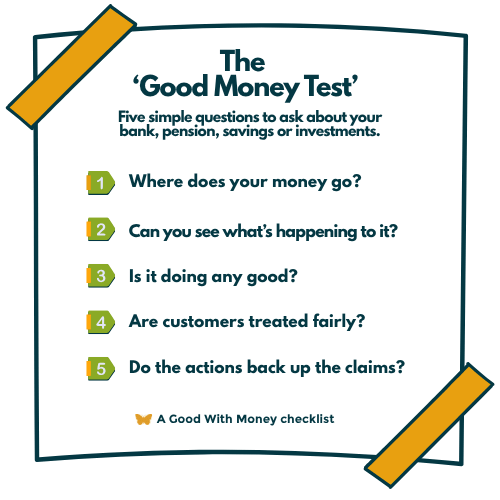





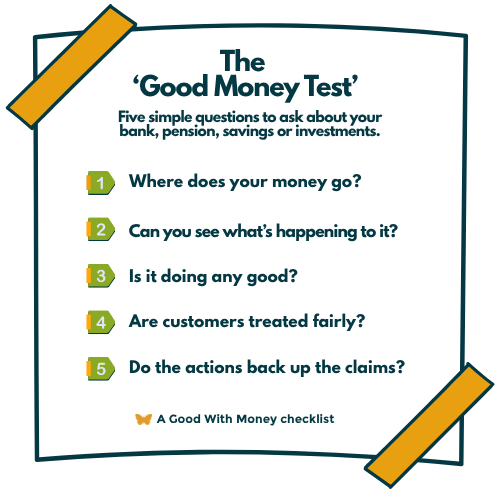

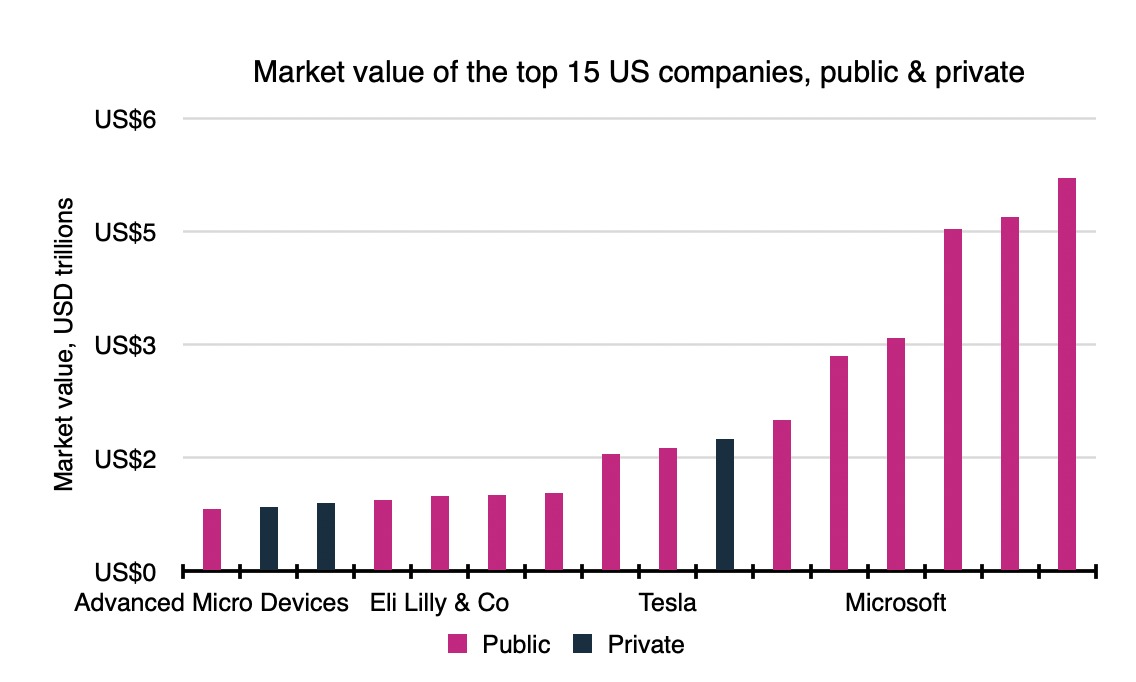


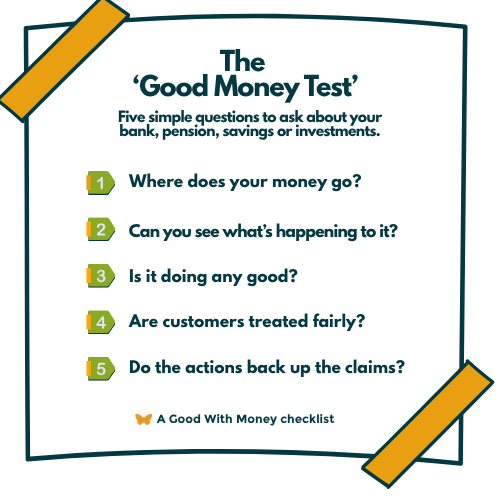



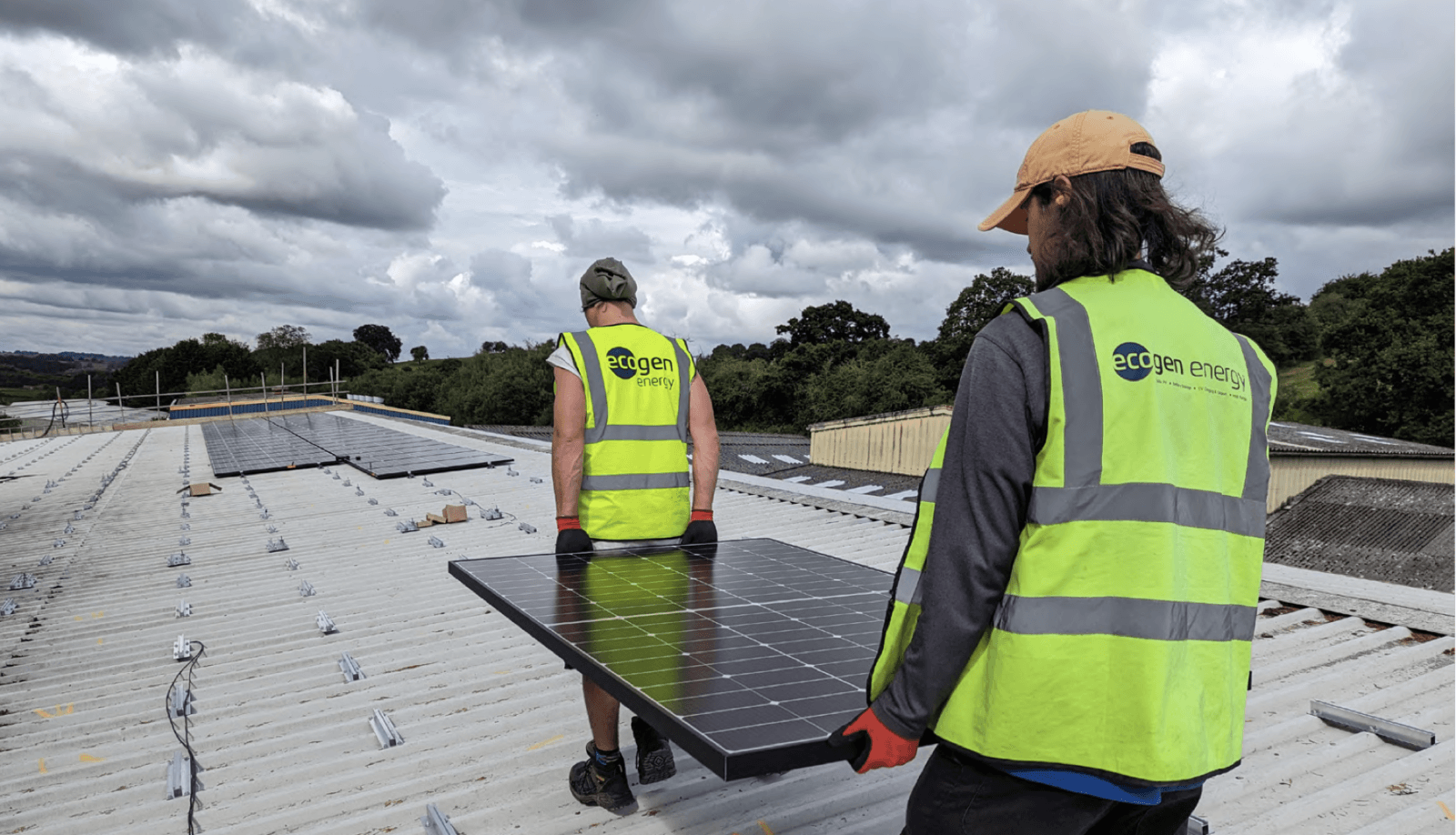



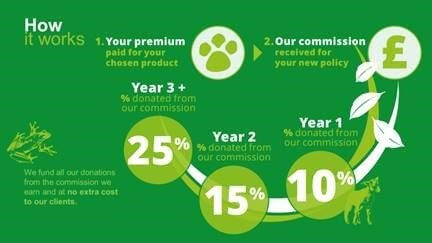



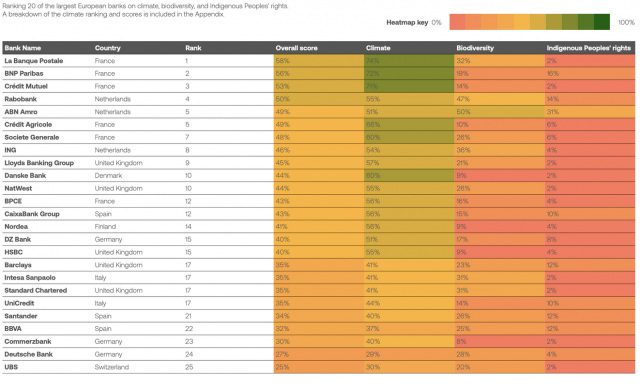

 PensionBee is on a mission to transform the pensions industry by helping people take control of their retirement savings. Launched in 2016, it is now a global leader in the consumer retirement market with over £6.3 billion in assets on behalf of more than 286,000 invested customers.


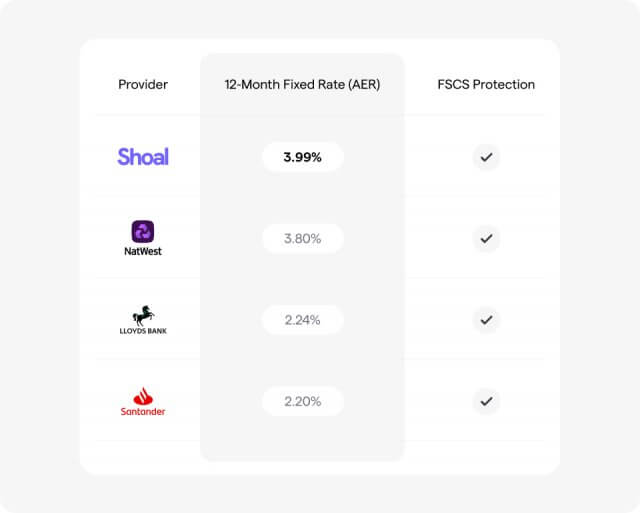
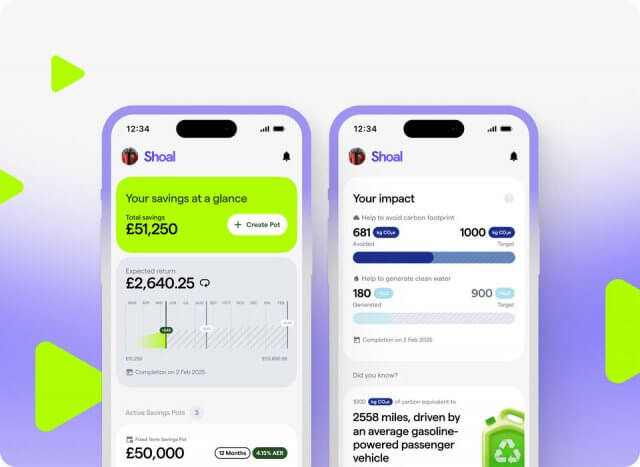
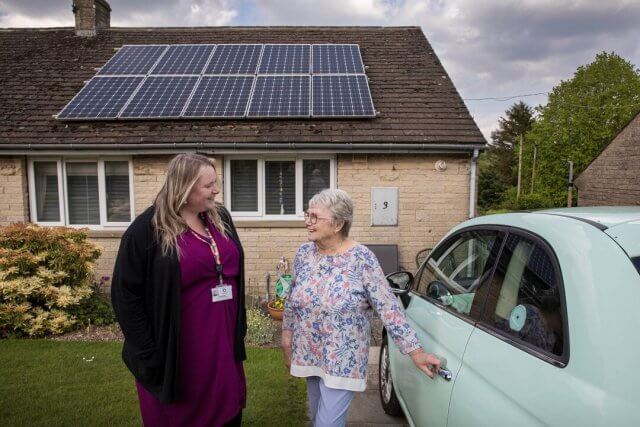
 The
The 
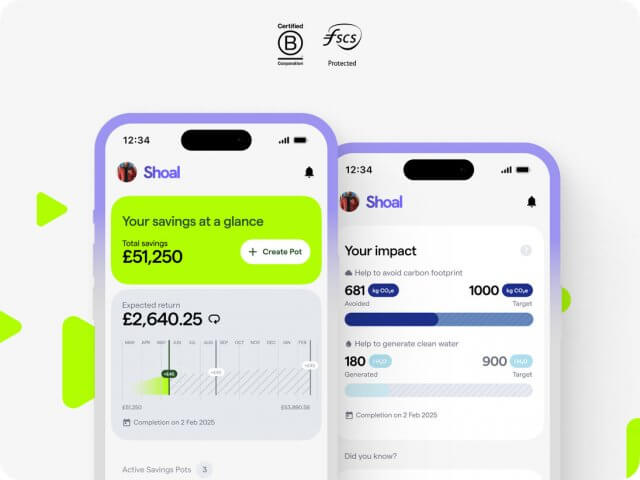
 Ethex is a UK-based direct impact investing platform that helps everyday investors to support projects that deliver positive social and environmental change.
 Energise Africa is a UK-based impact investing platform that enables people to invest directly in solar businesses delivering clean, affordable energy solutions to off‑grid communities across sub‑Saharan Africa.